
The best pre-sale work is usually targeted, not a full renovation. For pre-sale property maintenance for downsizers, start with minor repairs, tidy presentation, a thorough clean and garden maintenance. These jobs help the home feel cared for while keeping the focus on updates that make sense before a sale.
It’s easy to assume that more work will mean a better result, but bigger renovations can absorb money without adding comparable value. The practical approach is to weigh each proposed job against its cost and likely appeal to buyers in your local market. This guide explains what to repair, refresh, clean and tackle outdoors, and how to compare those tasks with larger renovations. You’ll also find a straightforward way to prioritise the work, so you can prepare the property without taking on unnecessary projects as you plan your move.
Key Takeaways
- Prioritise minor repairs that are obvious to buyers or affect how doors, taps, lights and other features work.
- Refresh the parts of the home that shape first impressions, then compare each proposed update with its likely buyer appeal.
- Plan cleaning and garden work as part of sale preparation, including outdoor surfaces and areas that can look neglected when left untended.
- Before committing to a major renovation, weigh its full cost against the likely sale-price benefit and what buyers in your local market expect.
1. Minor repairs and alterations
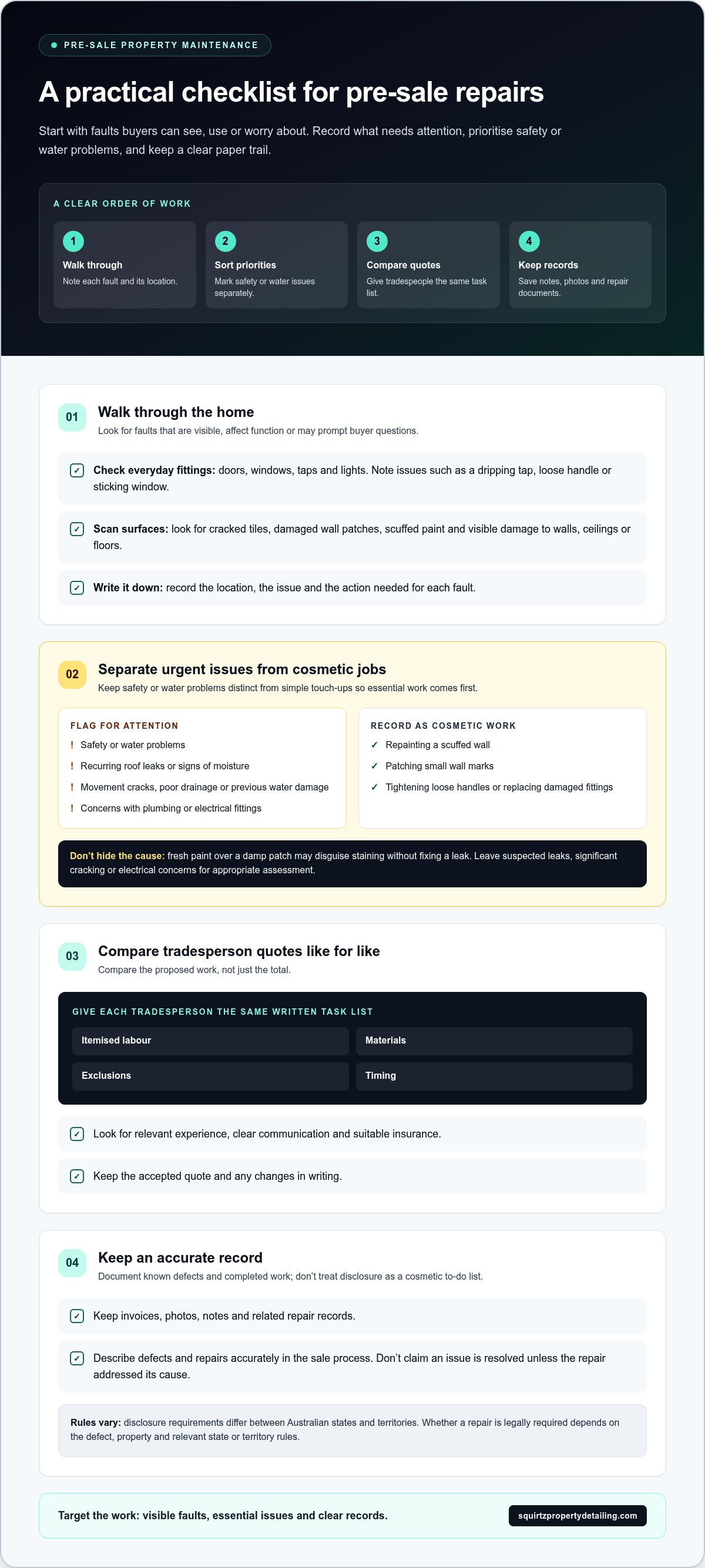
Start with faults buyers can see, use or worry about during an inspection. A dripping kitchen tap, loose door handle, cracked tile or sticking window can make the home appear poorly maintained. Walk through each room with a notepad and record the location, issue and action needed. Mark urgent safety or water problems separately from cosmetic touch-ups, so essential work comes first.
To compare quotes, give each Australian tradesperson the same written task list and request itemised labour, materials, exclusions and timing. Compare the proposed work, not just the total, and look for relevant experience, clear communication and suitable insurance. Keep the accepted quote and any changes in writing. This makes it easier to compare like with like, whether the work involves a leaking tap or several damaged wall patches.
There is no single repair checklist that applies to every Australian home sale. Whether a specific repair is legally required depends on the defect, property and relevant state or territory rules. Separate cosmetic jobs, such as repainting a scuffed wall, from matters that may affect safety or the property’s condition. Prepare sale documents accurately and address required work through the appropriate sale process.
Disclosure rules differ between Australian states and territories, so known defects should not be treated as a cosmetic to-do list. Record issues such as recurring roof leaks, movement cracks or previous water damage, and keep related repair records. The applicable disclosure process depends on the property and location. Describe defects accurately in the sale process rather than concealing them beneath fresh paint or a quick patch.
Buyers and building inspectors may look for signs of moisture, roof damage, cracking, poor drainage and faults in plumbing or electrical fittings. For example, a ceiling stain can prompt questions about a past leak, even if the surface feels dry. Test doors, windows, taps and lights, then note visible damage around walls, ceilings and floors. A clear list helps distinguish a simple adjustment from a problem needing further assessment.
DIY work can create new faults if a repair is incomplete or hides the underlying cause. Painting over a damp patch, for example, can disguise staining without fixing the leak. Concealing a known defect can also lead to disputes if buyers later discover it. Keep invoices, photos and notes for completed work, and describe repairs accurately. Don’t claim a problem is resolved unless the repair addressed its cause.
For straightforward jobs, group related tasks before arranging work: tighten loose handles, replace damaged fittings and patch small wall marks. Squirtz Property Detailing’s Handyman Repairs can help address a practical list of minor property faults before sale. Leave work involving a suspected leak, significant cracking or electrical concerns for appropriate assessment, rather than covering the visible symptom. A targeted list can preserve time and equity for the move to an apartment or other smaller home.
2. Moving from larger family homes to smaller residences
A smaller residence can reduce day-to-day upkeep, but it changes which maintenance tasks matter. Before selling, compare the demands of your current home with the way you want to live after settlement. A large lawn, pool or multi-level layout may require regular attention. An apartment may remove some outdoor chores, yet still need internal repairs and routine care.
Start by writing down the jobs that take the most effort at home. Include mowing, pruning, cleaning gutters, maintaining a pool and arranging repairs. Then consider which jobs would disappear in a smaller home and which would remain. A courtyard still needs weeding, while an apartment balcony may need regular cleaning. A smaller home doesn’t eliminate maintenance and repair costs.
Think about access as well as floor area when comparing residences. Walk through a prospective property and assess how easy it is to maintain, how many stairs it has and whether doorways can accommodate mobility aids. For example, a compact townhouse may have less garden work but several staircases. A single-level unit may be easier to move through, but its location and shared facilities affect the overall fit.
Fewer bedrooms are a common feature of the move: 43% of Australians who downsized after turning 50 moved to a property with fewer bedrooms. That change can mean less cleaning and fewer rooms to furnish. Before selling, decide what must fit in the smaller home and what can be cleared out. This also helps identify worn furniture, wall marks or floor damage that may become more visible once rooms are emptied.
For an apartment, include strata levies in your ongoing housing assessment. Levies are likely to be higher in complexes with more facilities, so compare the amenities with the maintenance they bring. A pool or landscaped common area may reduce personal upkeep, while shared facilities still require ongoing management. Consider whether those features suit your routine and budget, rather than judging the apartment by its size alone.
Use a practical comparison before committing to the move. Write down the property’s access, stairs, garden demands, shared facilities and expected household tasks. Compare that list with your current home and the residence you’re considering. This makes it easier to distinguish a genuinely lower-maintenance move from one that simply transfers work, such as shifting from a private garden to strata-managed grounds.
That comparison can also guide sale preparation. Focus first on issues that affect the home’s function and buyer experience, then avoid spending on alterations that only suit your future residence. If an apartment is your goal, make sure the current home is ready for sale without trying to reproduce apartment features in a larger property. A clear plan keeps pre-sale decisions connected to the move and the equity you want to retain.
For practical help preparing a property for sale, explore pre-sale property maintenance services.
3. Pre-sale presentation and minor repairs
Presentation work should make the property feel clean, cared for and easy to inspect. Start at the front entrance, then move through each room in the order a buyer might see it. Note scuffed paint, loose handles, marked floors, tired sealant and damaged flyscreens. A small, visible fault can distract from a room’s light, layout or storage. Prioritise repairs that improve function or remove obvious signs of neglect.
For a consistent result, prepare one task list before booking work. Separate repairs from presentation updates, such as touching up a marked wall or replacing a tired doorstop. Group jobs by room and record which tasks need access to the same area. For example, complete wall patching before painting, then clean the room after the dust has settled. This order reduces repeat work and keeps the property presentable during preparation.
Arrange maintenance as soon as the sale plan takes shape, before photography or buyer inspections are booked. Allow enough time for quotes, materials, repair work, drying and a final clean. The schedule depends on the number and order of jobs, and whether a repair reveals further work. A leaking tap needs attention before a vanity is repainted, while a simple handle adjustment can usually be added to a short task list.
Modest presentation work can involve cosmetic painting and minor repairs, but the right scope depends on the home. Avoid refreshing every surface automatically. In a bright, well-kept room, a thorough clean may be more useful than repainting. In a hallway with chipped paint and visible scuffs, a focused touch-up may create a tidier impression. Compare the work with the property’s condition and the lifestyle buyers are likely to picture there.
Keep the sale proceeds in view when choosing between possible updates. List each job, its purpose and its likely effect on presentation, then prioritise work that addresses visible wear or a practical issue. Don’t assume an extensive update will return its full cost. If selling forms part of retirement planning, financial advice can help you consider how sale proceeds fit your wider plans, separately from decisions about presentation.
Document completed work with dated photos, receipts and relevant insurance records. These details help you track what changed and keep the sale preparation organised. Before listing, walk through the Australian property again as a buyer would: open doors, check lights, view each room from the entrance and look for marks left by trades. Finish with a final clean, then remove tools, paint tins and leftover materials from the areas buyers will see.
4. Assessing renovation return on investment
Judge each proposed renovation by buyer appeal, local expectations and total cost. Substantial pre-sale renovations in Australia can cost A$50,000 or more, so a broad makeover needs careful scrutiny. Ask what the work changes: does it resolve a visible problem, improve everyday function or simply reflect your personal taste? A dated but sound kitchen, for example, may not need replacement if buyers can use it comfortably.
Compare the likely sale-price benefit with the full renovation cost before committing. Include materials, labour, related repairs and the work needed to finish affected areas. A new bathroom can also involve plumbing changes, waterproofing and replacement finishes. If those extra tasks add little buyer appeal, a focused repair or clean presentation may be a better use of your sale proceeds.
Local expectations matter. An update that suits one North Shore property may feel out of place in another, depending on its condition, price range and likely buyers. Check whether the proposed work is expected in the local market, then compare nearby properties with similar layouts and condition. The aim is not to match every feature, but to avoid leaving a clear weakness buyers will notice.
Separate essential work from optional upgrades. Address damage or poor function first, then assess cosmetic changes such as new finishes. For a pool, consider whether its condition affects the property’s appeal and whether the renovation scope suits the home. A major upgrade undertaken mainly for personal enjoyment has a different purpose from work intended to support a sale.
Downsizing finances also shape the decision. A Sydney purchase at A$900,000 attracts approximately A$35,000-A$36,000 in stamp duty, which affects funds available after selling. Seniors should also understand that Age Pension eligibility depends on both an assets test and an income test. Renovation spending can affect available assets, so consider intended sale proceeds alongside the next residence and personal circumstances.
Use a simple comparison for every proposed project: write down the problem, expected buyer benefit, full scope and cost, then compare the cost with the likely change in sale appeal. Keep these figures separate from moving costs and purchase expenses. This prevents a renovation budget from quietly absorbing money set aside for settlement, stamp duty or the move to a smaller home.
Finish by ranking projects according to function, buyer expectations and cost. If a repair protects the property’s condition, it may deserve priority over a fashionable upgrade. If the benefit is difficult to explain to a buyer, pause before adding more work. A clear scope helps keep renovation decisions tied to the sale rather than personal preference.
5. Cleaning and gardening before a sale
A clean, orderly property helps buyers focus on its rooms and outdoor space. Begin with the areas that shape first impressions: the entry, front path, windows and garden edges. Remove cobwebs, sweep leaves from paving and clear clutter from the porch. Inside, clean kitchen surfaces, bathroom fittings and floors, then open blinds to bring natural light into each room.
Work from top to bottom so dust and debris don’t undo completed cleaning. Wipe ceiling fans and light fittings before cleaning benches and floors. In the bathroom, remove soap residue from screens and taps, then check grout for visible marks. Clean windows after outdoor work, especially if pruning or sweeping has left dust on the glass.
For the garden, focus on neat boundaries and clear access rather than adding elaborate new features. Trim overgrown shrubs away from paths, remove dead leaves and weeds, and define lawn edges. A pot plant beside the entrance can add colour, while a crowded collection of containers may make a small courtyard feel tighter. Keep outdoor furniture clean and leave space for buyers to move through the area.
Check drainage and outdoor surfaces during the same walk-through. Clear leaves from visible drains, remove moss or dirt from paths, and note any pooling water after rain. Don’t hide a damaged surface beneath pots or outdoor rugs. A tidy garden should make the property easier to inspect, not obscure maintenance concerns buyers may notice.
Plan cleaning, gardening and presentation work together, since one task can affect another. Complete pruning and sweeping before window cleaning, then finish interior cleaning after repair work has stopped creating dust. If the home has a pool, clear leaves from the surrounding area and remove clutter from the poolside. This sequence helps the property present consistently in photographs and during inspections.
Downsizers should include these jobs in their sale-preparation budget alongside moving and ongoing retirement costs. Keep cleaning and garden work separate from funds intended for contributions or other financial plans. Centrelink eligibility and Age Pension assessments depend on financial circumstances, so don’t assume that sale proceeds or maintenance spending affect everyone in the same way. A clear household budget helps protect money set aside for the next residence.
Buyer interest can be shaped by simple details: clean windows, a swept path and a garden that looks manageable. Choose tasks that make rooms and outdoor areas accessible, then schedule a final tidy before inspections. For help getting outdoor areas ready, prepare your garden for sale.
Squirtz Property Detailing: House Washing
Squirtz Property Detailing can help prepare your home’s exterior when grime, cobwebs or weathered surfaces detract from its presentation. House Washing removes visible exterior build-up, while Gardens & Lawns services can tidy outdoor areas that need more than routine upkeep. These services are useful when the outside of the property looks less cared for than its interior.
For homes with other visible exterior concerns, Roof Restoration & Painting or Swimming Pool Renovations may suit the work required. Choose work that addresses the property’s condition and supports a considered sale presentation, rather than adding upgrades without a clear purpose.
To discuss property preparation, contact Squirtz Property Detailing.
Set up your next move with a clear plan
Preparing a property for sale also marks the start of a different daily routine. Use this transition to decide which tasks you want to leave behind and what matters most in your next home. A focused approach to pre-sale property maintenance for downsizers can help keep sale preparation aligned with the move, rather than turning it into a larger project than intended.
Choose the next step according to what needs attention outdoors. House Washing can refresh exterior surfaces, while Gardens & Lawns services can help organise the garden. If the pool is a major feature of the property, Swimming Pool Renovations may be relevant to its presentation. Squirtz Property Detailing can help you plan work around the areas you want to address.
Start with a clear picture of the property and your priorities, then decide which work to tackle. Contact Squirtz Property Detailing today to discuss preparing your home for sale.
Frequently Asked Questions
What should you do before selling your property?
Begin with a room-by-room condition check, then make separate lists for indoor, outdoor and paperwork tasks. For example, note a loose gate latch, a stained ceiling and an overgrown hedge in different categories. Sort the list by buyer impact and whether each task needs a specialist. Keep receipts and records for completed work together, so details are easy to retrieve while preparing the sale.
Should you renovate or sell as-is?
Renovate only when the proposed work addresses a clear problem or meets buyer expectations in your local market. Selling as-is can make sense when the home functions well and larger changes mainly reflect personal taste. For a North Shore property, compare similar homes by condition and features, then identify any gap buyers are likely to notice. A focused repair may address that gap without committing to a broad renovation.
What should downsizers consider?
Consider how the sale, next residence and household budget fit together. For example, a unit may reduce private garden work but involve shared facilities and ongoing strata costs. Review access, storage and the practical effort needed to maintain the new home. Also consider where furniture and belongings will go, since clearing space before listing can reveal maintenance issues and make sale preparation easier to organise.
What maintenance should downsizers do before selling a property in Australia?
For Australian homes, focus on safe access, functioning fixtures and visible signs of water or weather damage. Check paths, handrails, gates, external taps and the areas beneath sinks. Record any recurring issue rather than treating its visible mark as the whole problem. This practical approach to pre-sale property maintenance for downsizers helps organise work around the property’s actual condition, instead of applying the same checklist to every home.
Which pre-sale repairs and improvements offer the best return for downsizers?
The strongest candidates are usually jobs that remove a clear obstacle to a buyer’s confidence or use of the home. A broken front gate, cracked path tile or heavily marked entry may stand out during an inspection. Compare the repair’s full scope with the benefit it brings to presentation and function. The right priority depends on the property’s condition and what buyers in its market expect.
Should downsizers renovate, repair, or sell a property as-is?
Choose repairs for faults, selective updates for visible wear, and an as-is sale when the property already meets local expectations. For instance, a sound kitchen with dated handles may need less work than a bathroom with damaged fittings. Consider how each option affects the home’s usability and presentation, then compare its cost with the likely buyer benefit. Keep personal preferences separate from work intended for the sale.
What steps should downsizers follow to prepare and maintain a home before sale?
First, inspect the property and record repairs, cleaning and garden tasks. Next, address faults that affect function, then complete presentation work in an order that avoids redoing tasks. For example, finish pruning before washing nearby windows. Keep job records and organise a final walk-through before photography or inspections. This sequence helps coordinate access, keeps completed areas clean and makes remaining tasks easier to identify.


