
A major renovation isn’t always the smartest first move. When maximising property value before listing Sydney homes, start with visible condition and presentation, not a long wish list of upgrades. It’s understandable to worry about spending on improvements buyers may not value, especially when several jobs need attention.
A clear plan helps you decide what to tackle, what to leave alone and how to prepare without overcapitalising. This guide explains how to assess your home, prioritise practical repairs and presentation improvements, and organise the work into a manageable pre-sale plan.
Start with what buyers notice: the exterior, gardens, windows and signs of deferred maintenance. Then consider targeted work such as house washing, painting or handyman repairs before weighing up larger renovations. For Sydney sellers, coordinating several detailing and maintenance needs can make preparation more straightforward. Squirtz Property Detailing has served Sydney’s North Shore since 1993, helping owners bring different parts of a property together before it goes to market.
Key Takeaways
- Assess each issue by its visibility, practical importance and the effort needed to organise the work.
- Use a simple priority table to compare the problem, proposed fix and reason for doing it before committing to larger renovations.
- Separate maintenance from cosmetic updates and major renovations so you can weigh their purpose, scope and disruption.
- Plan in a practical sequence: inspect, set priorities, group related jobs, complete the work and review the presentation.
- Use a coordinated approach to maximising property value before listing Sydney, while remembering that presentation can support buyer appeal but can’t guarantee a sale result.
What does maximising property value before listing in Sydney really involve?
Maximising property value before listing Sydney is about preparing a home so its condition and presentation are clear to prospective buyers. That may mean completing unfinished maintenance, cleaning tired-looking surfaces or making the garden easier to appreciate. It isn’t a promise that the property will receive a particular valuation or sell for a set amount.
Market value and buyer appeal are related, but they aren’t the same thing. A property’s value is influenced by factors such as its location, features, condition and the market at the time of sale. Presentation can help buyers see the home’s qualities, while the eventual result depends on more than appearance alone.
First impressions often begin before an inspection. Buyers browsing online may form an initial view from listing photos, and visible wear or neglected areas can draw attention away from a home’s strengths. A cared-for appearance gives buyers a clearer basis for assessing the property and imagining how it could suit them. Better presentation can strengthen buyer appeal, but it can’t promise a financial return.
How presentation and property value relate
Pre-listing work can range from small maintenance jobs to broader home improvement projects that refresh a property’s interior or exterior. The useful question is not just whether a job looks attractive, but whether it addresses a noticeable issue and helps the home present well. A repaired gate, tidy lawn or clean exterior may remove distractions, but none can guarantee a higher valuation or sale price.
That distinction helps sellers avoid treating every possible upgrade as essential. Focus on work that makes the property look cared for or helps buyers understand its condition. If a project mainly reflects personal preference or would cause substantial disruption, weigh it against the property’s current presentation and likely buyer expectations.
Why start with the property’s current condition?
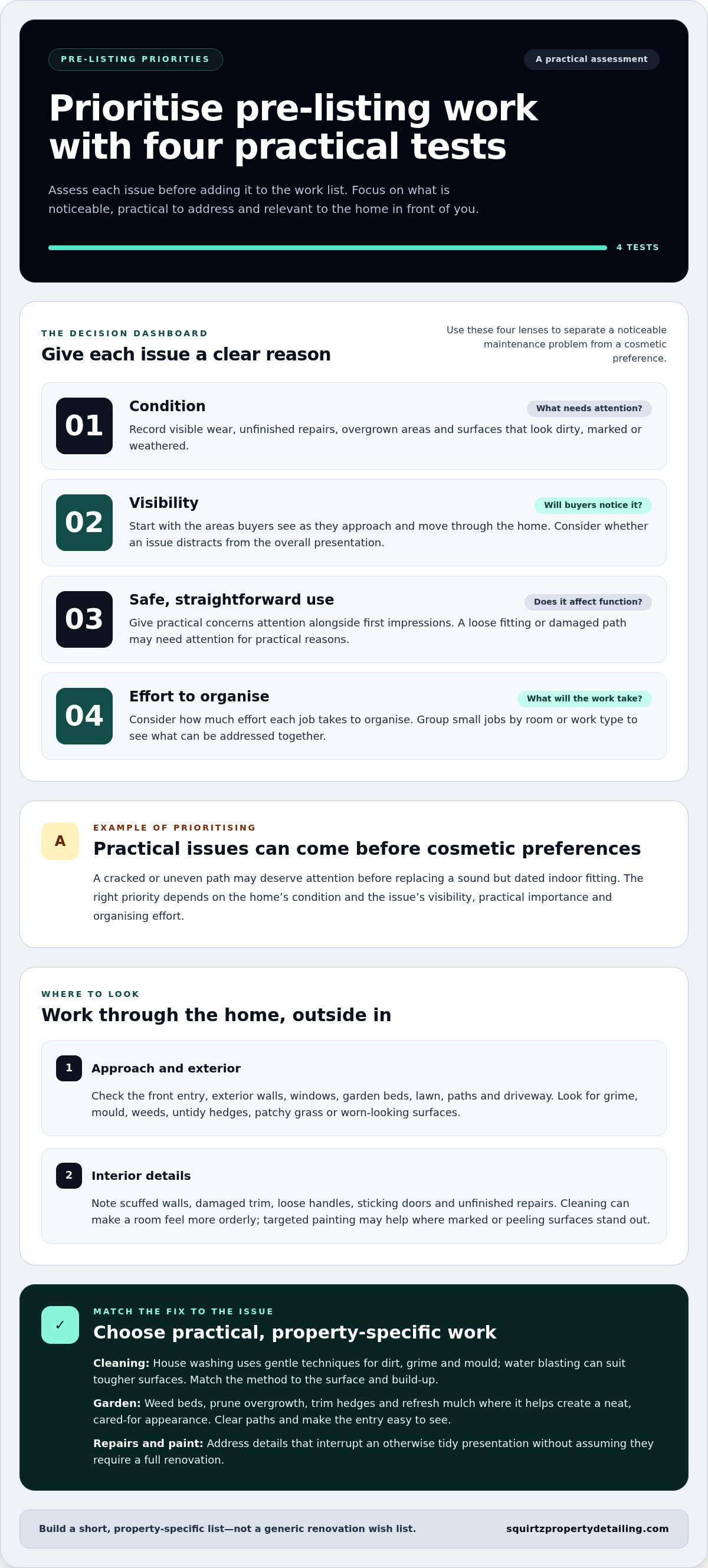
Begin with a calm walk-through, inside and out, before writing a work list. Look at each room, then check the entry, exterior, garden and other areas a buyer is likely to see. Record visible wear, unfinished repairs, overgrown sections and surfaces that look dirty, marked or weathered. Specific notes turn general concerns into tasks you can prioritise.
Describe the issue rather than jumping straight to a renovation: “paint is peeling on the entry trim” is more useful than “redo the front”. Then consider its effect on safety, function and first impressions. A loose fitting or damaged path may need attention for practical reasons; faded paint may be a presentation concern. This assessment gives you a basis for deciding what deserves priority and what can remain as it is.
Sydney homes vary widely, so priorities should reflect the property’s type, condition and intended buyer. An apartment may call for attention to its internal presentation, while a freestanding home may have more exterior areas to assess. A family home, an investment property and a compact unit can also attract buyers with different priorities. Tailor the preparation to the home in front of you, not a generic renovation checklist.
Which Sydney pre-listing improvements deserve attention first?
Prioritise work using four practical tests: the property’s condition, how visible the issue is, whether it affects safe and straightforward use, and how much effort it takes to organise. This helps distinguish a noticeable maintenance problem from a cosmetic preference. A cracked or uneven path, for example, may deserve attention before replacing a sound but dated fitting indoors.
Start with the areas buyers can see as they approach and move through the home. Then address interior issues that distract from the overall presentation. The best order for maximising property value before listing Sydney depends on the home itself, so use a walk-through to build a short, property-specific list instead of starting with a renovation wish list.
Exterior presentation: entry, surfaces and gardens
From the street, check the front entry, exterior walls, windows, garden beds, lawn, paths and driveway. Look for grime, mould, weeds, untidy hedges, patchy grass or surfaces that appear worn. House washing uses gentle techniques to remove dirt, grime and mould, while water blasting can suit tougher surfaces. Match the cleaning method to the surface and the type of build-up.
Keep garden work practical: weed beds, prune overgrowth, trim hedges and refresh mulch where it helps create a neat, cared-for appearance. Clear paths and make the entry easy to see. For property-specific ideas on preparing outdoor areas, explore garden landscaping for Sydney sellers. The Real Estate Institute of New South Wales is a useful industry reference for property professionals, while your improvement priorities should reflect the home’s condition and intended buyer.
Interior condition: repairs, cleaning and paint
Inside, note scuffed walls, damaged trim, loose handles, sticking doors and unfinished repairs. These details can interrupt an otherwise tidy presentation, but they don’t automatically call for a full renovation. Group small jobs by room or work type so you can see what can be addressed together. For practical maintenance ideas, see pre-sale handyman repairs in Sydney.
Cleaning can make a room feel more orderly, while targeted painting may help where marked or peeling surfaces stand out. Consider whether the work will create a more consistent finish across adjoining areas rather than treating one wall in isolation. More guidance on pre-sale house painting in Sydney can help you assess where a refresh may be useful.
- High priority: visible defects that affect safety, function or access.
- Presentation priority: dirty, overgrown or marked areas that catch the eye.
- Consider carefully: upgrades that add scope without addressing a clear issue.
Once you’ve identified the work, grouping related exterior cleaning, garden care and repairs can make preparation easier to coordinate. Squirtz Property Detailing brings property detailing and maintenance together across Sydney. Its pre-sale property preparation service can address several visible needs as part of one plan.
How can you weigh maintenance against renovations before a Sydney sale?
Not every item on a pre-sale list calls for a renovation. Separate the work into three types: maintenance that fixes a fault or deterioration, cosmetic refreshes that improve the finish, and major renovations that alter a room, layout or key feature. Each has a different purpose, scope and level of disruption. This comparison helps you decide whether a job responds to a clear need or adds work without addressing a noticeable concern.
No renovation has a guaranteed return across every property, because buyer priorities and sale outcomes depend on the home and its market. Avoid relying on generic return percentages. Instead, judge a proposed project against the property’s condition, the likely audience and what comparable homes in the area currently show.
When maintenance may be more appropriate than renovation
A visibly dirty exterior may need cleaning, not new cladding. An overgrown garden may benefit from pruning and weeding rather than a complete redesign. A damaged fitting may need a focused repair, not a room overhaul. In each case, the work can address a practical or presentation concern without changing the home’s layout. Restoring an existing feature is also different from replacing or substantially upgrading it, which usually brings a wider scope of decisions.
That distinction matters when maximising property value before listing Sydney. Repainting a marked surface may help create a consistent appearance; a major renovation can involve more disruption and coordination. The appropriate choice depends on what the home needs, not on a rule that bigger projects are always better.
A practical test before committing to bigger work
Before proceeding, ask whether the project resolves a clear condition issue or mainly reflects your personal taste. Then consider its scope, the areas of the home it will affect, the disruption involved and whether it fits into the overall sale preparation. A simple decision table can help: record the visible issue, proposed work, priority and reason for doing it.
- Visible issue: The front garden is overgrown. Proposed work: Weed, prune and tidy existing beds. Priority: Presentation. Decision rationale: Addresses a prominent first impression without redesigning the garden.
- Visible issue: A sticking door needs attention. Proposed work: Repair the existing door. Priority: Function. Decision rationale: Resolves a practical issue without replacing the door.
- Visible issue: The kitchen feels dated but functions as intended. Proposed work: Consider a major renovation. Priority: Review. Decision rationale: Weigh the scope and disruption against the property and comparable local listings before committing.
Use recent, genuinely comparable listings as context, paying attention to property type, condition and features rather than treating an asking price or presentation as a valuation. Listings can help you understand how similar homes are being marketed, but they can’t predict your sale result. A focused decision process keeps the work proportionate and helps prevent a cosmetic preference from becoming an unnecessary renovation.
How should you organise pre-listing work around a Sydney sale?
A simple sequence keeps preparation focused: inspect the property, set priorities, group related jobs, complete the work, then review the presentation. Build the plan around the home’s actual condition and your listing plans, not an assumed standard lead time. That way, you can see what needs attention, what can be handled together and what doesn’t need to be done.
This approach also helps sellers manage several moving parts. A residential property may need garden maintenance alongside exterior cleaning and small repairs. A commercial property may have different areas to consider, but the same principle applies: map the work to the site and keep the priorities clear. For further planning ideas, see the Sydney property maintenance selling guide.
Create a practical pre-listing work plan
Start by walking through key indoor and outdoor areas, noting each task beside its location. Grouping jobs by area or work type makes the plan easier to follow and helps identify tasks that can be coordinated. Separate essential repairs from optional presentation improvements so cosmetic jobs don’t obscure issues that affect the property’s function or condition.
- Inspect: Note the state of the entry, living areas, windows, garden, pool and visible exterior surfaces.
- Prioritise: Mark required repairs and maintenance separately from optional updates.
- Group: Combine related tasks, such as exterior cleaning with window cleaning, or garden work with path and driveway attention.
- Complete: Work through the plan in a sensible order for the property, leaving a final review until the tasks are finished.
Keep the list specific enough to act on. “Tidy the garden” can become “prune the front hedge and clear weeds from the entry path”. “Check exterior” can be broken into house surfaces, windows and paving. Clear tasks make it easier to coordinate work across the property and spot omissions before the home is presented to buyers.
Review the finished presentation before listing
Once preparation is complete, walk the property again as a visitor might. Check the entry, living areas, gardens, pool and visible exterior surfaces. Look for missed cleaning, repairs that remain unresolved or clutter that draws attention away from the space. A second pass can also reveal whether separate jobs feel consistent when viewed together.
For example, a clean exterior may still look unfinished if the windows are marked or the front path is cluttered. A freshly maintained garden can be let down by overgrown edges near the entry. Use a short final checklist and record any remaining work instead of assuming every task is complete because it was on the original plan. The professional exterior cleaning guide offers further detail on assessing visible outdoor surfaces.
Coordinating several detailing and maintenance needs can make sale preparation more manageable. Squirtz Property Detailing brings services such as house washing, garden work, window cleaning and handyman repairs together as a one-stop approach. Its pre-sale property detailing and maintenance service can help organise the work around your property’s needs.
How Squirtz Property Detailing helps prepare Sydney properties for listing
Preparing a property for sale can involve several visible maintenance needs, from a tired exterior to an untidy garden or unfinished repairs. Squirtz Property Detailing brings property detailing and maintenance together, helping owners organise practical work across the property. The aim is a well-presented home, not a promise of a particular sale price.
One-stop detailing for the work your property needs
Squirtz’s pre-sale preparation covers exterior cleaning, gardens and lawns, pool renovations, roof work, painting, window cleaning, driveway and path resurfacing, and handyman repairs. House washing uses gentle techniques to remove dirt, grime and mould, while water blasting can restore tougher surfaces. Licensed tradesmen are available when a licence is required.
This coordinated approach is useful when several jobs affect the same first impression. For example, exterior cleaning, garden work and a repair can be planned as connected parts of the property’s presentation rather than treated as unrelated tasks. The work can be tailored to the home’s condition, whether the priority is the entry, outdoor areas or visible maintenance inside.
- Exterior: House washing and window cleaning can address dirt and grime on visible surfaces.
- Outdoor areas: Garden and lawn work can help present the grounds as cared for.
- Property features: Pool renovations and roof restoration and painting can address specific maintenance needs.
- Repairs and finishes: Handyman repairs and internal or external painting can help resolve visible issues.
A Sydney team with established local experience
Established on Sydney’s North Shore in 1993, Squirtz Property Detailing serves Greater Sydney. Its local experience supports a practical approach to property preparation: identify the work that matters for the individual home, then coordinate the relevant detailing and maintenance. This can help owners manage multiple visible tasks through one property detailing and maintenance service.
Customer feedback reflects individual experiences, not a guaranteed sale outcome. Leonie Davis of Pymble said her home “has never looked better”. Geoff Singelton of Dee Why described the result of exterior detailing, garden work and pool renovation as “like night and day”. These comments speak to the changes those customers noticed in their properties; they don’t predict what another home will sell for.
For sellers focused on maximising property value before listing Sydney, a coordinated plan can make preparation more manageable while keeping attention on the property’s actual needs.
Make your next step a clear one
Before arranging any work, choose one practical next step: turn your property notes into a short list of priorities. Be specific about what needs attention, what can wait and which jobs could be organised together. A focused plan makes it easier to act without letting optional upgrades expand into a renovation by default.
As your listing plans take shape, keep the goal in view. Maximising property value before listing Sydney is about presenting a home that feels cared for and letting buyers assess its features clearly, not predicting or guaranteeing the final sale result. Review your priorities if the property’s condition or preparation needs change, and keep decisions grounded in the home itself.
If you’d like support turning visible maintenance needs into a manageable preparation plan, take the next step with Squirtz Property Detailing. Discuss your Sydney pre-sale preparation with Squirtz and move towards listing with a clear plan.
Frequently Asked Questions
Does renovating always increase a property’s value before listing?
No. A renovation’s effect depends on the property’s existing condition, the project’s scope and the market context. Replacing a functioning kitchen to suit personal taste is different from addressing a clearly worn or damaged area. Before committing, identify the specific issue the work would solve, then consider whether the scale of the project is proportionate. A renovation can change presentation, but it can’t promise a particular sale result.
How can I decide which improvements to make before selling my Sydney home?
Record the issues you can see, then rank them by practical importance and how readily a buyer may notice them. Separate essential maintenance from optional updates, such as replacing a sound fitting simply because you prefer another style. Sydney homes and buyer expectations vary, so a generic checklist won’t suit every property. For maximising property value before listing Sydney, use the home’s condition and intended buyer to guide your choices.
Is cleaning enough to prepare a property for sale?
Not always. Cleaning can help a home look cared for, but it won’t fix a loose handle, damaged surface or other maintenance issue. Consider the property as a whole: a clean living area may still feel unfinished if the windows are marked or the garden is untidy. Assess indoor and outdoor condition together, then decide whether cleaning alone addresses what buyers are likely to notice.
Should I renovate my kitchen or bathroom before listing?
Not automatically. A major kitchen or bathroom renovation is a substantial project, so weigh the current condition against its scope and likely disruption. Look at comparable local properties to understand how similar homes are presented, while remembering that listings don’t guarantee a particular outcome for yours. If the room functions and the concern is mainly personal taste, a full renovation may not be necessary for sale preparation.
When should I start preparing my property for sale?
Start early enough to assess the home, decide which tasks matter and review the finished presentation before listing. The time needed will depend on the property and the work involved, so there’s no single timeframe that fits every seller. Write a task list that reflects your intended listing schedule, and leave room to reassess if you uncover an issue or decide to change the scope.
Can pre-sale detailing guarantee a higher selling price?
No. Detailing can’t guarantee a sale price. A property’s condition and presentation are only part of the outcome, alongside market conditions and buyer decisions. The practical role of detailing is to help address maintenance needs and present the home carefully, so buyers can assess it clearly. Treat the work as preparation, not a promised financial result, and keep the scope appropriate to the property.


