
What if preparing your property for sale felt less like a growing to-do list and more like a clear plan? A stress-free property presentation for sale starts with identifying the visible issues that matter most, then tackling them in a sensible order.
It’s understandable to feel pulled between repairs, cleaning and finishing touches, especially when household routines and sale deadlines also need attention. You don’t have to tackle every task at once. A practical priority list helps you focus on the areas buyers notice, schedule work around daily life and decide which jobs you can handle yourself.
This guide explains how to assess your property, set priorities across key interior and exterior areas, and coordinate tasks from early repairs to final detailing. You’ll also learn how professional help can simplify the workload. For Sydney sellers, including those on the North Shore, Squirtz Property Detailing provides tailored pre-sale property maintenance and detailing. The aim is a manageable process and a property that looks cared for, without promising a particular sale outcome.
Key Takeaways
- Separate preparation tasks you can plan from sale outcomes you can’t control, so you can focus on practical decisions.
- Assess cleanliness, upkeep and visible finishing work in context. The right scope depends on your property and sale plans.
- Rank jobs by visibility, condition and relevance, giving noticeable maintenance concerns priority over minor cosmetic extras.
- Build a stress-free property presentation for sale by moving from a walk-through to a prioritised task list, coordinated work and a final review.
- Choose property maintenance and detailing that suits your needs rather than treating every service as essential.
Why property presentation for sale can feel stressful, and what you can control
Preparing a property for sale rarely happens in isolation. Work still needs attention, household routines continue, and maintenance jobs that have been put off can suddenly seem urgent. Add inspections, paperwork and a sale deadline, and every scuff, overgrown garden bed and unfinished repair can start to feel like a priority.
The challenge is not simply the number of jobs. It’s deciding what matters, what can wait and how to fit the work around daily life. Set a clear scope: aim for a property that looks clean, cared for and ready to present, rather than a flawless home or a guaranteed sale result.
Which parts of sale preparation can you control?
You can assess visible maintenance and presentation tasks, then decide which suit your property and sale plans. During a walk-through, note peeling paint, dirty windows, an untidy garden, a worn driveway or small repairs that draw the eye. Priorities differ between properties, so start with what you can see rather than assuming every possible improvement is necessary.
Buyer decisions, market conditions and the eventual sale result sit outside your control. Property presentation can help you prepare the home thoughtfully, but it can’t determine how buyers respond or what the market will do. Keeping that distinction in mind directs your effort towards the property itself, not outcomes you can’t promise.
Before starting, define a realistic scope. Consider the property’s current condition, the time available and which areas need attention to look well maintained. Presentation can include upkeep and finishing work as well as choices associated with home staging, but there’s no need to overhaul every room or exterior area.
How can a clear plan reduce presentation pressure?
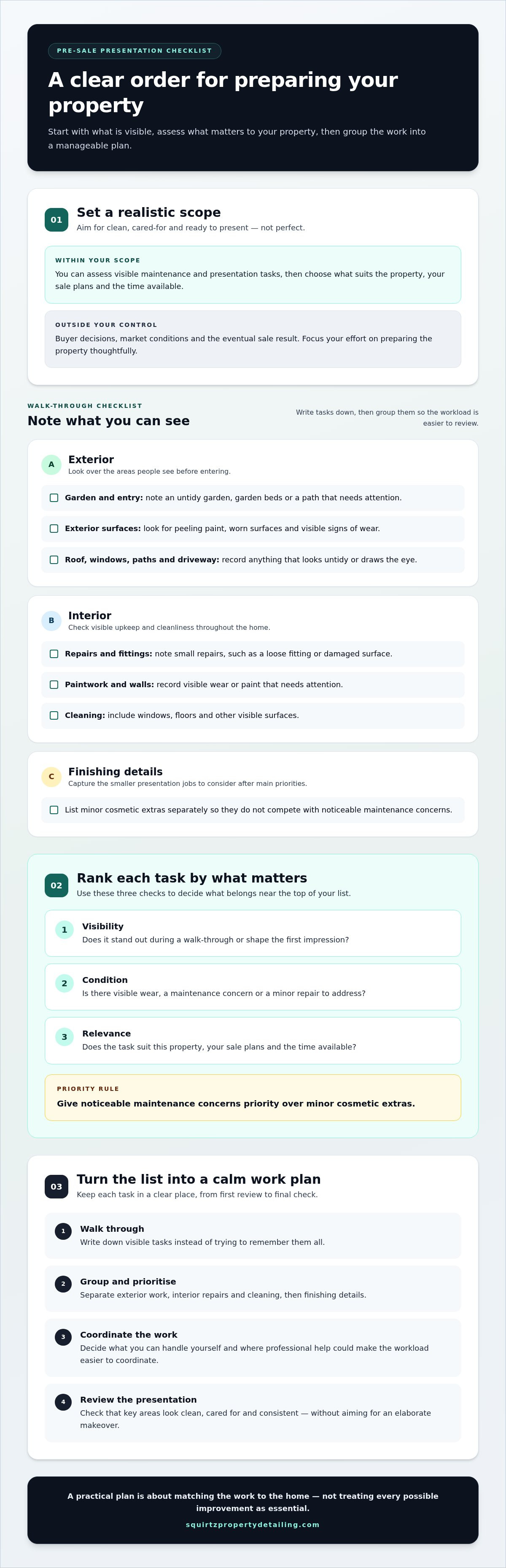
Write down what you notice during a walk-through instead of trying to remember every job. A list turns a vague mental checklist into tasks you can review and group. For example, put exterior work together, then list interior repairs and cleaning separately. This makes the workload easier to assess and helps prevent small cosmetic extras from competing with more noticeable maintenance concerns.
A defined task list turns sale preparation from a stream of worries into work you can review, group and manage.
- Exterior: note the garden, roof, windows, paths and driveway.
- Interior: record visible repairs, paintwork and cleaning needs.
- Finishing details: capture smaller presentation jobs to consider after the main priorities.
Next, decide what to do yourself and where professional help could make the workload easier to coordinate. A defined scope and work order won’t remove every pressure, but they give each task a place and make preparation more manageable.
What does sale-ready property presentation involve?
Sale-ready property presentation combines cleanliness, visible upkeep and finishing work to help a home look cared for and ready to show. It’s a practical standard, not a demand for perfection. The right scope depends on the property’s condition and features, your sale plans and the time available.
A well-maintained home may need only a tidy-up and a few finishing details. A property with worn exterior surfaces or obvious minor repairs may need more attention before it feels ready to present. A stress-free property presentation for sale comes from matching the work to the home, rather than treating every possible improvement as essential.
Which property areas shape a buyer’s first impression?
The entry, exterior surfaces, garden and driveway are visible before someone steps inside. A clear path to the front door, presentable surfaces and an orderly garden help the exterior feel considered. Inside, clean windows and maintained walls, floors and other visible surfaces support the same impression throughout the home.
Look at how these areas work together rather than judging each detail in isolation. A smart entry can feel less inviting if the surrounding exterior looks neglected; a clean interior may still feel unfinished if obvious wear stands out. Aim for consistency across key areas, not an elaborate makeover.
Furniture styling is separate from maintenance and detailing. Home staging can involve arranging a property’s contents to present its rooms, while sale preparation also covers practical upkeep and cleanliness. The National Association of REALTORS® (NAR) report on home staging offers background on staging practices. Its findings are based on the US market, so use them as context rather than a guide to Australian sale outcomes.
How do maintenance and presentation work differ?
Maintenance addresses visible wear or minor repairs before sale. That could mean dealing with peeling paint, a loose fitting or a worn exterior surface. Presentation focuses on making the main areas look clean, orderly and considered. Some tasks support both: repairing a damaged surface improves its condition and helps the area look cared for.
For example, a weathered exterior may need attention to its condition as well as a clean finish. Prioritise what is noticeable and relevant to the overall impression, then leave low-impact cosmetic extras off the immediate list. For more detail on exterior surfaces and cleaning considerations, see this professional exterior cleaning guide.
Squirtz Property Detailing tailors pre-sale maintenance and detailing to each property, rather than treating every task as a standard package. If coordinating the relevant work would make preparation easier, explore pre-sale property detailing in Sydney as part of your plan.
How to prioritise property presentation jobs without doing everything
A useful priority list weighs each task against three questions: how visible is it, what condition is it in, and how relevant is it to the property’s presentation for sale? This keeps attention on work that addresses an obvious concern or affects an area buyers are likely to see, rather than an ever-growing list of possible upgrades.
Use the comparison below as a guide, not a universal ranking. A worn front path may deserve attention at one property, while another may have a more noticeable issue inside. Rate each factor as high, medium or low, then give greater consideration to tasks that rate highly across several factors.
Front entry or approach: Visibility is often high because it’s encountered early. Note its condition and consider whether the area looks cared for and fits the overall presentation.
Main living area: Visibility is high during an inspection. Mark obvious damage or neglected finishes, then consider whether addressing them would make the space feel more orderly.
Outdoor areas: A garden, driveway or exterior surface may be prominent from the street or during a walk-around. Consider its condition and contribution to the property’s overall appearance.
Less prominent cosmetic detail: A small mark in a low-traffic area may have limited visibility and relevance. Record it, but compare it with more noticeable maintenance needs before committing time to it.
Use the comparison to separate essential preparation from optional improvements. Essential work addresses visible wear, minor repair needs or untidy areas that affect the impression of a cared-for home. Optional work may add polish, but it can wait if it has little bearing on the property’s presentation. A stress-free property presentation for sale isn’t about completing every possible project; it’s about making deliberate choices that suit the home.
Which jobs should move to the top of the list?
Start by reviewing the approach to the home and the main living areas. Note visible damage, neglected finishes and outdoor areas that look untidy. These are useful places to assess, not a fixed order for every property. Compare what stands out at your home with its condition and your sale plans, then prioritise tasks that address the clearest presentation concerns.
When is a larger improvement worth considering?
Before taking on a larger project, weigh the property’s current condition against the effort, household disruption and time involved. Painting, roof restoration or pool renovations may suit a property with a clear need, but they aren’t automatic requirements for every sale. Consider how each job contributes to a cared-for presentation before adding it to your essential list.
Property presentation cannot guarantee a particular price, sale timeframe or buyer response. Its purpose is to help you prepare the home thoughtfully, not predict the market. Use the priorities above to decide which work is relevant to your property and sale plans.
How to organise a calm, practical pre-sale presentation plan
A workable plan turns presentation jobs into a sequence you can coordinate around household routines and sale preparations. It also makes it easier to see what needs to happen first, what can be grouped together and where you may need help. You don’t need a fixed timetable to get organised; allow for practical access and enough household time for each task.
How should you start a property presentation walk-through?
Walk from the street towards the entry, look across outdoor areas, then move through the main interior spaces. Record what you notice without deciding on the spot that every mark or worn surface needs a major project. Sort your notes into immediate priorities, optional work and items that need more thought. This gives you a useful record without turning every observation into a commitment.
Use a simple list or table to keep the plan visible. Include the task, area, who will organise or complete it, any access needed and whether another job should happen first. Group compatible tasks by location or type where practical. For instance, coordinating several exterior jobs together may reduce repeated disruption compared with scheduling each separately.
How can you keep preparation on track?
Review the list with household routines in mind. Note when rooms or outdoor areas need to be accessible, and consider how planned work will affect everyday use of the property. If a task depends on another being completed first, record that relationship so the sequence stays clear. Leave room to adjust if circumstances change.
A practical pre-sale sequence is simple: walk through the property, record the work, set priorities, coordinate tasks and finish with a final review.
- Walk through: assess the approach, exterior, outdoor areas and main interior spaces.
- Record: write down observed tasks and note access or household considerations.
- Prioritise: separate immediate work from optional improvements and items to reconsider.
- Coordinate: group compatible jobs, note dependencies and assign responsibility.
- Review: revisit completed areas and identify any finishing details still in scope.
Keep the scope in view as work progresses. If a new task appears, compare it with the priorities already set rather than automatically adding it to the schedule. A final walk-through helps you check whether the planned areas look consistent and whether any agreed tasks remain. This orderly approach supports stress-free property presentation for sale without assuming every job must be done at once.
For more guidance on preparing a Sydney home, use the priorities in this guide to decide which maintenance tasks suit your property. If coordinating property maintenance and detailing would simplify your plan, organise pre-sale property detailing with Squirtz Property Detailing.
How Squirtz Property Detailing can simplify sale preparation in Sydney
Sale preparation can involve jobs across the inside and outside of a property. Squirtz Property Detailing is a Sydney-based business established in 1993, specialising in tailored maintenance and detailing for residential and commercial properties. Coordinating relevant work through one property detailing business can make the practical workload easier to organise, rather than treating every task as a separate project.
The right scope depends on what your property needs. A home with clean, well-kept exterior surfaces may need attention elsewhere, while another property could benefit from a garden refresh or visible repairs. Sellers in Sydney, including on the North Shore, can focus their preparation plan on the areas that matter instead of assuming every available service is necessary.
Which property detailing services can support sale presentation?
Match the work to what you observed during your walk-through. House washing and window cleaning may suit visible exterior surfaces and glass; other services can address specific maintenance or presentation needs. The aim is a considered scope, not a standard package. For example, a property with an orderly garden may not need landscaping work, while an untidy outdoor area may benefit from a garden makeover.
- Exterior surfaces: House washing can address presentation needs across visible exterior areas.
- Glass: Window cleaning can help windows look clean as part of the property’s overall presentation.
- Garden and access: Garden landscaping and makeovers or driveway and path resurfacing may suit areas that need attention.
- Paintwork and roof: Internal or external painting, and roof restoration and painting, are options to consider where the property’s condition calls for them.
- Specific repairs or pool work: Handyman repairs or swimming pool renovations may be relevant when those features need attention.
Each item should relate to an observed need and your sale-preparation goals. Some properties may benefit from a small number of targeted jobs; others may need coordinated attention across several areas. Tailoring the scope keeps your stress-free property presentation for sale focused on practical work, without implying that every service will suit every home.
What is the next step for Sydney sellers?
Start with your property type, the priorities you’ve identified and what you want to address before sale. A clear starting point makes it easier to organise relevant work around household routines. Squirtz provides tailored pre-sale property preparation across Sydney, bringing suitable maintenance and detailing tasks together for residential and commercial properties.
For a coordinated approach to your sale preparation, plan your property presentation with Squirtz.
Take the next step with a focused plan
Your preparation plan doesn’t need to account for every possible improvement before you begin. Choose a practical starting point, then let the property’s needs guide what comes next. That keeps decisions grounded and gives you room to adjust if your priorities or circumstances change.
A stress-free property presentation for sale is built through manageable choices, not an endless list of jobs. If coordinating the work feels difficult, a tailored plan can help bring the relevant maintenance and detailing tasks into focus.
Plan your property presentation with Squirtz and take the next step towards a sale-ready home with confidence.
Frequently Asked Questions
Does stress-free property presentation for sale require furniture staging?
No, a stress-free property presentation for sale doesn’t automatically require rented furniture or a full styling project. Start by checking whether the existing rooms are clean, functional and easy to move through. For example, clearing a crowded hallway may make the entry feel more open without changing the furniture. Staging is a separate choice, so consider it only if it suits your property and sale plans.
Can I live in my home while it is being prepared for sale?
Often, yes, but the type of work and access needed will affect what’s practical. If a job involves a regularly used area, such as the kitchen or main entry, plan how your household will use the space while the work is organised. Keep daily essentials accessible and let everyone at home know which areas may be affected. You don’t need to assume the whole property must be cleared at once.
Will property presentation guarantee a higher sale price?
No. Property maintenance and detailing can help a home look cared for, but they can’t guarantee a particular price, buyer response or sale timeframe. A buyer may weigh factors beyond presentation, including the property’s features and their own requirements. Treat preparation as a way to address the home’s visible condition, not as a promise about the market. Keep decisions focused on work that makes sense for your property.
How far ahead should I plan property preparation before listing?
There’s no single lead time that suits every property. The amount of preparation depends on its current condition, the tasks involved and your intended listing schedule. Start early enough to identify work that needs to happen in sequence, such as completing a repair before arranging a final clean of that area. Then set dates around your household commitments and sale timeline, allowing flexibility if your priorities change.
Do I need to fix every minor issue before selling?
No, not every small mark needs to become a project. Consider a faint scuff in a spare room differently from a damaged fitting in a frequently used area. Ask whether the issue is readily noticeable, whether it affects the impression of upkeep and whether addressing it fits your available time. This helps distinguish useful preparation from optional cosmetic work that may not warrant adding to the scope.
Can I organise several property preparation jobs through one plan?
Yes. A shared plan can keep tasks, access arrangements and their order in one place, even when the work covers different parts of the property. For example, note which exterior jobs can be coordinated together and whether an indoor task depends on another being finished first. Squirtz Property Detailing provides tailored pre-sale maintenance and detailing for residential and commercial properties, including homes across Sydney’s North Shore.
What should I do if an inspection identifies more work than expected?
Pause and assess each new item before adding it to the plan. Record where it is, how noticeable it is during an inspection and whether it changes the property’s overall presentation. A newly spotted issue might be a small cosmetic detail or a maintenance concern that deserves closer attention. Compare it with the tasks already underway, then update the scope deliberately rather than letting the list grow by default.


