
What if buyers notice signs of maintenance before they notice expensive upgrades? When considering what buyers notice first about a house exterior, start with the view from the street: the roof, paintwork, windows, garden and path to the front door. These details shape the first impression before buyers have a chance to see inside.
It’s understandable to worry that a tired-looking exterior could distract from your home’s strengths, especially when photography or inspections are approaching. Preparing to sell doesn’t have to mean taking on a major renovation. Cleaning visible surfaces, tidying the entrance and addressing obvious wear can help present the property as cared for.
This guide explains which exterior features are likely to catch a buyer’s eye and how to prioritise practical improvements. You’ll learn where to focus first, when repairs or fresh paint may make sense, and how house washing, garden work, window cleaning and driveway or path resurfacing can contribute to a more considered presentation. For Sydney North Shore sellers, the aim is to prepare methodically, not spend on upgrades without a clear reason.
Key Takeaways
- Understand what buyers notice first about a house exterior by assessing the approach from the street, not just the front door.
- Identify visible maintenance issues that could distract from the home’s strengths, then prioritise them by prominence and condition.
- Compare presentation tasks with larger repairs by considering visibility, the surface’s condition and the work involved.
- Use a walk-around and a practical task list to organise preparation before photography or inspections.
- See how Squirtz Property Detailing’s exterior services can be coordinated around your property’s pre-sale presentation needs.
What buyers notice first about a house exterior from the street
Preparing to sell can leave you wondering which exterior jobs matter most. The answer isn’t always a major renovation. Start by looking at the property from the street, then follow the route a buyer would take to the front door. This helps you build a manageable priority list based on what’s visible, what looks neglected and what could distract from the home.
The first view brings several details together: the frontage, garden, driveway and entry. Buyers see these before they can assess the rooms, so a cluttered or worn exterior may shape their expectations of the property. Curb appeal is the attractiveness of a property's exterior as seen from the street. Put simply, kerb appeal is the impression a home’s exterior makes at first glance.
The street view: frontage, garden and overall presentation
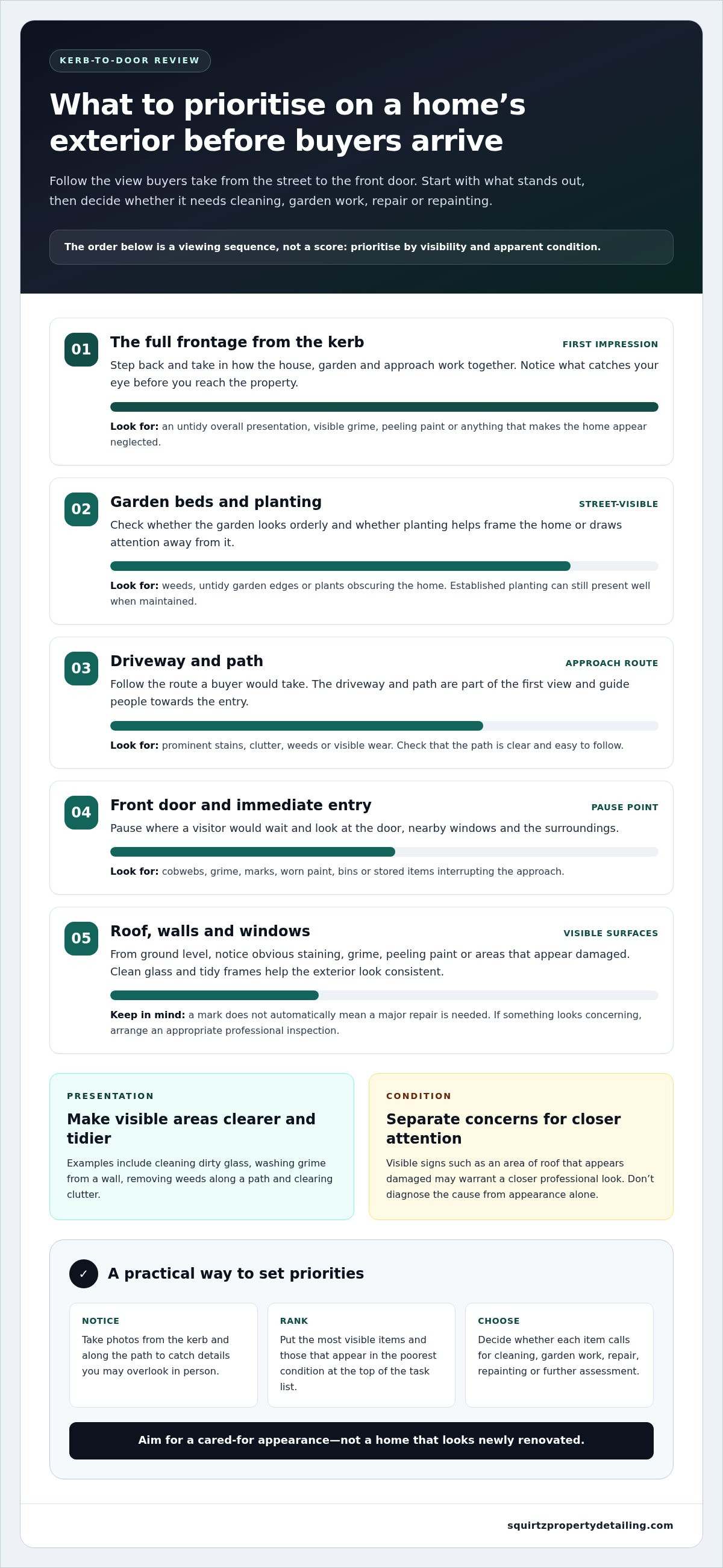
Stand across the road or at the kerb and take in the whole frontage, as a buyer might on arrival. Notice whether garden beds look orderly, plants obscure the home or weeds draw the eye. Check the driveway for prominent stains, clutter or visible wear. Look for peeling paint, grime and other obvious exterior issues. The aim is a cared-for appearance, not a home that looks newly renovated.
Step back far enough to see how these elements work together. A tidy garden may still feel neglected if the driveway is cluttered or the house exterior looks dirty. Equally, established planting and older finishes can present well when they’re clean and maintained. Focus on what stands out from the street, rather than trying to make every feature look brand new.
The approach to the front door
Now follow the likely line of sight from the boundary to the entry. Is the path clear and easy to follow? Do overgrown plants, stored items or bins interrupt the approach? At the door, look for visible cobwebs, grime, marks or worn paint. These small distractions are easy to miss when you see the property every day, but they can make the entrance feel less cared for.
Walk the route at a normal pace, then pause where a visitor would wait. Check the door, nearby windows and immediate surroundings from that position. A clean, uncluttered entry helps keep attention on the home, while dirt or scattered items can make the whole frontage seem less maintained.
For a practical first check, take photos from the kerb and along the path. Reviewing them can reveal details you overlook in person, such as a patchy driveway, an untidy garden edge or cobwebs around the entrance. Rank tasks by how visible they are and the condition they appear to be in. Begin with what buyers are most likely to see, then decide whether cleaning, garden work, repairs or repainting is the appropriate next step. This keeps preparation focused and helps you assess the street-to-entry view before committing to larger upgrades.
Which exterior details signal a well-maintained home?
A maintenance signal is a visible detail that suggests either regular care or an issue that hasn’t been addressed. It might be something simple, such as clean windows, or a noticeable concern, such as peeling paint. These details don’t tell a buyer everything about a property, but they can influence how confidently they assess its condition.
Clean, presentable surfaces make it easier to focus on the home rather than on dirt, stains or clutter. Knowing what buyers notice first about a house exterior can help you separate straightforward presentation tasks from signs that may need closer attention.
Visible upkeep helps buyers focus on the property, not wonder what its exterior details might mean.
Roof, exterior walls and windows
From ground level, look for obvious roof staining, peeling paint, grime on exterior walls or areas that appear damaged. Clean windows and tidy frames also help the exterior look consistent. Avoid trying to diagnose a roof or wall problem from its appearance alone. If something looks concerning, arrange an appropriate professional inspection before deciding what work is needed.
Not every mark calls for a major repair. Surface dirt may respond to cleaning, while flaking paint may need more than a wash. Consider the location and extent of what you can see, and whether it stands out in the overall presentation. This keeps cosmetic touch-ups distinct from issues that deserve further assessment.
Driveways, paths and outdoor areas
Driveways and paths form part of the approach, so check for prominent stains, weeds, clutter and patches that look worn or uneven. The aim isn’t to make every outdoor surface look new. Consider whether it appears cared for and whether people can access the home comfortably.
If the property has a pool, inspect the visible surrounds as well as the nearby outdoor area. Remove loose items and notice whether the space looks orderly and usable. Keep the difference clear between a presentation task, such as clearing clutter, and a condition concern that needs further assessment.
Sort what you find into two categories: presentation and condition. Presentation tasks might include cleaning dirty glass, washing grime from a wall or removing weeds along a path. Condition concerns are visible signs that could warrant a closer professional look, such as an area of the roof that appears damaged. A photograph can help you compare what catches your eye and record where it is, without drawing conclusions about the cause.
Once you’ve identified what needs attention, focus on the work that will make the exterior clearer and more orderly. For visible dirt on walls or windows, house washing and window cleaning can support a more consistent presentation. Addressing the right details helps buyers view the property without avoidable distractions, while an appropriate inspection can clarify concerns that cleaning alone won’t resolve.
Do buyers notice small exterior flaws more than expensive upgrades?
A larger upgrade isn’t automatically the best first task. A major renovation may have less effect on the viewing experience than an obvious, unresolved issue along the entrance route. To decide where to focus, weigh each item by three factors: how visible it is, what condition it appears to be in and how much work it involves.
This gives you a practical way to prioritise what buyers notice first about a house exterior without assuming that every mark needs a renovation. Start with prominent details buyers encounter during an ordinary viewing. Then separate cleaning and tidying from work that may need closer assessment. No single improvement guarantees a higher sale price, so choose tasks for the property’s presentation and condition.
Prioritise by visibility and condition
Use the table below as a starting point. An issue beside the front entry usually deserves attention before a flaw in a low-visibility area, unless its condition suggests it needs prompt assessment. Adjust the order to suit your home and the route buyers are likely to take.
| Priority | Visible issue | Sensible next action |
|---|---|---|
| First | Grime on the frontage, dirty windows or clutter beside the entry | Clean or clear the area, then review how it looks from the street. |
| Next | Peeling paint or a stained surface in a prominent spot | Establish whether it needs cleaning, painting or closer assessment before choosing the work. |
| Assess | A roof area or surface that appears damaged or deteriorated | Arrange an appropriate qualified assessment rather than relying on appearance alone. |
| Later | A minor flaw in an area buyers are unlikely to see | Record it, then consider it after visible and condition-related priorities. |
This is a guide, not a rule that every cosmetic detail outranks every hidden issue. If something looks as though it may involve deterioration, treat it differently from a removable stain or untidy edge. Cleaning can improve presentation, but it can’t establish the cause of a mark or resolve damage.
When cleaning, repair or restoration may be appropriate
Cleaning removes surface dirt and helps an exterior look presentable. Repair responds to damage. Restoration or painting is a broader project, and its suitability depends on the surface and its condition. For example, washing a roof is not the same as roof restoration; refreshing exterior paint differs from repairing a damaged area; and resurfacing a driveway is more involved than removing loose clutter.
Avoid choosing major work just because it sounds more substantial. First identify the visible issue and its scope. A stained wall may need cleaning, while peeling paint may call for painting or further assessment. A driveway that looks worn may need a different response from one that is simply dirty. The appropriate next step depends on what the surface needs, not on a general assumption that an upgrade is better.
For connected exterior tasks, house washing, painting and driveway resurfacing can be considered together as part of a property’s presentation plan. Prioritise what’s prominent, address condition concerns appropriately, then decide whether discretionary cosmetic changes are worthwhile for your home.
How to prepare a house exterior before buyers inspect it
A clear sequence makes pre-sale preparation easier to manage, especially if photography or inspections are approaching. Start by recording what needs attention, then group tasks by urgency and scope. This helps you address visible concerns first and avoid starting larger projects before you know what the property needs.
A practical pre-sale exterior walk-around
Walk the route a buyer is likely to take, from the street through to the entry and any outdoor areas included with the property. Take photos as you go. They’ll help you compare details later and create a clear record when planning the work.
- View the frontage from the street. Note garden presentation, driveway condition and any obvious wear on exterior surfaces. Photograph details that stand out, rather than relying on memory.
- Follow the path to the entry. Check whether access is clear and look at the front door, nearby windows and immediate surroundings. Record clutter or visible dirt to tidy or clean.
- Check the house surfaces and windows. Note grime, staining, peeling paint or areas that appear damaged. A photo can document what you see, but it can’t confirm the cause of a mark or the condition of a surface.
- Include outdoor areas in your circuit. Where the property has a garden, pool or entertaining space, note what needs tidying, cleaning, repair or closer assessment.
- Sort the notes by action and scope. Group tasks under “tidy”, “clean”, “repair” or “assess”. Prioritise prominent issues and concerns that may need an appropriate inspection before deciding on cosmetic work.
- Review the list and plan the order. Consider which tasks can be handled together and what needs to happen first. For example, plan cleaning before judging whether a surface also needs painting.
Match the work to the property’s presentation needs
Choose work to suit the actual condition and the way the property will be viewed. If the garden needs more than a quick tidy, a garden landscaping guide for Sydney sellers can help you think through outdoor presentation. If paint is a prominent concern, review pre-sale house painting in Sydney before deciding what needs attention.
For surface dirt, the professional exterior cleaning guide explains how to approach cleaning as part of property preparation. Sellers across Sydney, including the North Shore, can use this walk-around to build a focused plan rather than treating every exterior job as equally urgent.
Once you’ve grouped the work, plan your exterior property preparation with Squirtz around the needs you’ve identified.
How Squirtz Property Detailing helps sellers present the exterior
Once you’ve identified the parts of the exterior that need attention, match the work to the property. Squirtz Property Detailing provides pre-sale property maintenance and detailing for residential and commercial properties across Sydney, including the North Shore. Its services help sellers address presentation tasks as part of a considered property preparation plan.
This is useful when the first impression involves more than one area. House washing can address dirty exterior surfaces, window cleaning can refresh the glass, and garden landscaping and makeovers can help bring outdoor areas into better order. The right combination depends on what you’ve observed, the condition of the property and the presentation you’re aiming for. No particular service guarantees a sale-price increase.
Coordinate exterior work around the first impression
Think of the frontage and entry as connected parts of the same view. For example, washing the house while leaving visibly dirty windows may leave the overall presentation feeling unfinished. If the garden is also overgrown, garden work may be relevant alongside cleaning. A Sydney seller’s property maintenance guide offers further guidance on organising preparation around the property.
Other services make sense when they respond to an observed need. Roof restoration may be relevant if the roof requires attention; painting may suit prominent paintwork in poor condition; driveway or path resurfacing may be considered where the surface itself needs work. Handyman repairs can address appropriate small repairs. These tasks are distinct from cleaning, so identify the issue before deciding what work is suitable.
Squirtz brings multiple property preparation services together through one business, which can help you consider how the work relates across the home’s visible exterior. That doesn’t mean every property needs every service. A focused plan might involve washing and window cleaning, while another property may need garden work or painting as well. Prioritise based on the details buyers are likely to see and the condition you’ve observed.
Plan the next step for your Sydney property
Before planning work, note your priority areas and intended sale timeline. Record whether the main concern is surface presentation, garden order, paint condition, the roof, or the driveway and paths. This gives you a practical starting point for planning the preparation your property needs, whether it’s a residential home or a commercial property in Sydney, including the North Shore.
For sellers considering what buyers notice first about a house exterior, a coordinated approach can help turn observations into manageable tasks. Squirtz Property Detailing provides pre-sale property maintenance and detailing, with services selected to suit the property and its presentation needs. Explore Squirtz Property Detailing to plan your pre-sale property preparation.
Turn your exterior check into a clear plan
Before your next open inspection or property photos, take one final look at the exterior with fresh eyes. Use your notes and photos to choose a short, realistic set of priorities. Focus on work that addresses visible wear or helps the property feel cared for, and leave optional upgrades until you’ve considered the condition, scope and time available.
A considered plan can make preparation feel more manageable. You don’t need to make every surface look new; the aim is to present the home clearly and avoid preventable distractions. If you’re still deciding what buyers notice first about a house exterior, use the route from the street to the entry as your guide, then match each task to what the property actually needs.
For practical exterior preparation on the Sydney North Shore, explore pre-sale property detailing with Squirtz. Get in touch to plan the services that suit your property and move towards market with a clear, focused preparation plan.
Frequently Asked Questions
What do buyers notice first when they arrive at a house?
Buyers often take in the street view and entry approach before they see the interior. Their attention may move from the overall frontage to details along the way, such as garden edges, the driveway, exterior cleanliness and the front entrance. To assess the arrival experience, view the property from the opposite side of the street, then walk towards the door at a visitor’s pace. This can reveal distractions you might miss during everyday use.
Does kerb appeal really matter when selling a house?
Kerb appeal helps set the tone before buyers enter, although it can’t predict an offer or guarantee a sale result. A neat frontage can make it easier for buyers to focus on the home, while visible neglect may raise questions during their first look. For photography, check the view from the street as well as the angle towards the entrance. A clear, tidy scene can help the property read well in both settings.
Should I clean or renovate my house exterior before selling?
Start by identifying what’s causing the concern: dirt, untidiness, worn finishes or possible damage. A marked exterior wall may need cleaning, while flaking paint or a surface that appears damaged could call for further assessment before you choose the work. Avoid renovating simply because the property is going on the market. Compare the scope of the work with its visibility, and reserve larger projects for issues that warrant them.
Which exterior areas should I check before a house inspection?
Check the full arrival route, including the frontage, garden, driveway, paths, walls, windows and roof areas visible from the ground. If the property has outdoor living areas or a pool, include those spaces too. View them from positions a visitor might use, rather than only from inside the house. Note loose items, dirty surfaces and anything that appears damaged, then decide whether each item needs tidying, cleaning or closer assessment.
Can small exterior improvements make a house more appealing to buyers?
They can help create a more orderly impression, particularly when they remove a distraction from a prominent area. For instance, clearing items from a narrow entrance or trimming back plants that obscure a feature may make the approach feel more considered. The value of a task depends on the property and what needs attention. Treat small improvements as practical presentation work, not as a promise of a higher offer or sale price.
How do I prioritise exterior repairs before listing my house?
Make a short list after walking around the property, then sort each item by visibility, condition and work involved. A task near the entry may be more noticeable than one in a rarely viewed corner, but suspected damage should not be dismissed because it’s less prominent. Separate cleaning and tidying from repairs that need assessment. This helps you choose a sensible order without defaulting to the most expensive project.
What exterior work should I do before selling a house in Sydney?
Choose work based on the property’s condition and the areas buyers will see. For a Sydney North Shore home, that might mean house washing or window cleaning, garden improvements, exterior painting, roof restoration, or driveway and path resurfacing, depending on the need. These are options, not a checklist every seller must complete. Walk the property first, record the most noticeable issues and plan only the work that fits your priorities.
When should I prepare my house exterior before a property inspection?
Begin before listing photography, so you have time to identify the work and organise tasks that depend on one another. The time needed varies with the property and project scope, so avoid leaving larger repairs or restoration until the last moment. Once preparation is complete, do a final walk-through before the first inspection. Check that access is clear and that no new clutter or visible mess has appeared.


