
A tired-looking roof doesn’t always need a full restoration before a property goes on the market. Restoring a roof before listing property can improve its presentation, but the right choice depends on the roof’s condition as well as its appearance. A broad makeover may be unnecessary if cleaning or targeted repairs would address the issue.
Visible wear can catch buyers’ attention in listing photos, but it doesn’t automatically mean the roof needs restoration. Start by distinguishing between surface dirt, specific damage, broader wear and issues that may call for replacement. Each option addresses a different need, and a neat finish shouldn’t be mistaken for fixing an underlying problem.
This guide explains how to consider a roof’s sale-readiness, compare the available work and plan improvements alongside other pre-sale maintenance. Squirtz Property Detailing prepares properties across Sydney, including with roof restoration and painting. A proportionate plan helps you present the home thoughtfully without assuming that more work will produce a better sale outcome.
Key Takeaways
- Choose roof work based on the roof’s condition and the issue you want to address, rather than assuming a full restoration is necessary.
- Understand what restoration can improve and why it may not resolve underlying roof damage.
- Compare cleaning, repairs, restoration and replacement to identify a proportionate option before listing.
- Plan restoring a roof before listing property alongside other pre-sale presentation tasks.
- Squirtz Property Detailing prepares Sydney properties, with roof restoration and painting among its services.
Why restoring a roof before listing property can improve its presentation
Before arranging roof work, identify what the property needs. A tired appearance may need attention, but it doesn’t automatically mean the whole roof needs restoration. For sellers considering restoring a roof before listing property, the aim is to improve presentation in a way that suits the roof’s visible condition and any maintenance concerns, rather than spending on work that may not be necessary.
The roofline is a prominent part of a home’s exterior. From the street, it frames the building alongside the façade, windows, garden and driveway. It can also feature in wide listing photographs, where faded surfaces, uneven colour, visible debris or obvious wear may stand out. These details contribute to an overall impression of upkeep, but they don’t determine how buyers will respond.
Presentation and condition are related, but they aren’t the same. A roof can look worn without its appearance revealing its underlying state. Equally, a fresh-looking surface doesn’t prove there are no maintenance issues. Restoration isn’t a substitute for investigating visible damage or other signs that warrant closer attention. Understanding the parts and functions of a roof can help make the distinction clearer; Understanding Roof Structures provides a general overview of common roof components.
What buyers notice about a roof from the street
Street views show the roof across a broad area, so differences in colour or condition may be more noticeable than they are from beneath the eaves. Debris, patchy-looking sections or apparent wear can interrupt an otherwise tidy exterior, particularly in front-on or angled photographs. This doesn’t mean a buyer will reject the home because of its roof. It does mean the roof contributes to the first impression alongside the rest of the property.
How roof condition fits into a pre-sale decision
Separate visible appearance from known condition. Fading or dirt may be a presentation issue; damage or other signs of deterioration may indicate a condition concern that needs proper assessment. Consider the roof in the context of the home’s overall upkeep. If exterior paint, the garden or paths also need attention, prioritise the work so the finished home feels consistent rather than focusing on one surface alone.
A well-presented roof supports the home’s first impression, but its appearance should be considered alongside its condition. Restoration may be a suitable part of pre-sale preparation when it addresses the roof’s needs. It cannot guarantee a higher offer, a faster sale or a particular market result. The decision is about presenting the property thoughtfully and addressing visible concerns proportionately, not predicting what buyers or the market will do.
What roof restoration involves, and what it does not resolve
Roof restoration is work intended to refresh a roof and improve its condition or appearance without replacing the entire roof. The term describes an overall purpose, not a fixed package of tasks. The appropriate scope depends on the roof’s material, visible condition and required work. A tiled roof and a metal roof may need different considerations, so don’t assume there is one standard scope for every property.
For sellers, this distinction matters. Restoring a roof before listing property may address worn presentation, but the word “restoration” alone doesn’t explain what work will be done or whether the roof’s underlying condition is suitable for it. Understand what each option is intended to address before deciding how much work to include in pre-sale preparation.
Restoration, roof cleaning, and painting: how the terms differ
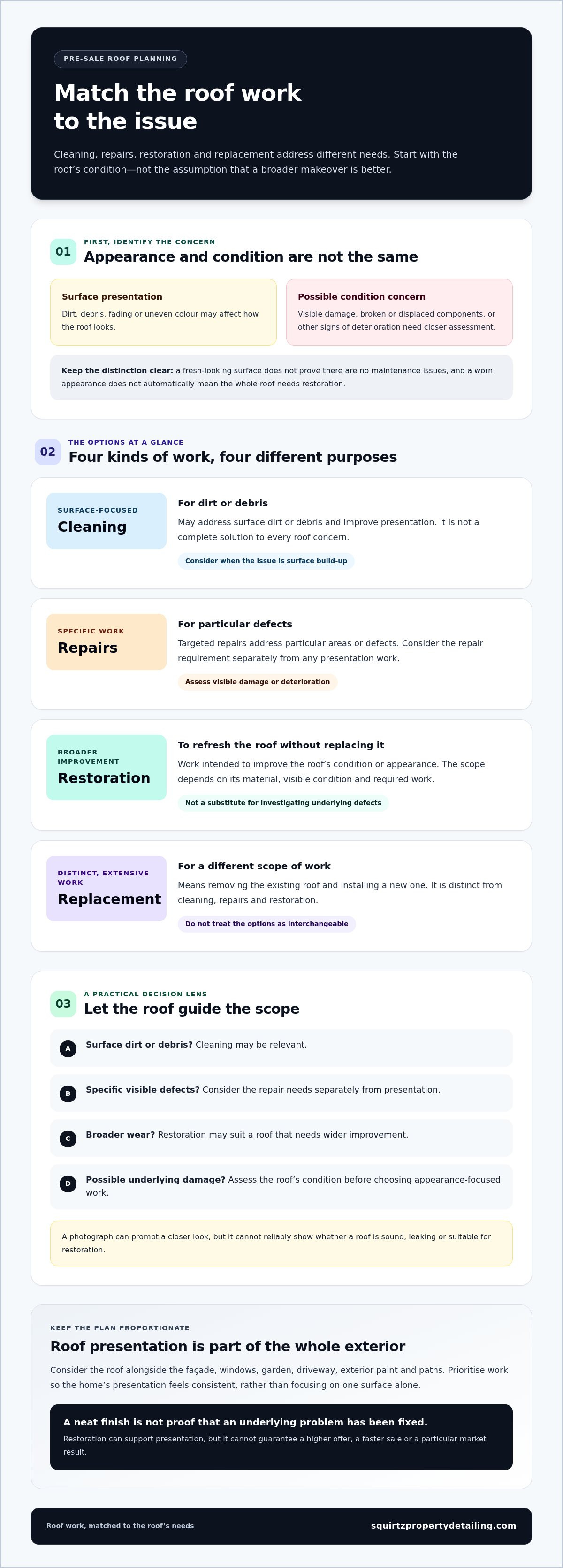
Cleaning is surface-focused upkeep. It may address dirt or debris, but it isn’t a complete solution to every roof concern. Restoration is a broader term for work intended to refresh and improve the roof, while roof painting focuses on its painted finish. These terms can describe different scopes, so the work should reflect the roof’s material and condition rather than an assumed universal specification.
Targeted repairs address particular areas or defects, while replacement means removing the existing roof and installing a new one. These options aren’t interchangeable, and there’s no single sequence that suits every property. A roof with a surface presentation issue may call for a different response from one with visible damage. Begin with the issue to be addressed, not the assumption that a more extensive option is automatically better.
When appearance work is not enough
Visible damage, displaced or broken components, or other signs of possible deterioration are reasons to assess the roof’s condition before choosing appearance-focused work. A cleaner or fresher finish can improve how a roof looks, but it can’t resolve every underlying defect. A photograph also can’t reliably show whether a roof is sound, leaking or suitable for restoration. Treat images as a prompt to look more closely, not as a diagnosis.
Keep the purpose of each option clear as you plan. If the main concern is surface dirt, cleaning may be relevant. If there are specific visible defects, consider the repair requirement separately from presentation. Restoration may suit a roof that needs broader improvement, while replacement is a distinct, more extensive option. The right scope depends on the roof itself, not just the sale date or desired listing photographs.
Redfin’s discussion of the Impact of Roof Replacement on Property Value is a useful reminder to distinguish roof work from assumptions about resale outcomes. Its market context isn’t a direct prediction for a Sydney property, and no restoration or replacement can promise a particular offer or sale result.
For sellers considering roof restoration and painting as part of broader property preparation, Squirtz Property Detailing’s roof services can help address the home’s roof presentation needs.
Roof cleaning, restoration, repairs, or replacement: which suits your sale?
There isn’t one right roof-work option for every seller. Start with the roof’s condition and the issue you’re trying to address, then match the scope to what it needs. Surface dirt, a localised defect and widespread deterioration call for different decisions. If you can see signs that may indicate damage, have the condition assessed before treating the job as a cosmetic refresh.
| Option | May suit | What to keep in mind |
|---|---|---|
| Cleaning | Surface dirt or debris affecting the roof’s appearance. | It addresses surface presentation, not damage or every maintenance concern. |
| Targeted repairs | A specific, localised issue requiring attention. | Repairs address the identified area rather than refreshing the whole roof. |
| Restoration | A roof that needs broader improvement to its condition or appearance. | The suitable scope depends on the roof’s material and assessed condition. |
| Replacement | A roof whose condition or required work calls for a more extensive option. | It shouldn’t be chosen solely to improve listing photographs. |
Use the table as a guide, not a diagnosis. A roof can look dirty from the street and still need a closer look, while a tidy-looking surface doesn’t prove it’s free of defects. Ground-level views and listing photographs can help identify visible concerns, but they can’t reliably establish the roof’s full condition.
When cleaning or targeted repairs may be more proportionate
If surface dirt or debris is the main visible issue and there are no apparent signs of broader deterioration, cleaning may be worth considering as a presentation measure. It won’t repair damage. Where a particular defect is identified, targeted repairs may address that issue without refreshing the entire roof. A view from the ground is only an initial observation, not a reliable assessment of what’s happening across the roof.
When restoration or replacement deserves consideration
Restoration may be appropriate where broader work is needed to improve a roof’s presentation or condition, depending on what an assessment shows. Replacement is more extensive and should reflect the roof’s actual needs, not simply the desire for a newer look in photographs. Match the scope of work to the roof’s actual condition, not to a blanket pre-sale rule. That keeps the decision practical and proportionate.
Research about new roofs and resale, such as this discussion of roof work and potential return on investment, can offer context, but shouldn’t be treated as a prediction for a Sydney property or as evidence that restoration will produce a particular result. A sale price or buyer response depends on more than roof work alone.
For sellers weighing up restoring a roof before listing property, establish whether the concern is surface appearance, a specific repair need or a broader condition issue. This gives you a clearer basis for choosing the work, coordinating it with other pre-sale tasks and avoiding unnecessary scope.
When to restore a roof before listing on Sydney's North Shore
Plan roof work as part of sale preparation, not as a last-minute response to a photograph. On Sydney’s North Shore, nearby trees, shade, sun exposure and visible debris can affect how a roof looks from one property to the next. Consider the specific home and its surroundings, then leave time to decide the scope, arrange the work and complete any follow-up presentation before photography or inspections.
Sequence roof work around listing photographs and inspections
Use this planning sequence to keep decisions and presentation tasks in order:
- Set your intended sale timeline. Decide when you hope to have the property ready for photographs and inspections. Build a practical buffer into the plan rather than assuming roof work can fit at short notice.
- Review the roof and its setting. Note visible wear, debris, tree cover and areas that receive more or less sun. These observations help identify questions for an assessment, but don’t establish the roof’s condition by themselves.
- Determine the work required. Use the roof’s material and assessed condition to decide whether cleaning, targeted repairs, restoration or another option is proportionate. Agree on the scope before coordinating the rest of the exterior work.
- Schedule the roof work ahead of photography. Where practical, complete it before final exterior photographs. Leave room afterwards for related cleaning or other presentation tasks, so the finished exterior can be prepared as a whole.
- Review the result before listing. Check the roof’s visible presentation as part of the broader exterior and keep relevant inspection findings in mind. Those findings can inform decisions, but they can’t guarantee a particular buyer response or sale outcome.
Allow space in your plan for scope decisions, scheduling and follow-up work. No fixed lead time suits every property or project, so avoid setting photography dates on the assumption that roof work will be completed by a particular day.
Coordinate the roof with the rest of the property's presentation
Roof work may affect when you plan other exterior tasks. For instance, you may want to coordinate it with house washing or window cleaning so the roof and the rest of the home’s exterior feel consistently presented. Squirtz’s guide, Professional Exterior Cleaning: The Strategic Guide to Property Detailing in Sydney, and Property Maintenance for Sale: The Sydney Seller's Guide to Maximising Market Value offer related perspectives on preparing the exterior and planning broader maintenance.
If roof restoration and painting form part of your pre-sale plan, plan your roof presentation project with Squirtz Property Detailing, a Sydney property preparation business.
Plan pre-sale roof restoration with Squirtz Property Detailing
Roof work can be one part of getting a home ready for sale, but it should fit the property rather than dictate the whole preparation plan. Squirtz Property Detailing provides property detailing and pre-sale preparation in Sydney, including roof restoration and painting alongside other property maintenance and detailing work.
For sellers considering restoring a roof before listing property, connect the scope of work to the roof’s condition and the home’s presentation priorities. A roof with a particular appearance concern may need a different response from one with visible signs of deterioration. Treat restoration as a considered maintenance and presentation decision, not an investment with a guaranteed return.
Make roof work part of a considered sale-preparation plan
Consider how the roof will sit within the finished exterior. If it’s being refreshed, you may also be planning house washing, window cleaning or external painting. Coordinating these tasks can help organise the work and make it easier to review the property as a whole before listing photographs. The right combination depends on what the home needs; not every property requires every type of exterior work.
For broader planning, the guide Pre-Sale Property Detailing Buying Guide: Maximising Your Sydney Sale Price in 2026 considers property preparation in a wider context. Where the exterior finish is also a priority, Pre-Sale House Painting in Sydney: Maximising Your Property’s Market Value is a relevant companion topic. Keep the roof’s condition at the centre of the decision, then coordinate other tasks around the scope you choose.
A practical plan can be as simple as keeping three points in view:
- Condition: Base the roof-work decision on its material and assessed condition, not appearance alone.
- Scope: Choose work that addresses the identified need without assuming more extensive work is automatically better.
- Presentation: Allow for related exterior tasks and a final review before photographs or inspections.
Take the next step with a local property detailing team
The decision follows a clear order: assess the roof’s condition, select proportionate work, then coordinate the finished presentation with the rest of the property. That approach helps you plan deliberately, while recognising that no roof work can promise a particular sale price, offer or market result.
To prepare your property for sale, talk with Squirtz Property Detailing about roof restoration and painting as part of your pre-sale plan.
Set your roof plans in motion with confidence
Before committing to roof work, decide what you want the property’s exterior to communicate and how the roof fits that picture. This gives you a practical basis for restoring a roof before listing property, rather than treating a pre-sale project as an automatic upgrade. Ground the decision in the home’s needs and leave room to adjust your plan if an assessment brings new information to light.
A considered approach also keeps presentation priorities in perspective. Roof work can contribute to a well-prepared property, but it can’t control buyer preferences or guarantee a particular sale result. Focus on making a sound, proportionate decision that you’re comfortable presenting to prospective buyers.
When you’re ready to include the roof in your sale preparation, talk with Squirtz Property Detailing about pre-sale roof restoration. A clear next step can make preparation more manageable as you move towards listing.
Frequently Asked Questions
Does restoring a roof guarantee a higher sale price?
No. Restoration may improve the roof’s appearance and support a well-maintained presentation, but it can’t guarantee a higher offer or a particular sale result. The outcome also depends on the property, its condition, buyer demand and other factors. For sellers, the practical test is whether the work addresses a real maintenance or presentation priority. Treat any potential return as uncertain, and avoid budgeting on the assumption that roof work will be recovered in the sale price.
Can roof restoration fix an active leak?
Not automatically. If a leak is active, the cause needs to inform the work, because improving the roof’s surface appearance may not resolve water entry. Note where you’ve seen signs such as a ceiling mark and whether the issue changes after rain. Those observations can help describe the concern, but they don’t identify its source. Include the leak in the work scope rather than assuming restoration alone will fix it.
Will a restored roof pass a building inspection?
No. Roof restoration can’t guarantee a particular building inspection result. An inspection considers the property’s condition, and cosmetic work won’t remove every possible defect. If a report identifies an issue, use its specific observations to guide the next decision rather than treating a refreshed finish as proof that the concern has been resolved. Keep records describing the work completed, but don’t present them as a guarantee of an inspection outcome.
Can any roof material be restored before selling?
Not necessarily in the same way. The suitable work depends on the roof material and its condition, so identify what the home has before settling on a scope. Tiled and metal roofs have different characteristics, and a method suited to one shouldn’t automatically be assumed suitable for the other. For a Sydney North Shore property, base the decision on the actual roof and its needs, not a general claim that every material can be treated alike.
Does roof restoration make a roof waterproof?
No. Don’t assume restoration makes a roof waterproof or prevents every future leak. The work has a defined purpose and scope, and a surface improvement may not address an underlying water-entry problem. If you’re preparing the home for sale, describe the work accurately and keep any known concerns separate from claims about the finish. This helps avoid implying that restoration provides protection or resolves defects beyond the work actually completed.
Should I restore the roof before listing photos are taken?
If roof work is part of your plan, aim to complete it before final exterior photographs where practical, so the images reflect the presentation you intend buyers to see. Allow space for decisions, scheduling and follow-up detailing rather than booking photography around an assumed completion date. For a North Shore home, consider how trees, shade and debris affect its exterior setting as you organise the remaining presentation tasks.


