
A quick dab of paint can draw more attention than the scuff it was meant to hide. Before an open home, it’s natural to want every mark gone, but a mismatch in colour or sheen can make a patch more noticeable than the original wear. The key to interior painting touch-ups for open homes is to focus on what buyers are most likely to see and choose a repair that suits the condition of the wall.
Use this checklist to prioritise visible marks, identify damage that needs more than a simple touch-up and prepare each room for inspection. You’ll also learn when a small repair is likely to work, when repainting one wall may create a more consistent finish, and when broader interior painting is worth considering.
Start with the entry, main living areas and other high-traffic spots where scuffs, chips and wall damage can catch the eye. Then consider the colour and sheen, the surface condition and whether a repair should come before painting. For Sydney North Shore sellers, a measured approach helps rooms look tidy and well maintained without trying to cover every minor mark.
Key Takeaways
- Prioritise interior painting touch-ups for open homes by visibility, surface condition and the likelihood that a repair will blend in.
- Match the paint’s colour and sheen, and prepare the surface carefully to reduce the chance of a patch standing out.
- Decide whether isolated marks need a touch-up, several flaws call for repainting one wall, or widespread unevenness points to a full-room repaint.
- Work through rooms in order, then review the finish in the open-home setting. Keep painting separate from cleaning, decluttering and unrelated repairs.
- Squirtz Property Detailing provides internal painting and handyman repairs as part of pre-sale preparation for Sydney properties.
Interior painting touch-ups for open homes: what buyers notice first
Before arranging painting, decide which flaws are visible enough to distract from the room and which are minor signs of everyday use. An open home doesn’t require every room to look newly painted. A practical inspection helps North Shore sellers focus on the areas that matter most to the property’s presentation.
Prioritise flaws visible from normal viewing positions. Check sightlines from the front door, room entrances and main walkways before deciding what to touch up. A mark on a wall visitors face as they enter may deserve attention before a small blemish behind furniture.
Which interior marks are most noticeable during an open home?
Scuffs near doorways, small chips on corners, scratches along busy hallways and uneven-looking paint patches can catch the eye because they sit on common routes through a home. Give entryways, living spaces and walls beside doors a close look. These are areas visitors naturally pass or pause in, rather than corners they may never see.
Lighting affects what stands out. Daylight from a window or bright overhead lights can reveal differences in colour, sheen or texture that are less obvious in softer conditions. A patch may look acceptable straight on but stand out from the side. Check key walls from more than one normal viewing position, not just at close range.
What should sellers inspect before deciding on paint work?
Walk through each room as a visitor would. Start at the doorway, then look at the main walls from the distance where someone would naturally stand. Note each flaw’s location and whether it appears isolated or repeated across one wall. This helps distinguish a single scuff from a broader pattern that could make a surface look tired.
- Record scuffs, scratches, small chips and patches that look different from the surrounding paint.
- Mark whether each flaw is on a prominent sightline, such as an entry wall, doorway or living-room feature wall.
- Look for repeated marks or unevenness across a wider area, rather than treating every mark as a separate touch-up.
Then assess the surface itself. A light scuff may need careful cleaning or a small paint repair, while a chip or dent may need filling and sanding before paint is applied. Peeling, cracked or damaged areas need attention to the underlying surface. Painting straight over them can leave the defect visible. If damage is extensive, plan any necessary repair alongside the painting.
Use your notes to set priorities, not to predict a sale result. A visible flaw doesn’t guarantee a lower offer, and not every minor mark needs work. The aim is a tidy, consistent presentation: address obvious distractions first, then decide whether each surface needs a touch-up, preparation and repair, or more extensive painting.
How to make an interior paint touch-up blend in
A tidy touch-up depends on more than applying paint neatly. The colour, sheen, condition of the wall and application method all affect how the repair looks against the surrounding surface. For interior painting touch-ups for open homes, follow a clear sequence and judge the result in the room, not just up close.
How do colour and sheen affect a paint touch-up?
A close colour match doesn’t guarantee that a repair will disappear. Sheen describes how much light a painted surface reflects. Two paints in a similar colour can look different if one appears flatter or shinier. Existing paint may also have changed with wear, cleaning or exposure to light, so paint kept from an earlier job may no longer look identical on the wall.
A patch can be neatly applied and still stand out if its colour, sheen or surface texture differs from the paint around it. Before committing to a larger repair, compare the available paint with the wall in its usual lighting. Check it from a normal viewing distance and from the angles visitors are likely to see.
What preparation helps a small repair look tidy?
First identify the finish and check the surface condition. Remove loose or uneven material where appropriate, then prepare the affected area so paint isn’t applied over dust, residue or a rough edge. If the mark includes a chip or indentation, it may need filling and sanding before painting. A simple scuff on an otherwise sound surface calls for a different approach.
Keep the repair controlled. Avoid spreading paint beyond the damaged area, as a broad, irregular patch can be more conspicuous than the original flaw. Apply it carefully and avoid leaving a raised edge or visible build-up. If the surface is damaged beyond a small, localised area, consider whether a wider repair or repaint will give a more consistent appearance.
Use this order to assess and complete a touch-up:
- Identify the finish. Check the colour and sheen of the existing wall, and consider whether the paint may have changed over time.
- Prepare the surface. Clean the area as suitable for the surface and remove loose or uneven material where needed. Address chips or dents before applying paint.
- Apply carefully. Keep the paint within the repair area and aim for an even finish that follows the surrounding surface.
- Review the result. Once the paint has dried according to its directions, check it under the room’s usual lighting and from normal viewing positions.
If the patch catches the eye, don’t keep adding paint without reassessing. The mismatch may come from the finish, the condition of the surrounding wall or the size of the repair. A larger painted area may give a more consistent appearance. Sellers weighing targeted repairs against broader internal painting can consider pre-sale painting preparation as part of the property’s overall presentation.
Touch-up, repaint one wall or repaint the room?
The right scope depends on the number of marks and how consistent the surrounding paint looks. A small repair can be sensible on a wall in good condition, but if the colour or sheen differs, the patch may draw more attention than the original mark. Use the comparison below to weigh each option against the surface condition and the result you want.
| Option | Visual purpose | Likely limitation | What to assess |
|---|---|---|---|
| Local touch-up | Address an isolated chip, scuff or scratch without repainting the whole surface. | A small patch can stand out if the surrounding paint has changed or the finish doesn’t match. | Is the mark minor and isolated? Does the rest of the wall look consistent? |
| Repaint one wall | Create a more uniform appearance where several marks or visible patches sit together. | The refreshed wall may look different from adjoining walls if their paint has aged or varies in finish. | Are flaws spread across the wall, or is there a noticeable colour difference in one area? |
| Repaint the room | Bring walls across the room to a more consistent finish when unevenness is widespread. | It involves a broader scope than a targeted repair and may be unnecessary if most surfaces are sound. | Do multiple walls look worn or uneven, or is the issue confined to one surface? |
Think of the choices as a progression, not a rule that every visible flaw requires a full repaint. For sellers planning interior painting touch-ups for open homes, compare the repair with the wall around it and the room as a whole. A touch-up is most useful when it addresses a local distraction without creating a new, more obvious contrast.
When is a local paint touch-up a sensible option?
A local repair can suit an isolated, minor mark on an otherwise consistent-looking surface. For example, one small chip beside a doorway may not justify repainting the entire wall if the surrounding colour and sheen still look even. The condition of the existing paint matters: wear, previous cleaning or earlier repairs can make a fresh patch more noticeable, even when the mark itself is small.
Don’t treat paint alone as a fix for cracks, moisture issues or widespread damage. Those conditions may need further investigation or repair before painting is considered.
When should sellers consider repainting a full wall?
Several visible marks clustered across one wall, or obvious differences between old patches and surrounding paint, may make a broader repaint worth considering. Repainting one wall can address that surface without automatically extending the work to the whole room. Check whether the other walls remain consistent and presentable. If unevenness is widespread, assess the room as a whole instead.
For broader decisions about the scope of pre-sale work, the guide to pre-sale house painting in Sydney can help put targeted repairs in context.
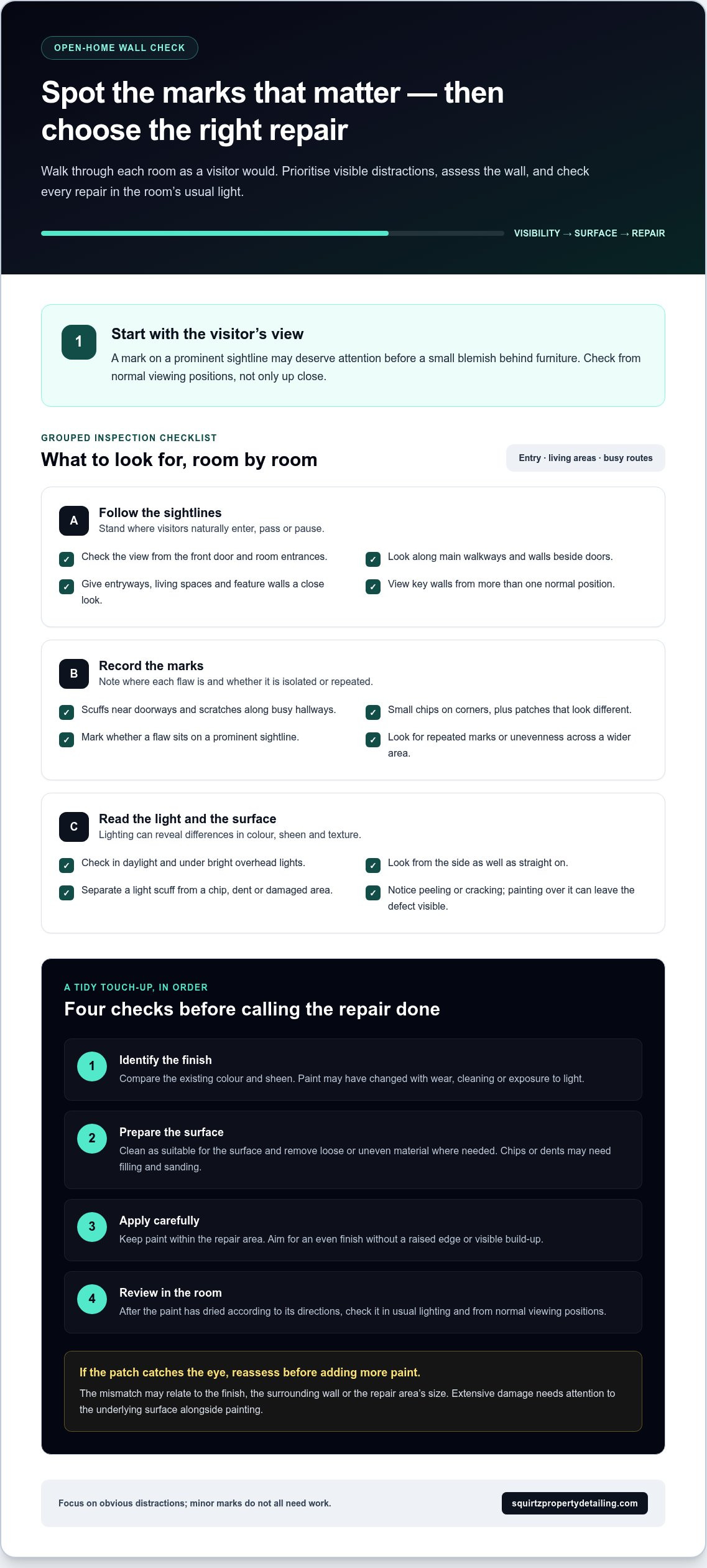
Open-home interior painting checklist: prepare rooms in order
A useful open-home plan starts with an inspection, not a tin of paint. Work through the rooms in the order visitors are likely to encounter them, note what each surface needs, then keep painting tasks separate from cleaning, decluttering and unrelated repairs. This makes it easier to set a clear scope and avoid rushing into touch-ups that may not improve the overall presentation.
A room-by-room inspection checklist for Sydney sellers
Walk through the property as a visitor would, starting at the entry and continuing through living areas, hallways and bedrooms. Record each visible paint issue, where it is and whether it’s isolated or spread across a wider area. Include doors and trim when worn paint is noticeable in the room, rather than adding every small maintenance job to the painting list.
- Entryways: Check walls beside the front door and along the first passage into the home.
- Living areas: Note marks on prominent walls and surfaces visible from the main entrance.
- Hallways: Look for repeated scuffs along narrow or frequently used routes.
- Bedrooms: Review the walls from the doorway and from the room’s usual viewing positions.
- Doors and trim: Include paint wear only where it affects the room’s overall appearance.
For each item, write down the surface, type of mark and whether the issue extends beyond one spot. This gives you a practical work list: paint touch-ups in one group, cleaning and decluttering in another, and repairs requiring separate attention in a third. If a wall is damaged as well as marked, note the repair needed before paint is applied.
How to review the finish before the open home
Once the paint work is complete, check each repaired area under the room’s normal lighting. Stand at the doorway first, then view it from places a visitor might naturally pause. Look for obvious differences in colour, sheen or texture. A small repair may still be visible, so assess whether it looks tidy in context rather than expecting it to disappear completely.
Keep the final review distinct from the rest of the pre-inspection clean. Dust, clutter and unrelated maintenance can affect how a room feels, but they aren’t paint defects. Make a separate list for those tasks, then check that no new scuffs or marks appeared during the remaining preparation. Allow time to complete and review painting and any surface repairs before the inspection.
For interior painting touch-ups for open homes, a room-by-room record helps focus effort on visible areas and keeps the scope manageable. Broader presentation decisions can sit alongside the Sydney property maintenance seller’s guide. Squirtz Property Detailing provides internal painting as part of pre-sale preparation for Sydney properties.
How Squirtz Property Detailing helps with pre-sale interior painting
Squirtz Property Detailing is a Sydney property detailing business established in 1993. Its Internal & External Painting service forms part of broader Pre-Sale Preparation, helping sellers consider paint presentation alongside other property maintenance priorities. For an open home, that can mean focusing first on visible wall marks while also identifying damage that needs repair before painting.
How interior painting fits into wider pre-sale preparation
Start with a practical list of what visitors are likely to notice: marked walls, chipped paint and areas where the finish looks uneven. If a wall has a dent or other visible damage as well as paint wear, it may need repair before the surface is painted. Squirtz’s Skilled Handymen install, fix and repair most things around the home, with licensed tradesmen available when required.
Connecting the work can help sellers plan relevant maintenance without treating every item as a painting job. A touch-up may be enough for an isolated mark on a sound surface; broader painting may suit a wall or room where the finish is consistently worn. For other property issues that affect presentation, pre-sale handyman services in Sydney can be considered alongside the paint work.
Squirtz approaches interior painting touch-ups for open homes as one part of preparing a property for inspection. Sellers considering a wider repaint can explore the guide to pre-sale house painting in Sydney to assess the broader scope.
Plan the next step for your open-home checklist
Before arranging work, record the rooms that need attention and note the visible paint concerns in each one. Identify which areas are a priority for presentation, where the paint is uneven across a wider surface, and whether any damage needs repair first. This gives you a clear starting point for deciding what belongs in the painting scope and what should be handled separately.
Squirtz’s Pre-Sale Preparation brings relevant property detailing services together, including painting and repairs related to the home’s visible condition. Based on Sydney’s North Shore, the business focuses on the work needed to present a property well.
To discuss interior painting and other pre-sale preparation for your Sydney property, contact Squirtz Property Detailing.
Set a clear plan for your next open home
Use your inspection notes to turn paint concerns into a focused plan: decide which rooms need attention first, what can be left as normal wear and where a repair should come before painting. This helps keep interior painting touch-ups for open homes practical and proportionate, rather than expanding the job without a clear reason.
If visible wall damage sits alongside paint work, include both in the same pre-sale plan. Squirtz Property Detailing’s internal painting and property preparation services help bring those priorities together, with handyman repairs for damage that needs attention before painting.
Take the next step with a room-by-room list and a clear idea of what you want buyers to notice: well-presented spaces, not distracting marks. Talk to Squirtz Property Detailing about preparing your Sydney property for sale.
Frequently Asked Questions
Should I touch up paint before an open home?
Yes, if a paint flaw is likely to distract visitors or makes a room look poorly maintained. Focus on visible damage rather than trying to erase every sign of normal use. View the room as a buyer might, then decide whether the mark is prominent enough to address. Avoid rushing a repair just before an inspection if there isn’t time to review the finish properly.
How do I make a paint touch-up blend with the existing wall?
Use paint that matches the wall’s colour and finish as closely as possible, and compare the repair from different positions in the room. If you have leftover paint from the original job, its label or container may help identify the colour and finish. Paint can change in appearance over time, so assess the result against the actual wall rather than relying on the label alone.
Can I touch up a wall without repainting the whole room?
Yes. A small, isolated mark on a wall that otherwise looks consistent may only need a local repair, and one wall can be addressed without repainting every wall in the room. Consider how visible the repaired area is from the doorway and whether the surrounding paint looks even. If the result creates a noticeable contrast, reassess the scope instead of automatically extending the work to the whole room.
When should I repaint an entire wall instead of touching up a mark?
Consider repainting the full wall when marks are scattered across it, previous patches are visible in several places or the paint looks uneven over a broad area. A wall with clear boundaries, such as a corner or doorway, can be assessed separately from the rest of the room. Check adjacent walls too, so the refreshed surface doesn’t look out of place beside them.
Why can a paint touch-up look different from the surrounding wall?
A repair may stand out because the existing paint has aged, been cleaned or received different light over time. The repaired surface can also have a different texture if the underlying wall is rough, damaged or more absorbent in that spot. Even careful application may leave a visible difference. Compare the area in the room’s usual light before deciding whether a wider repaint would look more consistent.
Which rooms should I check for paint marks before an open home?
Start with the entry, hallways and living areas, then check bedrooms and any stairwell or dining space visitors will see. Give extra attention to corners, door frames and walls along busy routes, where bags, furniture or daily movement can leave marks. In kitchens, inspect visible walls near dining areas, but keep the focus on paint wear rather than general cleaning or unrelated maintenance.
Can interior painting be included in pre-sale property preparation in Sydney?
Yes. Squirtz Property Detailing includes Internal & External Painting within its broader Pre-Sale Preparation services for Sydney properties. Sellers can plan painting alongside relevant repairs, such as fixing a dented wall or worn trim before the surface is painted. Skilled Handymen install, fix and repair most things around the home, with licensed tradesmen available when required. This helps bring related presentation work together in one preparation plan.


