
A full renovation isn’t always the smartest pre-sale move. Pre-sale maintenance for investment properties on the North Shore is often most useful when it targets visible wear, deferred repairs and presentation rather than a broad overhaul. Fresh paint, modern lighting and garden improvements are practical areas to consider, alongside cleaning and minor repairs.
Be selective: the aim is to prepare the property for prospective buyers without spending on work that won’t improve its presentation. The property’s condition, layout and outdoor areas help determine which tasks to prioritise.
This guide explains which upgrades may be worthwhile, how cleaning, staging and repairs fit into the preparation, and how to plan maintenance and inspections. You’ll also learn what to consider when organising the work and how to request a free quote, so you can set a clear scope before getting started.
Key Takeaways
- Prioritise small, visible improvements such as fresh paint, modern lighting and tidy gardens to strengthen the property’s presentation.
- Assess paintwork and flooring alongside kitchen and bathroom condition, then focus on updates that address obvious wear.
- Plan cleaning, staging and minor repairs together so the property feels cared for and is ready for buyer inspections.
- Use a maintenance schedule to keep on top of roofs, gutters, drains and other recurring issues before sale preparation begins.
- Define the work needed and request a free quote to understand the scope before deciding which property improvements to proceed with.
Minor upgrades to improve property appeal
Focus on visible wear and presentation issues rather than a full overhaul. For North Shore investors, a room-by-room inspection helps identify what buyers are likely to notice first.
Landscaping and street appeal
Start at the street and view the rental property as a buyer would. Clear the front path, remove weeds, trim overgrown plants and tidy garden edges. Check the entry, fence and driveway for signs of wear or damage. On Sydney’s North Shore, a neat garden and unobstructed entrance help the property make a well-kept first impression.
Keep landscaping practical and in proportion to the block. Restore defined garden beds and replace dead plants rather than adding features that need ongoing attention. Check that outdoor areas are clear and usable, and remove leaf litter from paths. These steps improve first impressions while working with the property’s existing layout.
Repairs and cosmetic improvements
Prioritise defects buyers can see or that may point to a larger maintenance issue, such as peeling paint, loose handles, cracked tiles and damaged gates. Fresh paint, modern lighting and garden improvements are also worth considering. Choose work that presents rooms and outdoor areas as clean, functional spaces rather than following a passing style.
Which repairs and cosmetic improvements add the most value before sale? Start with visible defects, then consider fresh paint, modern lighting and garden improvements that suit the property. These changes may improve appeal, but their usefulness depends on the home’s condition and presentation.
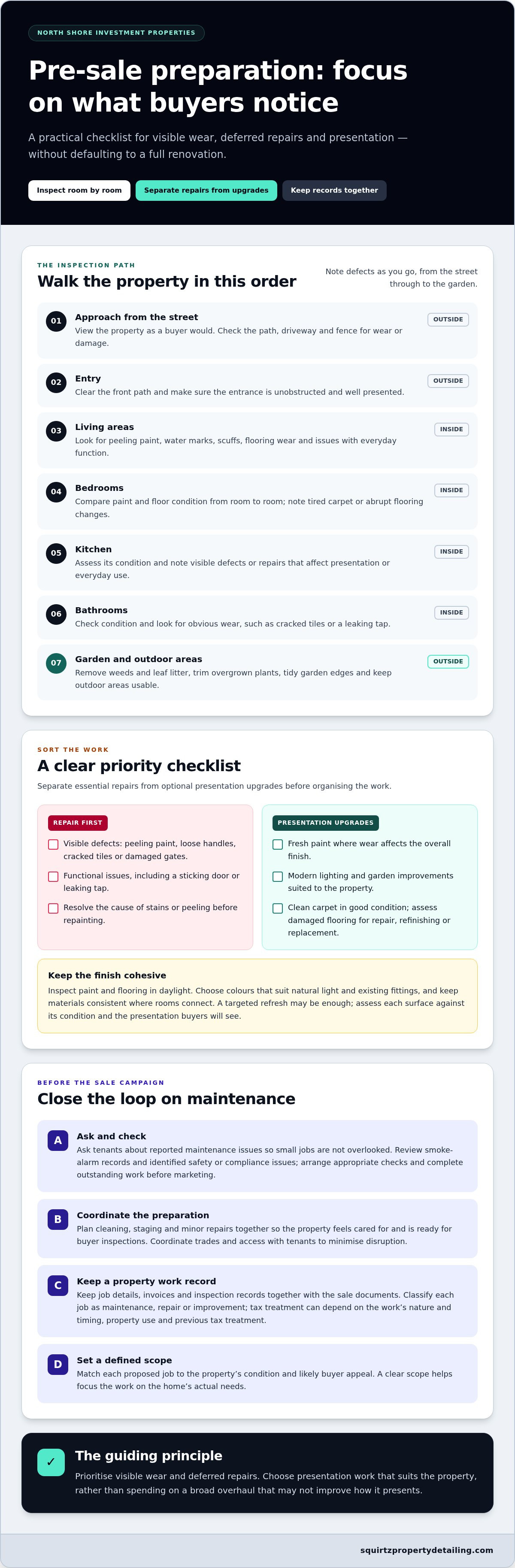
Use a simple inspection sequence: approach, entry, living areas, bedrooms, kitchen, bathrooms and garden. Record each defect and separate essential repairs from presentation upgrades. This helps prioritise work that affects first impressions or everyday function, such as a sticking door or leaking tap. Ask tenants about reported maintenance issues so small jobs aren’t overlooked before the sale campaign.
Which safety and compliance issues should be reviewed before selling a rental property? Review the property’s smoke-alarm records and any identified safety or compliance issues, then arrange appropriate checks and complete outstanding work before marketing. Keep inspection and repair records with the property’s sale documents.
How do maintenance costs affect capital gains tax and deductible expenses when selling an investment property in Australia? Keep invoices and classify each job as maintenance, repair or an improvement. How expenses are treated for tax purposes can depend on the work’s nature and timing, how the property is used and previous tax treatment. Preserve records for your tax return.
- Inspect: Note visible defects from the street through to the garden.
- Sort: Separate repairs from optional presentation upgrades.
- Record: Keep job details, invoices and inspection records together.
A focused plan directs effort towards the property’s clearest needs. Reassess each proposed upgrade against the rental property’s condition and likely appeal to buyers.
Painting and flooring updates
Paint and flooring influence how buyers read the condition of a rental property. For a North Shore sale, inspect both in daylight and note where wear is most visible. Prioritise cosmetic improvements alongside kitchen and bathroom updates, then focus the scope on defects that affect presentation or everyday use.
Paintwork that presents well
Walk through each room and look for scuffs, peeling edges, water marks and uneven touch-ups. A fresh, consistent finish can make rooms feel cared for, while mismatched colours may draw attention to repairs. Choose colours that suit the home’s natural light and existing fittings rather than using a dramatic shade in one room.
Before painting, address the cause of any staining or peeling. Repainting a water-marked ceiling without resolving the underlying issue, for example, can leave the defect visible again. Prepare walls, trims and doors carefully, and include exterior surfaces where fading or flaking affects street presentation. A clear scope keeps paintwork aligned with the property’s condition and sale plans.
Flooring and carpet care
Check floors from room to room for worn carpet, lifted edges, scratches, stains and loose boards. A thorough clean may improve carpet that is otherwise in good condition, while flattened or visibly damaged areas can detract from a tidy room. For timber or hard flooring, remove surface dirt first, then inspect for damage before deciding whether repair, refinishing or replacement is appropriate.
Keep materials consistent where rooms connect. A flooring change at a doorway can look deliberate when it follows the layout, but abrupt changes may interrupt the visual flow. In a strata property, review building rules before planning work that could affect shared areas or require access through common property. Coordinate trades and access with tenants to minimise disruption.
A competitive sale presentation doesn’t require replacing every surface. Compare each room’s condition and wear with the finish buyers will see during inspections. If only one bedroom has tired carpet, assess whether cleaning or a targeted update could bring it into line with adjacent rooms. If several surfaces show similar wear, a broader refresh may create a more cohesive result.
- Inspect: Note paint defects and floor condition in every room.
- Prepare: Resolve the source of stains before repainting.
- Prioritise: Choose repairs or updates that create a consistent finish.
For a planned paint refresh, internal and external painting can form part of the property’s pre-sale scope. Set the work around the surfaces that most affect presentation, rather than assuming every wall or floor needs replacing. A well-considered finish supports the property’s overall appeal without treating renovation spend as a direct measure of future rental income.
Pre-sale cleaning, staging and minor repairs
Cleaning, simple styling and small repairs help buyers see a property’s condition clearly. Start with areas visible during an inspection: the entry, living spaces, kitchen, bathrooms and outdoor entertaining areas. Clear benchtops, open curtains and arrange furniture to show how each room functions. These practical steps improve presentation without turning preparation into a major renovation.
Clean methodically from top to bottom. Dust ceiling fans and light fittings before wiping shelves, skirting boards and window sills. In the kitchen, clear benches and clean cupboard fronts; in bathrooms, remove soap residue and polish mirrors and tapware. Clean windows to let in natural light, then check floors and corners for missed dirt. A consistent finish helps the property feel ready for buyers to inspect.
Pressure cleaning can remove grime from hard surfaces such as paths, driveways and patios. The maintenance guidance recommends pressure cleaning hard surfaces every six months. Before sale, check these areas for slippery growth, stains and built-up dirt, then plan cleaning around the materials and their condition. House washing can also refresh exterior surfaces where dust or weathering dulls the home’s appearance.
Give roof and gutter care attention before interior cleaning. Regular roof maintenance and gutter cleaning can help prevent water ingress and potential interior damage. Check for visible debris, blocked downpipes and signs of overflow, and arrange appropriate maintenance. On leafy North Shore streets, include tree pruning and quarterly gutter cleaning in the property’s upkeep plan. Clear gutters also reduce the chance of leaves spilling onto paths and freshly cleaned areas.
Complete minor repairs before the final clean. Tighten loose handles, replace failed light bulbs, repair sticking doors and address small wall marks. Left until inspection day, these details can distract buyers. If tenants still occupy the property, coordinate access and explain which areas need attention. A clean, orderly home can also help attract tenants between sale decisions while improving its appeal to prospective buyers.
- Before cleaning: Remove clutter and list visible repairs.
- Outside: Assess paths, gutters, downpipes and overhanging branches.
- At the end: Recheck windows, floors and entry areas after work is complete.
Keep the sequence practical: finish repairs first, clean surfaces next, then arrange simple staging. For exterior grime, professional house washing can be included in the property’s preparation plan. This approach keeps cleaning and presentation work organised, so the home is ready for buyer inspections without unnecessary disruption.
Maintenance schedules and inspections
A written schedule helps North Shore investors organise routine checks before sale preparation begins. Record the inspection date, issue found, action required and completion details for each property. This creates a practical history for an apartment or freestanding home and helps owners spot recurring faults before they affect presentation.
Plan rental property inspections at least annually. Checks between tenancies or bi-annual inspections are also suggested. Use each visit to review ceilings, walls, windows, plumbing fixtures, electrical items and outdoor areas. Compare observations with previous records: a recurring damp mark, sticking window or cracked seal may need more than a cosmetic touch-up.
What maintenance issues do North Shore buyers and building inspectors commonly identify? Roofs, gutters and paint are recurring maintenance priorities in Turramurra and Wahroonga. Plumbing disruption from tree roots, blocked drains in leafy areas and electrical repairs are also practical items to include in an inspection.
Schedule recurring work rather than waiting for a sales campaign. Plan quarterly gutter cleaning and tree pruning, particularly where branches drop leaves near rooflines. Arrange annual roof inspections and service electrical appliances included in the lease annually. These intervals help maintain a record of completed work and identify issues before they become more involved.
Pay close attention to Upper North Shore plumbing. Tree roots can disrupt pipes, and abundant trees can contribute to blocked drains and potential flooding into the home. During an inspection, note slow drainage, unusual odours or water collecting near external grates. Record the location and date, then track the follow-up so the same concern isn’t missed at the next visit.
Match the inspection routine to the property. An apartment may need attention to internal fittings and relevant strata maintenance records, while a house near bushy streets may need closer checks of roof drainage and garden growth. Properties nearer the coast can also be checked for visible wear to exterior paint and metal fittings. Set priorities based on observed condition, not assumptions about a suburb.
- Log: Record each inspection, issue and completed repair.
- Schedule: Keep quarterly gutter cleaning and tree pruning in the calendar.
- Review: Revisit unresolved plumbing, roof and paint concerns before sale preparation.
For an upcoming sale, review the maintenance log before arranging presentation work. This helps distinguish ongoing upkeep from repairs needing attention now. A clear record also gives owners a practical way to explain how the property has been maintained and organise the handover of information during the sale process.
Free quotes for property work
A free quote helps turn a pre-sale task list into a defined work scope. Before requesting one, identify the areas needing attention, such as exterior paint, a worn garden edge or an uneven path. Clear details help describe the job and make it easier to compare the proposed work with your selling priorities.
Start with a walk-through and record each task separately. Note the location, visible condition and outcome you want. For example, write “trim overgrown shrubs beside the front path” rather than “tidy garden”. For painting, identify the affected surfaces and whether the work is internal or external. This detail helps the quote reflect the property and requested scope.
The price depends on the work’s scope, surface condition, access, preparation and materials, and is provided after a quote request. A small area requiring careful preparation can involve different work from a straightforward refresh. Include access limits, tenant arrangements or strata considerations that could affect how the task is planned.
Use the quote to separate essential repairs from optional presentation work. If a path is cracked and a garden is overgrown, list both, then decide which has the greatest effect on safe access and first impressions. For neutral paintwork, describe the rooms and surfaces involved rather than requesting a broad, undefined refresh. A clear scope helps you decide what fits your sale plan.
- List: Record each room, surface or outdoor area needing work.
- Describe: Include visible condition, access details and the intended finish.
- Prioritise: Mark tasks as necessary repairs or optional presentation improvements.
- Review: Compare the proposed scope with your priorities before agreeing to work.
For a garden makeover, note which existing plants to retain, the areas needing attention and how the outdoor space is used. Specify, for example, whether the front entry needs clearer access or the rear garden needs a more orderly layout. These details define the intended result without assuming extensive landscaping is necessary.
Keep the quote and task list with inspection notes and maintenance records. If the property is tenanted, include access arrangements in your planning. For a strata apartment, identify whether the work involves shared areas. These practical details can shape the sequence and scope of the property work.
Request a free quote with your prioritised list and property details. Use the response to understand what work is proposed, which surfaces or areas it covers, and what preparation is involved. A defined scope gives you a clearer basis for deciding which improvements to complete before selling.
Squirtz Property Detailing: House Washing
Squirtz Property Detailing can help prepare a North Shore investment property when exterior surfaces need attention before sale. House Washing removes visible dirt and weathering from suitable exterior surfaces, helping the home look cleaner during buyer inspections.
Consider this work alongside other visible maintenance needs. Garden Landscaping & Makeovers can address untidy outdoor areas, while Roof Restoration & Painting may suit a roof requiring attention. Swimming Pool Renovations can help when the pool’s condition affects the property’s presentation. Choose work according to the property’s actual condition and your pre-sale priorities.
To discuss preparing your North Shore property for sale, contact Squirtz Property Detailing with the areas you want addressed and your preferred scope of work.
Set your sale preparation in motion
A considered approach to pre-sale maintenance for investment properties on the North Shore starts with a clear question: what needs attention before buyers see the property? Turn inspection notes into a prioritised scope, then organise the work around access, tenant arrangements and the sale timetable. This gives each task a purpose and helps keep preparation manageable.
For exterior presentation, Squirtz Property Detailing offers House Washing, Garden Landscaping & Makeovers and Swimming Pool Renovations. These services address specific areas of a property when they align with your preparation priorities.
Share the work you have in mind and request a free quote to discuss the scope. Contact Squirtz Property Detailing to take the next step with a clear plan for your North Shore property.
Frequently Asked Questions
Is it worth doing at all?
Yes, targeted maintenance can be worthwhile when it addresses visible defects or helps buyers understand how the property functions. Compare each task with its likely effect on presentation: repairing a damaged entry step may matter more than replacing a serviceable fitting. For pre-sale maintenance for investment properties on Sydney’s North Shore, prioritise work that improves the viewing experience and creates a clear, well-kept impression rather than renovating without a defined purpose.
What if costs go past the quote?
Pause before approving additional work and request a revised scope and price in writing. Compare the change with the original quote, including what has changed, why it is needed and whether it affects the finish or timing. If concealed damage appears during a repair, for example, ask for the affected area and proposed work to be described clearly. This gives you a record to decide whether to proceed, adjust the scope or leave optional work aside.
What pre-sale maintenance should be done before selling an investment property on Sydney’s North Shore?
Begin with issues that affect function, property condition or the buyer’s first inspection. Check for water staining, sticking doors, damaged surfaces and neglected exterior areas. Review records of previous repairs, then walk through the property as a buyer might, from the entry to the main living spaces. For a strata apartment, distinguish work inside the lot from building matters managed through strata to keep your preparation plan focused.
Should landlords complete maintenance before selling with a tenant in place?
Coordinate suitable maintenance with the tenant to maintain access and manage disruption. Where practical, group related tasks into one visit, such as minor internal repairs, and explain which rooms or outdoor areas need access. Keep communication clear and record agreed arrangements. If a job would substantially disrupt the tenant’s use of the home, consider whether its timing fits the sale plan and the property’s current condition.
Is it better to renovate, make minor repairs or sell an investment property as-is?
Choose based on the property’s condition and the purpose of each proposed job. Minor repairs can address clear defects without changing the home’s layout, while renovation may suit broader wear or outdated areas. Selling as-is can be reasonable when work would add little to the presentation or the existing condition is acceptable. Compare each task’s scope and disruption with the improvement buyers will actually see.
What is a practical pre-sale maintenance checklist and timeline for a North Shore investment property?
Start by gathering maintenance records, tenant feedback and any strata correspondence. Inspect the property and sort tasks into essential repairs, presentation work and optional upgrades. Organise repairs before final cleaning, then do a final walk-through to catch missed details such as loose fittings or marked surfaces. If the property is tenanted, factor access arrangements into the sequence. This staged plan keeps decisions organised without rushing every task into one visit.


