
What exterior house painting will help attract buyers on Sydney’s North Shore? Often, the most useful place to start is with the areas buyers notice first. A fresh coat can sharpen a property’s presentation, but repainting every surface may add work without addressing the details that stand out at an inspection. If you’re preparing to list, it can be difficult to judge what needs attention and how painting fits around other maintenance.
Start with the entry, façade, trim and other prominent surfaces. Compare the condition of the paint with how visible each area is from the street and approach. The aim is to identify where worn or inconsistent paint is affecting first impressions, not to assume the whole exterior needs repainting.
This guide explains how to assess exterior paintwork before a sale, prioritise a practical scope and coordinate painting with house washing, garden improvements and repairs. Squirtz Property Detailing provides external painting and property maintenance across Sydney, including the North Shore, to support a cohesive pre-sale presentation. You’ll have a clearer basis for deciding what to tackle before listing, without treating a paint job as a guarantee of buyer interest or a sale result.
Key Takeaways
- Assess the façade from the street, then check the entry and outdoor living areas for paintwork that stands out.
- Tailor exterior house painting to the visible condition of your North Shore home, rather than assuming every surface needs work.
- Compare small touch-ups with repainting a larger area, and prioritise the work that will make the clearest difference to presentation.
- Clean surfaces before setting the final painting scope, then coordinate painting with repairs and other pre-sale work.
- Squirtz Property Detailing’s external painting and property maintenance can contribute to a cohesive sale-ready presentation.
Why exterior house painting can shape first impressions on the North Shore
Pre-sale exterior painting is a presentation decision. It addresses paintwork that makes a home look tired or poorly maintained before buyers have had a chance to appreciate the property. The right scope depends on what’s visible and the condition of the existing finish. It doesn’t mean repainting every surface, and it can’t guarantee a higher sale price.
Improved presentation can help a home make a more considered first impression, but it isn’t a guaranteed financial return. On Sydney’s North Shore, the right approach depends on each home’s condition, architectural style and setting. A weatherboard façade, rendered walls and painted timber trim can show different kinds of wear, so assess the actual surfaces rather than assume one solution fits every property.
What buyers can notice before they reach the front door
The street-facing façade, entry and visible trim form part of a home’s curb appeal, or the impression it makes from the street. Buyers may notice peeling paint around a door, faded or patchy sections of wall, or worn trim beside a cared-for garden. These details don’t affect every home equally, but they can draw attention away from the property itself.
Look at the approach as a visitor would. Check what can be seen from the footpath, driveway and main entry, then consider exterior areas visible from outdoor living spaces. Consistent upkeep can help the home feel cared for and allow buyers to focus on its layout, features and setting, rather than wondering whether visible wear points to a wider list of maintenance jobs.
When a fresh coat may not be the first priority
Not every mark calls for paint. Dirt, dust or surface marks may affect how a wall looks without indicating that its paint has failed. Check whether the finish is peeling, uneven or visibly weathered, and note how prominent the area is. A small flaw in a less visible spot may deserve less attention than deterioration beside the front door.
Cleaning can reveal the surface more clearly before you settle on a painting scope. If grime is obscuring the condition of walls or trim, consider professional exterior cleaning in Sydney as part of the assessment. House washing may address surface dirt, while external painting is relevant where the finish itself needs attention.
Separate cosmetic wear from other maintenance concerns as you walk around. A loose fitting or damaged element won’t be fixed by applying paint, and painting over dirt won’t address the underlying presentation issue. Record what you see, where it is and how clearly it can be seen from common viewing points. This helps keep decisions about exterior house painting to attract buyers on the North Shore focused on the property’s visible needs, rather than an automatic full repaint.
How to assess exterior paintwork before listing a North Shore home
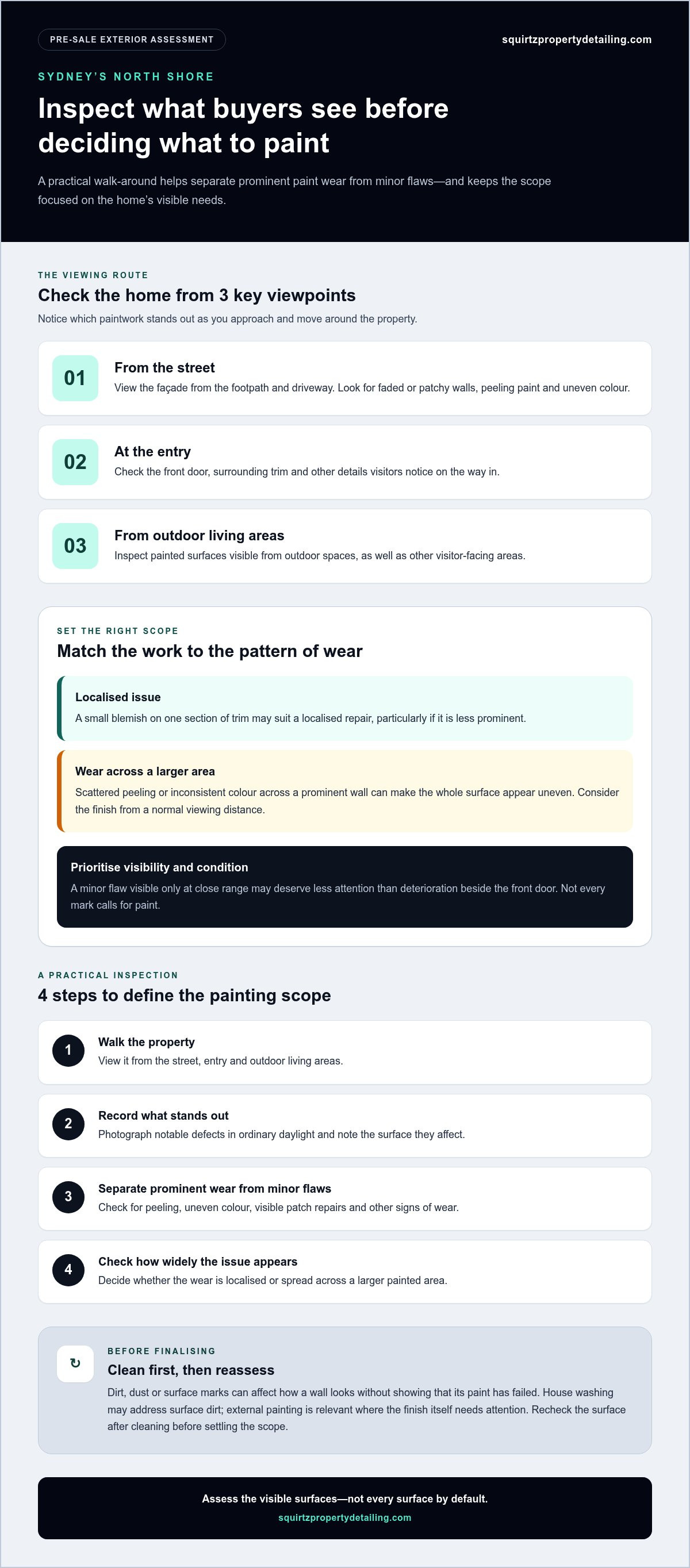
A structured walk-around can help you define the painting scope before pre-sale work begins. Look at the house from the street, move closer to the entry, then check painted areas visible from outdoor living spaces. These viewpoints show which flaws are prominent and which are noticeable only up close.
For sellers considering exterior house painting to attract buyers on the North Shore, the aim is to distinguish localised defects from widespread deterioration. Note the surface and location of each issue, and take photographs in ordinary daylight. This record makes it easier to compare areas, organise the work and explain what you want addressed without defaulting to a full repaint.
Which exterior areas deserve the closest inspection?
Start with the façade, front door and surrounding trim, then inspect other painted surfaces visitors are likely to see on the way in or from outdoor areas. View them from the footpath, driveway and entry rather than relying only on a close-up check. Daylight helps reveal uneven colour, peeling edges and patchy repairs that might be less obvious in shade.
Keep other presentation issues separate in your notes. A roof concern belongs in a roof assessment; garden maintenance or dirty walls may need different attention. If a cleaning issue overlaps with a painted area, record both rather than assuming the paint is at fault.
How to decide between touch-ups and broader repainting
The distribution of the wear matters as much as its size. A small blemish on one section of trim may suit a localised repair, while scattered peeling or inconsistent colour across a prominent wall can make the whole surface appear uneven. Judge each area by how visible it is and whether the finish looks consistent from a normal viewing distance.
Before deciding, use this checklist: Inspect the façade, entry, exterior trim and visitor-facing surfaces for peeling, uneven colour, visible patch repairs and other signs of wear.
- Walk the property from the street, entry and outdoor living areas.
- Photograph notable defects and record the surface they affect.
- Separate prominent deterioration from minor flaws visible only at close range.
- Check whether the issues are localised or spread across a larger painted area.
This process gives you a practical basis for setting priorities. It also helps avoid treating every painted surface as though it needs the same work. If cleaning may clarify the condition, assess the surface again afterwards before finalising the scope.
Once you’ve recorded the areas that need attention, you can organise a focused pre-sale plan. Squirtz Property Detailing’s external painting can form part of that work alongside relevant property maintenance, with the scope suited to the home’s visible condition.
What exterior painting should you prioritise to attract buyers?
Set priorities by considering two things together: the condition of the paint and how clearly buyers are likely to see it. A small flaw beside the front entry may warrant attention sooner than more extensive wear on a side wall that’s largely out of view. This keeps the scope practical and avoids treating the whole exterior as one uniform job.
The comparison below can help turn your inspection notes into a first-pass plan. It’s a guide, not a fixed specification. The home’s overall condition and your wider presentation plans still matter.
| Visible condition | Buyer-facing prominence | Likely scope | Suggested priority |
|---|---|---|---|
| One small, isolated blemish | Low, or visible only up close | Localised touch-up, if suitable | Lower, unless it affects an important detail |
| Peeling or patchy paint around the entry | High, on the approach to the home | Targeted work to the affected area | High, because it’s immediately visible |
| Uneven or weathered paint across much of the façade | High, across a broad street-facing surface | Consider repainting a larger area for a consistent finish | High, subject to the surface condition |
| Wear on a less visible exterior surface | Low during a typical viewing | Address only if its condition or your wider plan warrants it | Proportionate to its visibility and condition |
Which paintwork should sellers consider addressing first?
Start with conspicuous peeling, patchiness or deterioration on the street-facing façade and around the entry. These areas frame a buyer’s approach, so resolving a visible defect there can make more sense than repainting an entire exterior with a sound, consistent finish. Then consider other prominent painted surfaces visitors will see from outdoor areas.
For exterior house painting to attract buyers on the North Shore, prioritise the work that addresses the clearest presentation issue, not simply the largest possible scope. A well-presented façade with one isolated mark may need only focused attention. If unevenness or peeling runs across a prominent wall, broader painting may create a more consistent appearance. Less visible surfaces can remain a lower priority when their condition is sound and the overall plan supports that choice.
How can paint colours support a cohesive exterior?
Before changing colour, consider the home’s existing façade, fixed finishes and architectural character. A restrained, coordinated choice can help painted surfaces sit comfortably alongside materials that aren’t being changed. That doesn’t mean every home needs a neutral scheme or that one colour will appeal to every buyer.
Keep the decision grounded in the property. If only one area needs work, consider how its finish will relate to adjoining surfaces. If a larger area is being repainted, review the exterior as a whole. The aim is a coherent presentation that suits the home, not a promise of buyer preference or a stronger offer.
How to plan exterior painting alongside other pre-sale work
Exterior painting is easier to plan as part of a wider preparation sequence. Start by assessing the property, then decide which painted areas need attention and what related work could affect their appearance. This helps prevent cleaning, repairs and painting from becoming disconnected tasks, or the same area being prepared twice.
Every property and scope is different, so build a schedule around the work involved rather than assuming a set completion time. For sellers arranging exterior house painting to attract buyers on the North Shore, a clear order of tasks helps keep the overall presentation consistent as listing preparations progress.
How should painting fit into the property preparation sequence?
Begin with a condition review. Dirt can obscure the state of a painted surface, while damage to a fitting or other exterior feature may need attention separately from painting. Identify these issues before setting the scope, so the work responds to the actual condition of the property.
- Assess: Record paint defects, areas affected by dirt and any separate maintenance needs.
- Define the painting scope: Decide which surfaces need targeted work and whether a larger area needs a consistent finish.
- Coordinate related work: Plan cleaning and repairs around the painting so they support, rather than disrupt, the intended presentation.
- Review the result: Once maintenance is complete, walk around the property again and check that the exterior feels considered as a whole.
Where grime makes it difficult to judge a surface, consider cleaning before finalising the painting scope. A clean surface gives you a better basis for deciding whether the concern is dirt or worn paint. For more on sequencing painting decisions, see this Sydney pre-sale house painting guide.
Which other presentation tasks may complement painting?
House washing can address dirt that dulls painted walls and other exterior areas. Window cleaning is a separate task, but clear glass can help the home’s exterior look more orderly. Neither should be treated as a substitute for painting where the paint itself is visibly deteriorated.
Consider the garden as another part of the overall approach. Overgrown edges or untidy outdoor areas can sit awkwardly beside freshly presented walls, even though they need different work. If the garden also needs attention, this Sydney garden landscaping guide offers related ideas for planning the outdoor presentation.
Squirtz Property Detailing brings external painting together with property maintenance options such as house washing, window cleaning and garden makeovers for North Shore homes. Plan your pre-sale exterior painting and property preparation as a coordinated scope suited to your property.
Prepare your North Shore home for sale with Squirtz Property Detailing
Preparing a home for sale often involves more than deciding whether to repaint the façade. Squirtz Property Detailing is a Sydney property maintenance business that also serves the North Shore. Its external painting can form one part of a practical pre-sale plan, alongside other work that supports the property’s overall presentation.
The right combination depends on what the home needs. A façade with worn paint may call for painting, while dirt on otherwise sound surfaces may make house washing more relevant. Roof restoration, window cleaning or garden work may also be worth considering when those areas affect the home’s appearance. Match the scope to visible conditions and the seller’s priorities, rather than applying the same checklist to every property.
What a coordinated presentation plan can address
Look at the exterior as buyers are likely to experience it, from the street and entry through to the garden and other outdoor areas. A painting decision can sit alongside separate maintenance priorities, such as washing exterior walls, restoring a roof or tidying garden areas. Keeping these tasks in view helps sellers plan a more consistent presentation without assuming that every surface needs work.
Timing and scope depend on the project. A home needing a small amount of targeted painting and window cleaning has different preparation needs from one with broader paint wear and several outdoor areas to address. For related maintenance considerations, the Sydney property maintenance seller’s guide can help you think through the wider preparation picture.
How to take the next step before your sale
Start by noting your intended listing timeframe and the exterior areas you want to address. Separate paintwork from cleaning, roof, window and garden needs, then consider which items have the clearest effect on the home’s presentation. This gives you a useful starting point for organising the work and deciding where painting fits.
Squirtz Property Detailing brings external painting together with relevant property detailing and maintenance for residential pre-sale preparation. A coordinated approach can help you focus on the work that suits your property, without treating a particular sale result as guaranteed.
Explore pre-sale painting and property preparation with Squirtz and consider how the right mix of work can support a cohesive presentation before your home is listed.
Set a clear plan for your pre-sale presentation
Before committing to exterior work, turn your observations into a short, practical plan. Decide which areas need attention, what can wait and how painting fits with the rest of your preparations. That keeps the project focused on your home’s needs rather than an assumption that every surface must be repainted.
A thoughtful approach to exterior house painting to attract buyers on the North Shore can help you present the property with care, while keeping expectations realistic. The goal is a cohesive exterior that feels maintained and ready to be viewed, not a promise of a particular offer or sale result.
If you’re ready to organise the next steps, bring together the areas you want addressed and your preferred listing timeframe. Squirtz Property Detailing can coordinate external painting with relevant property detailing and maintenance. Plan your North Shore pre-sale property preparation with Squirtz Property Detailing.
Frequently Asked Questions
Does exterior house painting attract buyers on Sydney’s North Shore?
It can help a home make a more cared-for impression, particularly if worn paint is prominent in listing photos or visible as buyers arrive. Exterior house painting to attract buyers on the North Shore is most useful when it addresses a clear presentation issue, rather than adding work to surfaces already in good condition. Buyer interest also depends on the property and wider market, so painting should be treated as preparation, not a promise of a sale.
Should I repaint my whole house before selling?
No, a complete repaint isn’t automatically necessary. If most exterior paint is consistent and only a small section is marked or peeling, a focused repair may be more proportionate. A broader repaint may be worth considering when unevenness or deterioration affects a large, prominent area and local touch-ups would leave the façade looking inconsistent. Base the scope on the visible condition and how the work fits your overall preparation plans.
Can exterior cleaning be enough instead of repainting?
Yes, if dirt is making a sound painted surface look dull or marked, house washing may improve its appearance without repainting. Cleaning won’t resolve peeling, failed or persistently patchy paint, so assess the surface once it’s clean. For example, if a wall looks more even after washing, painting may not be needed there. If the finish still appears deteriorated, consider whether targeted or broader painting is appropriate.
What exterior paint colours appeal to home buyers?
There’s no single colour that will appeal to every buyer. A practical starting point is to consider the home’s existing materials and fixed finishes, then choose a colour that sits comfortably with them. For instance, if you’re repainting trim but keeping the façade, compare the options against the actual exterior rather than choosing in isolation. Aim for a coherent result that suits the property, not a guaranteed buyer preference.
When should I arrange exterior painting before listing my home?
Arrange an assessment early enough to define the work and coordinate it with other preparation before photography and buyer inspections. The time required depends on the property, the areas being painted and any related maintenance, so avoid setting a schedule based on a generic estimate. If you’re still deciding whether to paint or clean, assess the surfaces before finalising the scope. This gives you room to organise the work in a considered order.
Will painting my house increase its sale price?
Painting may improve presentation, but it can’t guarantee a higher sale price. The financial result depends on factors beyond paintwork, including the property, buyer interest and market conditions at the time of sale. Consider whether the visible improvement is worth including in your preparation plan, rather than treating painting as a set return. A focused scope can address obvious wear without assuming that every exterior surface needs repainting.


