
What if a makeover that looks straightforward on paper pushes your photography date back? If you’re asking how long does a pre-sale property makeover take, the answer depends on the work involved, the order it’s done in and how much room you leave for changes or delays.
It’s sensible to want every repair, clean and presentation detail finished before buyers see the property. But painting before repairs, or scheduling outdoor work without considering weather and access, can disrupt the sequence and put pressure on your campaign date.
To estimate a realistic timeline, list the work your property needs, identify which tasks depend on others and plan backwards from photography. A focused refresh will usually involve fewer moving parts than a makeover across several areas. Either way, settle the scope early and leave time for a final check.
Squirtz Property Detailing prepares residential and commercial properties for sale in Sydney, including the North Shore. A clear campaign date and a plan shaped around your property’s condition can help you organise the work and avoid relying on a generic timeframe.
Key Takeaways
- There’s no single answer to how long does a pre-sale property makeover take. Estimate the timeline from the property’s condition, agreed scope and campaign date.
- Use a practical sequence: assess and plan first, complete repairs and surface work next, then finish with detailing.
- A focused refresh, a multi-area detailing plan and a broader renovation involve different levels of coordination. Compare the scope and dependencies before setting a schedule.
- Work backwards from photography or inspections, allow time for completion checks and settle the scope before confirming a campaign date.
- Squirtz’s pre-sale preparation services include painting, house washing, garden makeovers, window cleaning and handyman repairs, helping you organise relevant tasks around the property’s needs.
How long does a pre-sale property makeover take? Start with the scope
There’s no reliable single timeframe for a pre-sale property makeover without understanding the property and agreeing on the work. If you’re asking how long does a pre-sale property makeover take, start by listing the tasks required, then consider how they fit around your campaign deadline. A targeted presentation refresh is different from a broad renovation, and each needs its own schedule.
A makeover doesn’t automatically mean rebuilding rooms or changing the property’s structure. It can involve selected maintenance and presentation work, such as repairing visible damage, painting tired surfaces, washing the exterior, cleaning windows or tidying the garden. The aim is to address what affects the property’s presentation, not to assume every possible improvement is necessary.
Timing depends on more than the number of tasks. Your campaign date sets the outer limit, while the work areas, access and task order shape the programme. For example, painting should generally be completed before final window cleaning, so the glass isn’t marked by later work. A property-specific assessment is the starting point for estimating how long the jobs themselves will take.
What counts as a pre-sale property makeover?
Think of a makeover as a tailored set of improvements rather than a fixed package. One home may need house washing and window cleaning; another may benefit from internal or external painting, handyman repairs or a garden makeover. Home staging, also known as property styling, is the act of preparing a private residence for sale in the real estate marketplace. Presentation work can support that broader goal, but it doesn’t mean every property needs the same tasks.
Targeted detailing focuses on visible maintenance and presentation. Structural changes or a full-scale renovation are broader undertakings with different planning requirements. Keeping those scopes distinct helps you avoid building a small pre-sale refresh around work the property doesn’t need.
Why one property’s timeline differs from another
Property size and condition affect how much work is involved. A home with several rooms needing paint and repairs requires a different plan from one needing only outdoor cleaning. The number of work areas matters too: tasks may need to happen in sequence or be arranged across different parts of the property, depending on access and what needs to happen first.
Decisions can influence the schedule as well. If the scope changes after work is planned, the sequence may need to be adjusted. Access to rooms, outdoor areas or shared spaces can also affect how tasks are organised. Around Sydney’s North Shore, consider weather when planning outdoor work such as house washing and garden improvements. It’s a scheduling factor to account for, not a reason to assume a delay.
- Property: size, condition and the areas needing attention.
- Scope: which repairs and presentation tasks are included.
- Coordination: access, task order and decisions during planning.
- Campaign: the date the property needs to be ready for photography or inspections.
Define the scope before committing to a final presentation date. That gives you a clearer basis for arranging the work around your campaign, rather than relying on a generic timeframe that may not fit your property.
How pre-sale detailing tasks affect the makeover schedule
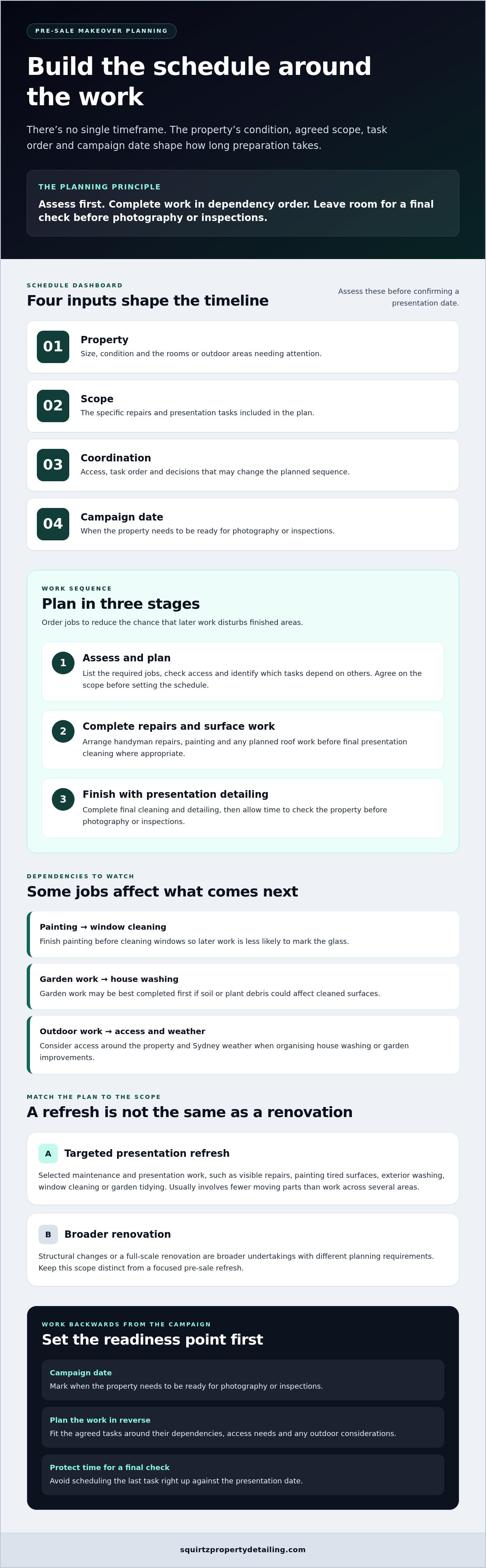
A practical schedule follows the work’s dependencies rather than assigning every job an isolated date. Start with an assessment, agree on the scope and order, complete repairs and surface work, then finish with presentation detailing. This sequence helps avoid cleaning areas only to have later work create dust, marks or mess.
A work sequence is the order that prevents completed areas from needing rework. That principle matters before photography: a property can look close to ready while a final task still risks affecting a freshly finished surface. The National Association of REALTORS® (NAR) explains that staging helps buyers visualise a property as their future home. Coordinate presentation tasks so the property is ready as a whole, rather than finishing areas in isolation.
Which jobs usually need to happen first?
Begin with repairs and work that could disturb other surfaces. Handyman repairs may involve tools or materials indoors, while roof work or painting can create debris, dust or marks. Completing these before final cleaning helps protect the finish. The precise order depends on what needs attention and where workers need access.
Outdoor jobs need their own coordination. Garden work may be easier to complete before house washing if soil or plant debris could affect cleaned surfaces. Driveway or path resurfacing may require clear access to the work area, so consider how it affects movement around the property and other scheduled tasks. Weather around Sydney can influence when outdoor work is practical, so include it in the plan.
Use this sequence as a planning guide, then adjust it to the property:
- Assess and plan: identify required jobs, access needs and dependencies.
- Complete repairs and surface work: organise handyman repairs, painting and any planned roof work before final presentation cleaning where appropriate.
- Coordinate outdoor improvements: schedule garden work and driveway or path resurfacing around site access and the agreed scope.
- Finish with detailing: arrange final house washing or window cleaning after disruptive work where practical.
Why finishing work belongs near the end
Final detailing is most useful once the work that could affect clean surfaces is complete. For example, schedule window cleaning after painting, and leave a final house wash until dusty or disruptive exterior work is finished where the tasks overlap. Not every sale needs every service; include only the jobs that suit the property and its presentation goals.
Build in a final walk-through before photography or inspections. Check for paint marks, missed cleaning, visible repair issues and areas affected by work completed later in the sequence. If something needs attention, you’ll have an opportunity to address it before the campaign moves forward.
For an overview of how selected property detailing can fit around a campaign date, see Squirtz’s pre-sale property preparation services.
Focused refresh or broader makeover: compare the time commitment
The scope of work is the clearest guide to how much coordination a pre-sale makeover may need. A focused refresh covers a small number of presentation priorities. A multi-area detailing plan brings several tasks together, while a broader renovation can involve more decisions, dependencies and complexity. The table compares relative scheduling demands, not guaranteed durations or a quote.
| Scope | Typical tasks | Scheduling dependencies | What may extend the programme |
|---|---|---|---|
| Focused refresh | House washing, window cleaning or selected handyman repairs | Repairs or other disruptive work may need to finish before final cleaning. | Unexpected maintenance needs, access or changes to the agreed scope. |
| Multi-area detailing plan | A combination of painting, garden improvements, repairs and exterior cleaning | Work across indoor and outdoor areas needs to be ordered to avoid clashes and rework. | More work areas, access constraints, weather-sensitive tasks or late decisions. |
| Broader renovation | Extensive updates across multiple parts of the home | More stages may depend on earlier work being completed before the next begins. | Complexity, the property’s condition and additional decisions as work progresses. |
Rather than choose the largest scope by default, use the campaign date and the property’s condition to set priorities. Opendoor’s guidance on home improvements before selling also points to the value of being selective. Focus first on work that addresses visible maintenance or presentation concerns, then consider whether extra projects fit the planning window.
When a focused refresh may suit the campaign
A focused refresh can be appropriate when a property is generally presentable but has a few clear issues to address. House washing may tidy the exterior, window cleaning can finish the glass, and selected handyman repairs can resolve visible maintenance concerns. Fewer interdependent tasks can make the plan more straightforward to organise, but they don’t guarantee faster completion. The property’s condition and the work required still matter.
When a broader scope needs more coordination
Combining painting, landscaping and roof work can involve more scheduling dependencies than addressing one or two presentation priorities. Decide which areas to include, consider access and set the order of work before finalising the programme. Broader improvements may make sense for the property, but a sale-price result can’t be assumed. Keep the scope tied to the home’s needs and campaign priorities.
To judge how long does a pre-sale property makeover take for your home, compare the proposed tasks with the deadline and identify which jobs rely on others being finished first. This helps distinguish essential presentation work from additional projects that could add complexity without being necessary for campaign readiness.
Plan a pre-sale makeover back from your campaign date
A dependable pre-sale schedule starts with a fixed deadline and a prioritised scope. Set your intended photography and campaign dates first, then work backwards to plan the assessment, decisions, work stages and final check. This gives you a practical way to judge whether the proposed work fits the campaign, rather than setting a date before you know what the property needs.
Use this sequence to build the plan:
- Set the target dates: note the intended agent appraisal, photography and campaign launch. Treat these as connected milestones, as a change to one may affect the next.
- Assess the property: identify repairs and presentation tasks across the areas buyers will see, including outdoor work affected by weather or access.
- Agree the scope: decide which work is essential, what can be left out and which choices, such as paint colours or repair details, need to be settled before work begins.
- Order the tasks: map which jobs depend on others, and place final cleaning and presentation checks after disruptive work where practical.
- Allow for completion checks: reserve time before photography to inspect the result and address visible marks, missed details or work affected by later tasks.
Decide the scope before booking photography or promising a final presentation date. The time required for the actual jobs depends on the property and agreed work, so build the campaign plan around an assessment rather than an assumed number of days.
Set milestones before work starts
Work backwards from the date the property needs to be ready for photography, then place the agent appraisal and campaign launch in the same calendar. From there, identify when the scope must be agreed, when decisions are due and which work stages need to finish before the next begins. These milestones help coordinate expectations; they’re planning targets, not guarantees of completion.
Leave room between the planned end of work and photography for a final review. That space is useful if the property needs exterior painting, house washing or garden work, where suitable conditions and clear access matter. It also gives you a chance to adjust the plan if the condition of a surface or repair becomes clearer once work is underway.
Reduce avoidable delays during the makeover
Keep decisions moving. Late choices about paint, repairs or which areas to include can affect both the work and the order it happens in. Make access arrangements clear, keep the agreed scope visible and review priorities if conditions change. If the schedule tightens, protect essential presentation tasks first and reconsider optional improvements.
Squirtz’s Sydney pre-sale property preparation services bring relevant maintenance and detailing work together around your campaign plans.
Plan your Sydney pre-sale property makeover with Squirtz
Planning property preparation around a sale campaign means balancing the condition of the home with the date it needs to be ready. Squirtz Property Detailing prepares residential and commercial properties for sale across Sydney, including the North Shore. The approach is practical: define the presentation priorities, identify how the work areas relate and shape the plan around the property rather than applying the same scope to every sale.
Several tasks can be considered together where they suit the property. House washing, garden makeovers, internal or external painting, window cleaning and handyman repairs may all contribute to presentation, but not every home needs each one. A tailored scope keeps planning focused and gives the work a clear purpose. It also helps establish how long does a pre-sale property makeover take for the agreed work, without relying on a generic timeframe.
What to prepare before discussing the project
A few details can make the planning conversation more useful. Note the intended campaign date and property type, then identify the areas you most want to improve. List known maintenance issues, along with work already completed or scheduled, so the proposed scope can account for what’s been addressed and what remains.
- Your target dates for appraisal, photography or campaign launch.
- Priority rooms and outdoor areas, plus visible repairs or presentation concerns.
- Any work already booked or completed.
- Access arrangements and timing constraints that may affect the work sequence.
These details help connect the work to the campaign instead of treating each task in isolation. If access to a garden, roof or internal area is restricted, include that information early so it can be considered when planning the schedule.
Turn the scope into a workable plan
Once priorities are clear, the relevant work areas can be identified and the sequence considered. For example, painting or repairs may need to happen before final window cleaning, while garden work may need to fit around access to the exterior. A clear plan aligns selected services with the property’s needs and campaign dates, without adding tasks simply because they’re available.
The appropriate scope and schedule depend on the property, its condition and the agreed work. Squirtz provides tailored pre-sale property preparation in Sydney, with a plan shaped around the campaign rather than a fixed duration or promised sale result.
Explore Squirtz’s pre-sale property preparation to see how the relevant work can be planned around your property and campaign date.
Turn your campaign date into a clear starting point
Your campaign date can do more than set a deadline. Use it to shape the decisions ahead: what needs attention, which improvements matter most to the property and what can realistically be included. That gives you a useful brief for planning, even before every detail is settled.
If you’re still wondering how long does a pre-sale property makeover take, ground the estimate in your property’s actual needs. A clear plan for priorities, access and timing can turn a broad list of ideas into a workable scope, with room to make considered decisions rather than rush them as photography approaches.
Squirtz Property Detailing can organise relevant property preparation around your campaign needs. Plan your pre-sale property preparation with Squirtz and take the first step towards a practical, property-specific plan.
A considered start can make the path to campaign day feel much more manageable.
Frequently Asked Questions
How far in advance should I organise a pre-sale property makeover?
Organise it as soon as you’ve chosen a likely campaign window, especially if the property needs several work areas addressed. The right lead-in depends on the home, so begin with a property review rather than relying on a standard timeframe. For a North Shore property, note shared access, sloping gardens or exposed outdoor areas early. These details can affect how the work is arranged and help shape a realistic plan.
Can a pre-sale property makeover be completed before property photography?
Yes, if the agreed work, final checks and any required drying or curing time fit the available window. Before settling the photography date, identify which tasks must be finished and what can be left out. For instance, a freshly painted room may need time before it’s ready to photograph. A final check of key rooms, entry areas and outdoor views can help confirm whether the property is camera-ready.
What can delay a pre-sale makeover in Sydney?
Changes to the agreed scope, late decisions and restricted access can all affect the plan. Sydney weather may also influence outdoor work, particularly if rain affects painting conditions or access to a garden or driveway. A newly noticed maintenance issue can add another task to consider. Keep priorities clear and review the plan if circumstances change, rather than assuming every original task still fits the campaign window.
Does painting need to happen before house washing and window cleaning?
For exterior painting, house washing is generally scheduled beforehand so the surface can be prepared for the paintwork. After painting, window cleaning usually belongs near the finish, as paint or dust can mark the glass. Internal painting also needs to be completed before final window cleaning if the work could affect nearby surfaces. The exact order depends on the areas involved and whether other work could create dust or residue.
Can I prepare my property for sale in stages?
Yes. Staging the work can help you manage preparation across separate areas, such as addressing the frontage first and then moving to priority rooms or the garden. Each stage should leave the relevant area in a useful condition and account for work that may affect it later. Keep the campaign date in view, so early phases support the overall presentation rather than becoming disconnected projects.
What should I prioritise if my sale campaign date is close?
Focus on visible maintenance issues and the areas most likely to shape a buyer’s first impression, such as the entry, street-facing exterior and main living spaces. A targeted repair or house wash may be more practical than adding a large project with several dependencies. List the remaining tasks, rank them by presentation importance and decide promptly which are essential before photography and which can be omitted.
Does a larger pre-sale makeover always take longer?
Not always. A larger scope usually involves more coordination, but the schedule also depends on the property’s condition, access and how the work can be arranged. A small job in a difficult-to-access area may need careful planning, while several straightforward tasks may be easier to coordinate. To estimate how long does a pre-sale property makeover take, consider the specific work and its dependencies, not just the number of tasks.


