
A pool compliance certificate is not a one-off fix: in NSW, owners must keep the pool barrier compliant, and a buyer has 90 days from settlement to address listed defects and obtain a certificate after a property sale. That makes pool compliance certificate repairs in Sydney a practical safety and compliance task, not simply a paperwork exercise.
It’s understandable to want a clear answer when an inspection identifies repairs, especially if a sale or tenancy is approaching. The rules depend on the situation, and a pool barrier certificate does not assess the pool’s structure, leaks, pumps or electrical equipment.
This article explains who can inspect a pool, what repair deadlines and certificate requirements apply in NSW, and what a barrier assessment covers. You’ll also learn what to prepare for an inspection and how to approach repairs so you can work towards the required certificate with a clearer understanding of the process.
Key Takeaways
- Before arranging an inspection, make sure the inspector can access the pool area, gates and relevant boundaries.
- Register the pool in the NSW Swimming Pool Register before applying for a compliance certificate, and account for the different requirements for sales and leases.
- A barrier certificate assesses pool barrier compliance, not the condition of pumps, electrical equipment, leaks or the pool structure.
- Keep the barrier compliant over time by checking gates and latches and keeping climbable items away from the fence.
What does the law say about pool compliance inspection and repair?
In NSW, pool owners must keep barriers compliant, and inspections assess pool safety. Inspections may relate to a new pool, a sale, a lease, a council program or a safety concern.
Preparing for a pool inspection
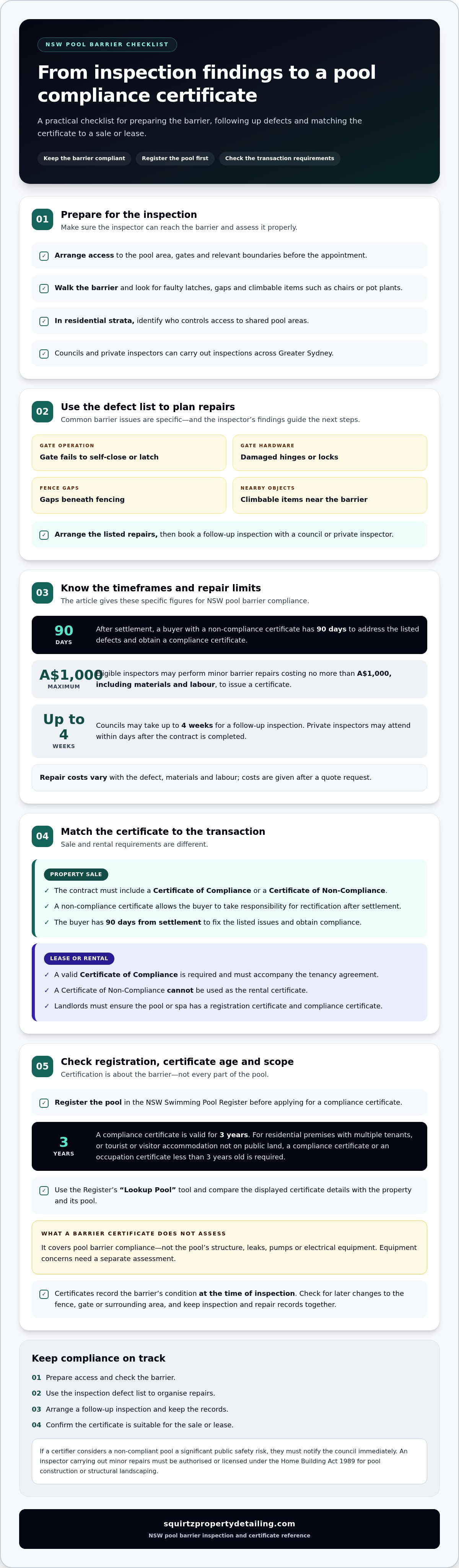
For pool compliance certificate repairs in Sydney, start by arranging access to the pool area, gates and boundaries. Walk the barrier and look for faulty latches, gaps and climbable objects, such as chairs or pot plants. Councils and private inspectors can carry out inspections across Greater Sydney. In residential strata, identify who controls access to shared pool areas before the appointment. For a sale involving a non-compliance certificate, the buyer has 90 days from settlement to address listed defects and obtain compliance.
Repair and inspection costs
Pool barrier repair costs depend on the defect, materials and labour, and are given after a quote request. Eligible inspectors may perform minor barrier repairs costing no more than A$1,000, including materials and labour, to issue a certificate.
Common repairs and follow-up inspections
Common defects include gates that fail to self-close or latch, damaged hinges or locks, gaps beneath fencing, and climbable objects near the barrier. Planning pool compliance certificate repairs in Sydney starts with the inspector’s defect list. Arrange the repairs, then book a follow-up inspection with a council or private inspector. Councils may take up to 4 weeks; private inspectors may attend within days after the contract is completed. An inspector doing minor repairs must be authorised or licensed under the Home Building Act 1989 for pool construction or structural landscaping. If a certifier considers a non-compliant pool a significant public safety risk, they must notify the council immediately.
Jurisdiction-specific pool registration and certificate requirements
NSW pool owners must register their swimming pool and keep its barrier compliant. Sale and rental requirements differ, so the relevant certificate depends on the property transaction.
NSW registration and compliance requirements
Register the pool in the NSW Swimming Pool Register before applying for a compliance certificate. In NSW, a swimming pool includes an excavation, structure or vessel that can hold water deeper than 30 centimetres. The main requirements include the Swimming Pools Act 1992, Swimming Pools Regulation 2018 and Australian Standard AS 1926.1.
Pool safety rules differ across Australian states and territories. For Sydney owners, the practical priority is maintaining a compliant barrier and keeping pool registration details accurate. Landlords must ensure the pool or spa has a registration certificate and compliance certificate. Tenants should know where the pool area is and report barrier faults promptly to the landlord.
When a certificate is required
For a NSW property sale, the contract must include a Certificate of Compliance or Certificate of Non-Compliance. A non-compliance certificate allows the buyer to take responsibility for rectification after settlement. For a lease, a valid Certificate of Compliance is required and must accompany the tenancy agreement. A non-compliance certificate cannot be used for a rental.
A compliance certificate is valid for 3 years. For residential premises with multiple tenants, or tourist or visitor accommodation not on public land, a compliance certificate or an occupation certificate less than 3 years old is required. To check certificate details, use the NSW Swimming Pool Register’s “Lookup Pool” tool. Compare the displayed certificate details with the property and its pool.
Where an inspection identifies broader pool work beyond barrier rectification, swimming pool renovations may suit that separate project.
Does a barrier certificate cover equipment condition?
No. A swimming pool compliance certificate concerns the pool barrier, not the pool’s structure, leaks, pumps or electrical equipment. A fence may look safe while its gate, latch or another barrier detail still needs attention. Conversely, a barrier certificate isn’t a condition report for pool equipment.
Certificates record the barrier’s condition at the time of inspection. If someone later changes the fence, gate or surrounding area, an older certificate doesn’t establish the barrier’s current condition. Owners and property managers should compare the certificate with the inspection findings and note any later alterations.
For a NSW property sale, attach either a Certificate of Compliance or a Certificate of Non-Compliance to the contract. If the seller can’t obtain compliance, the non-compliance certificate can transfer responsibility for the listed defects to the buyer. The buyer then has 90 days from settlement to fix those issues and obtain a compliance certificate. This process concerns the listed barrier defects, not repairs to pumps or electrical equipment.
Rental transactions have separate certificate requirements, so check that the pool documentation is suitable before leasing. A Certificate of Non-Compliance cannot serve as the rental certificate. Landlords remain responsible for pool safety, while property managers can help coordinate access, keep certificate records with tenancy documents, and report visible barrier changes or faults to the owner. The certificate doesn’t replace ongoing attention to the pool fence.
For a sale or tenancy, match the certificate to the property and check whether the barrier has been altered since inspection. A registered swimming pool inspector carries out certification work in NSW. Keep the inspection result and repair records together so the seller, landlord or manager can track identified defects through to rectification. Equipment concerns need a separate assessment: barrier certification doesn’t establish that pumps, wiring or the pool structure are sound.
NSW pool safety and compliance certificates
A compliance certificate records whether a swimming pool barrier met applicable requirements when inspected. It doesn’t replace an owner’s ongoing pool safety duties. The NSW Government outlines pool and spa owner obligations, safety responsibilities and certificates as part of pool ownership.
Keep the pool registered and the barrier maintained between inspections. NSW owners must ensure the barrier continues to comply at all times. Check that gates self-close and self-latch, lubricate hinges and locks, and promptly replace faulty parts. Keep plants, toys, ladders and chairs out of the non-climbable zone, including anything that could help a child climb over a fence.
Measure the surrounding area against the applicable barrier requirements. Keep climbable objects at least 900 mm from pool fences, and make sure the CPR sign is readable from within a 3 metre range. These practical checks help identify issues before a pool safety inspection, but they don’t replace formal certification.
Children need active supervision around swimming pools, even when a compliant barrier is in place. Teach children to swim from an early age and keep the gate closed after each use. If visitors are present, explain where the pool area begins and ensure adults understand their supervision responsibilities.
A compliance certificate is generally valid for 3 years, but a council direction requiring compliance with the Swimming Pools Act can invalidate it. Keep certificate records with the property documents, including the contract or leasing paperwork where relevant. If a pool remains non-compliant, follow the listed rectification steps and arrange another inspection after repairs. A Certificate of Non-Compliance is valid for 12 months, while the owner has 90 days from its issue date to fix listed defects and obtain compliance.
For physical pool-area improvements beyond certificate checks, explore swimming pool renovation options suited to the property.
Squirtz Property Detailing: House Washing
Once pool compliance requirements are clear, Squirtz Property Detailing can help improve the surrounding property. Swimming Pool Renovations suit owners planning broader upgrades, while Garden Landscaping & Makeovers can refresh the outdoor area. House Washing can also clean exterior surfaces when preparing a property for sale or improving its presentation.
These services improve the property but do not include pool certification or barrier inspection. If an inspection identifies a barrier defect, arrange the required repair and follow-up certification separately. Before planning wider outdoor work, consider how the pool, fencing and landscaping fit together.
For property improvement support, contact Squirtz Property Detailing or visit squirtzpropertydetailing.com.
Plan the next stage of your property work
For pool compliance certificate repairs in Sydney, keep required certification work separate from broader property improvements. Start by distinguishing repairs that address inspection findings from upgrades intended to improve the pool area or the property’s presentation. This gives each task a clear purpose and helps you organise the work in a sensible order.
Squirtz Property Detailing offers Swimming Pool Renovations, Garden Landscaping & Makeovers and House Washing for wider property improvement projects. These services can support plans for the outdoor area and exterior, while pool compliance certification remains a separate requirement.
If you’re planning improvements beyond the compliance work, contact Squirtz Property Detailing to discuss the property work you have in mind. A clear plan can help you move from inspection findings to the next stage with confidence.
Frequently Asked Questions
What is a Certificate of Compliance in NSW?
A Certificate of Compliance records that a swimming pool barrier met NSW requirements when inspected. It concerns barrier safety, not the condition of pumps, electrical equipment, leaks or the pool structure. Keep the certificate with property records and note any changes to gates, fencing or the surrounding area, as the document doesn’t assess alterations made after inspection.
Are Pool Fence Repairs or Rectification services available?
Squirtz Property Detailing offers Handyman Repairs and Swimming Pool Renovations, but pool barrier certification is a separate inspection task. A registered swimming pool inspector may complete minor barrier repairs costing no more than A$1,000, including materials and labour, when authorised or licensed under the Home Building Act 1989 for pool construction or structural landscaping. Use inspection findings to identify the specific rectification required.
What happens if my pool fails the Inspection?
After a failed inspection, the pool owner receives a list of defects to address before obtaining a Certificate of Compliance. If a non-compliant pool presents a significant public safety risk, the certifier must notify the council immediately. Otherwise, the council is notified if the pool remains non-compliant six weeks after the first inspection. Treat each listed defect as a repair task and retain records of completed work.
What is a pool compliance certificate in New South Wales?
It is a formal record that an authorised inspection found the pool barrier compliant with applicable NSW requirements. It applies to the barrier, including its gates and access controls, rather than certifying the pool’s pumps, wiring or structure. A certificate is generally valid for 3 years, but a council direction requiring compliance with the Swimming Pools Act can make it invalid.
When is a pool compliance certificate required in Sydney?
In NSW, a property being leased needs a valid Certificate of Compliance for its pool, and the certificate must accompany the tenancy agreement. For a sale, the contract must include either a Certificate of Compliance or a Certificate of Non-Compliance. These documents address pool-barrier requirements for the transaction, so sellers and landlords should organise the appropriate paperwork before finalising a contract or tenancy.
What is the deadline to fix pool safety defects after an inspection in NSW?
The deadline depends on the document and transaction. A Certificate of Non-Compliance gives the owner 90 days from its issue date to fix listed defects and obtain compliance. For a sale where that certificate accompanies the contract, the buyer has 90 days from settlement to complete the listed repairs. Landlords should ensure listed pool-barrier defects are addressed before leasing the property.


