
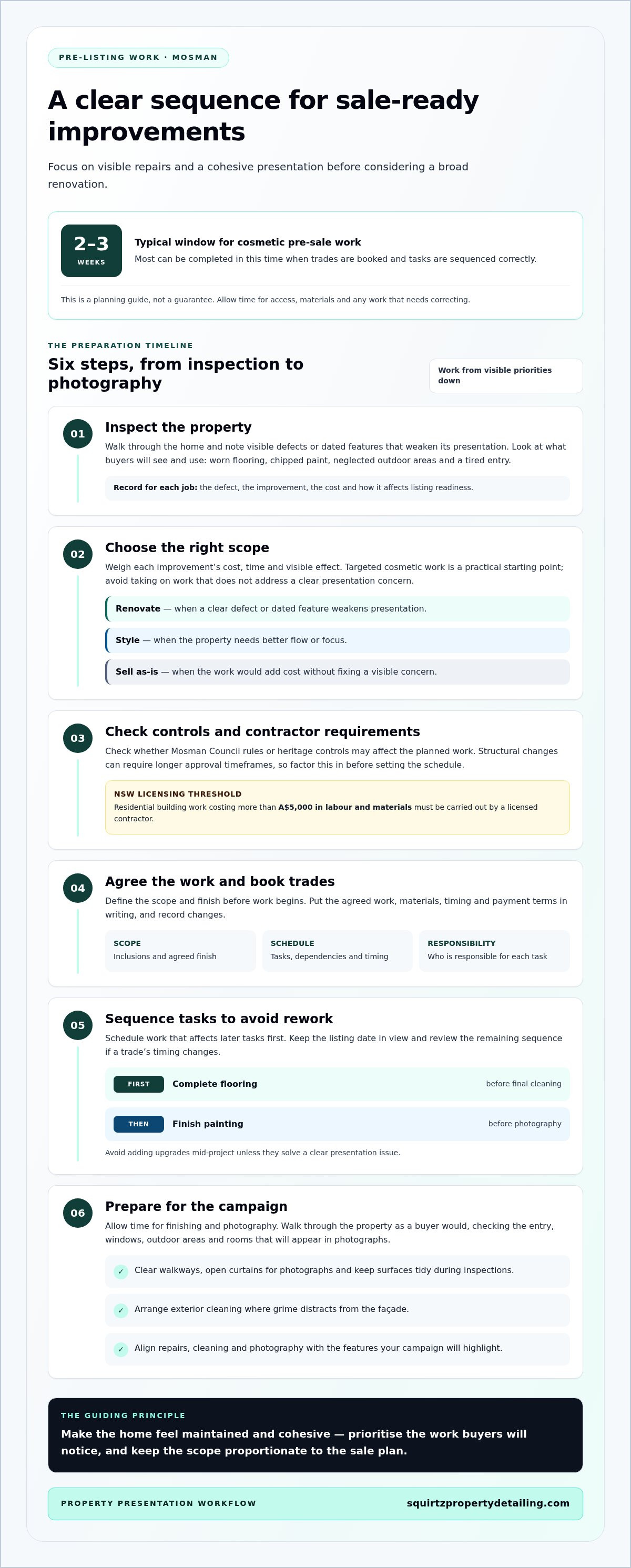
Pre-listing property improvement services in Mosman can focus on visible repairs, fresh paint and kerb appeal rather than a full renovation. Most cosmetic pre-sale work can be completed in 2-3 weeks when trades are booked and sequenced correctly. The right priorities help present the home as cared for without taking on unnecessary work.
Painting deserves particular attention: tired walls, marked trim or weathered exterior surfaces can distract buyers from a property’s best features. A considered refresh, alongside practical preparation, can make rooms feel cleaner and the exterior more inviting. The aim is a cohesive presentation, not change for its own sake.
This guide explains how to weigh improvement costs against the scope of work, where interior and exterior painting may fit, and how to prepare your property and improve its street appeal. It also covers how Mosman Council rules or heritage controls may affect renovations and repairs, so you can plan the work in a sensible order before listing.
Key Takeaways
- Prioritise visible maintenance and cosmetic updates before considering a major renovation; scope and sequencing shape the preparation plan.
- Use painting to refresh tired interiors and exterior surfaces, while keeping the finish consistent with the home’s character.
- For an established brick veneer home, assess the facade, roof, garden and entry together to create a tidy, cohesive first impression.
- Check how council rules and heritage controls may affect planned work, especially structural changes that can require longer approval timeframes.
- Mosman had 28,329 people in 2021, according to the Australian Bureau of Statistics; tailor the property’s presentation to its setting and likely buyers.
Pre-sale improvement costs and estimated returns
For most Mosman sellers, targeted cosmetic work is a practical starting point. Renovate when a clear defect or dated feature weakens the home’s presentation; style when the property needs better flow or focus; sell as-is when the work would add cost without addressing a visible concern. An agent can help identify what buyers are likely to notice, but the decision should reflect the property’s condition and your sale plan.
Use local cost estimates to compare a modest refresh with larger work. These are market estimates, not a budget for every Mosman property.
Local context helps frame the likely audience, not predict an individual sale. Mosman had a population of 28,329 people in 2021, according to the Australian Bureau of Statistics. The same organisation reports Mosman’s median household income is A$2,892 and that 41.6% of employed residents work as professionals. These details can inform how carefully owners plan presentation, finish and renovation scope.
Most cosmetic pre-sale work can be completed in 2-3 weeks when trades are booked and sequenced correctly. Start with an inspection and a written list of priority repairs, then schedule work that affects later tasks first. For example, complete flooring before final cleaning, and finish painting before photography. Book trades around the listing date and allow time for access, materials and any work that needs to be corrected.
Project management reduces stress by keeping decisions and responsibilities clear. Define the scope, agree on the finish, record inclusions in the contract and organise access before work begins. Keep a simple schedule showing each task, its dependencies and who is responsible. If one trade changes timing, review the remaining sequence to avoid disrupting photography or the campaign launch.
Hiring contractors carries practical risks, including unclear scope, inconsistent finish and delays caused by poorly sequenced work. In NSW, residential building work costing more than A$5,000 in labour and materials must be carried out by a licensed contractor. Put the agreed work, materials, timing and payment terms in writing, and keep records of changes. Avoid adding upgrades mid-project unless they solve a clear presentation issue.
Strategic improvements focus on what buyers see and use: worn flooring, chipped paint, neglected outdoor areas or a tired entry. Choose work that makes the home feel maintained, then weigh its cost and time against the likely benefit to presentation. A broad renovation can consume the sale preparation window; a focused repair or fresh finish may address the concern with less disruption.
For each proposed job, note the defect, the improvement, the cost and how it affects listing readiness. The price depends on the work and is provided after a quote request; scope, materials, access and finish all affect cost. This comparison helps Mosman owners choose a sensible level of work before proceeding.
Property preparation and marketing during a sale
Preparation should make the home easy to appreciate in person and in campaign photography. Match each improvement to likely buyers and the property’s strongest features.
Budgeting for Potential Market Uplift
Set the renovation budget around the work buyers will see, not a broad makeover. These figures provide market context, not a forecast for an individual home. Compare each proposed improvement’s cost, time and visible effect before committing.
Build the budget in priority order: address presentation issues, complete essential repairs, then consider optional upgrades. Keep a record of costs and agreed work so you can judge whether each task supports the campaign. For example, refreshing a worn entry may improve the first impression more directly than replacing a sound feature. Leave time for finishing and photography after the work is complete.
Positioning for Buyer Appeal
Buyer appeal starts with understanding the home’s likely audience. A family may value usable outdoor space and practical storage, while an apartment buyer may focus on light, condition and shared access. Prepare houses and units to show these features clearly. Clear walkways, open curtains for photographs and keep surfaces tidy during inspections.
For a harbour-view home, preserve sightlines from the main living areas and avoid letting garden growth obscure outlooks. The marketing campaign can then present the view alongside the property’s layout and condition. In Mosman, the median time on market across listings was 37 days, with figures current as at May 2026. Plan presentation tasks around the intended campaign schedule.
Some sellers consider an off-market approach instead of a public campaign. Access to potential buyers depends on the agent’s relationships, the property’s position and the seller’s preferred process. Ask how inspections, photography and property preparation will work under that approach. The home still needs a coherent finish, even if its first exposure is to a smaller audience.
Before the campaign begins, walk through the property as a buyer would. Check the entry, windows, outdoor areas and rooms shown in photographs. Arrange exterior cleaning where grime distracts from the façade; house washing for sale preparation can help present those surfaces cleanly.
Agree on presentation priorities with your agent before work starts. Confirm which features will lead the listing, then align repairs, cleaning and photography with that plan. This keeps the campaign focused on the home’s genuine strengths, whether it is a harbour outlook, a family-friendly layout or a well-maintained apartment.
Interior and exterior painting
Paint affects how buyers read a room before they notice its dimensions or fittings. For a Mosman home, inspect walls, ceilings, doors, skirting boards and exterior trim in daylight. Look for peeling, patchy colour, scuffs and visible repairs. A fresh, even finish supports a clean presentation, while unnecessary repainting can consume time without solving a clear problem.
Start inside with the rooms that feature prominently in listing photographs and inspections. A hallway with marked walls, for example, can make an otherwise tidy home feel tired. Prioritise visible damage, high-traffic areas and inconsistent finishes. Keep the palette coordinated across connected rooms, and consider how natural light changes the colour from morning to afternoon.
Preparation determines the final result. Remove loose paint, fill small surface defects and clean areas before applying a new coat. Protect floors, hardware and adjoining surfaces, then allow each layer to dry according to its product instructions. Rushed preparation can leave uneven edges or visible patches, especially around windows, doors and skirting boards.
Exterior painting requires a different inspection. Check weatherboards, rendered surfaces, eaves, fascia and exposed timber for peeling or deterioration. Identify the surface material before selecting paint, because preparation and coating depend on what is being painted. A timber window frame, for example, needs a different approach from a rendered wall.
Consider the whole frontage, not just the main wall. A faded front door or flaking trim can disrupt an otherwise well-kept exterior. Match the finish to the home’s character and surrounding streetscape, then inspect the result from the footpath. A consistent exterior appearance helps make a strong first impression before buyers reach the entry.
Painting can support a competitive campaign when it addresses a visible presentation issue. It does not replace repairs: water staining, cracked surfaces or recurring peeling may point to an underlying problem. Resolve the cause before repainting, or the defect may return during the campaign. For an auction, finish paintwork before photography and allow time to clean the rooms afterwards.
Use a short inspection sequence to set priorities: view each room in natural light, note defects, check exterior surfaces, then group work by location. Ask for details about surface preparation, product suitability and the agreed finish in the written scope. This clarifies the intended result and helps avoid last-minute changes that disrupt the listing schedule.
Keep the final check practical. Open doors, view corners from the entry and look for missed edges around fittings. Confirm repaired areas blend with surrounding surfaces, and remove paint dust before photographs. A carefully finished room should feel maintained, not newly altered, so buyers can focus on the home’s layout, light and features.
Kerb appeal for established brick veneer homes
Assess the frontage from the footpath before planning work. For an established brick veneer home, consider the brickwork, roofline, entry, driveway and garden as one composition. A clean façade can still look neglected if the path is stained or shrubs block the front windows. Walk towards the entrance and note what draws your attention first.
Start with a careful exterior clean. Remove leaves from gutters, clear cobwebs around the porch and clean grime from visible surfaces. Choose a method suited to each surface, especially around older mortar and painted trim. A uniform result matters more than aggressive cleaning, which can make sound brickwork look patchy or highlight previous repairs.
Brick veneer does not automatically need painting. First assess whether the brick is intact, the mortar appears damaged or previous coatings have altered its appearance. Painting can change the home’s established character and make future maintenance more involved. If the brick is sound, cleaning and repairing nearby details may be a more strategic improvement.
Look next at the roof, fascia, gutters and front door. Faded trim or a weathered entry can compete with the brick’s natural colour. A neutral finish on painted details can create a calmer presentation, while a restrained door colour adds definition. Keep the palette consistent with the roof and surrounding homes rather than introducing several new colours.
Garden work should frame the house, not conceal it. Trim plants covering windows, clear weeds from garden edges and define the path to the front door. A neatly edged bed, for example, can make an established garden feel deliberate without replacing mature planting. Keep the entry visible from the street and leave space for buyers to approach comfortably.
Inspect the driveway and path for stains, loose sections or uneven transitions. Sweep away debris, then assess whether cleaning or a surface repair would address the main concern. A tidy path guides visitors from the street to the entrance. Check that the letterbox, gate and visible house number also look clean and work as intended.
Use a simple order: clean, repair, then refresh painted elements. This prevents new paintwork from being marked by later cleaning or garden tasks. Photograph the frontage after the work is complete and review the image at normal viewing size. This final check can reveal clutter, blocked sightlines or a finish that looks uneven from the street.
For a Mosman sale, aim to make the brick veneer look cared for, not disguised. Keep original features visible where they contribute to the home’s character. A strategic combination of exterior cleaning, tidy landscaping and selective painting can strengthen appeal while preserving the established look buyers see on arrival.
Do Mosman Council rules or heritage controls affect pre-sale renovations and repairs?
Yes. Council planning controls and heritage considerations can influence the scope and timing of pre-sale work in Mosman. A cosmetic repair, such as patching a wall, differs from structural work or an external change that alters a building’s appearance. Identify the proposed work first, then establish whether approvals or heritage considerations affect the property.
Start by checking the property’s planning information and heritage status with Mosman Council. Compare the proposed work with the existing building: repainting an existing surface differs from changing its material, while repairing a pool differs from altering its structure. Keep photographs and a written scope to describe the work clearly.
Structural work needs particular attention before a sale deadline is set. In NSW, development application approvals for structural work take a minimum of 3-6 months. That timeframe can affect the campaign plan, so avoid scheduling structural changes as last-minute presentation jobs. A repair that does not alter the structure may have a different approval pathway, depending on the property and work.
Heritage controls can also shape decisions about visible changes. Replacing original external features or changing a façade, for example, may raise different considerations from repairing an existing finish. Preserve the home’s established character while planning updates, and distinguish maintenance from alteration in the scope. This helps owners understand the planning implications before committing to work.
For a swimming pool, define whether the work is a repair, renovation or structural alteration. Document the pool’s current condition, intended outcome and any changes to its form. Apply the same careful distinction to fences, retaining structures and external additions. Clear descriptions help owners assess whether an improvement fits the sale schedule.
Residential building work costing more than A$5,000 in labour and materials must be carried out by a licensed contractor in NSW. Include the work scope, materials, finish and schedule in the written agreement. Keep approvals and project records together with sale documents, especially where work changes the building or its exterior.
Use this sequence before booking work: define the change, check the property’s planning and heritage status, establish the relevant approval pathway, then schedule trades. Let the approval process guide the campaign timetable rather than assuming structural work can be completed within a cosmetic preparation window.
For repair work that supports sale preparation, arrange property handyman repairs as part of a clearly scoped plan. A defined repair list helps separate practical maintenance from alterations that may need further planning consideration.
Squirtz Property Detailing: House Washing
Squirtz Property Detailing helps prepare sale properties with practical exterior improvements, including House Washing. It’s useful when grime, cobwebs or weathering distract from the façade, entry or outdoor areas in listing photographs and inspections.
Exterior cleaning can complement other presentation work, such as Garden Landscaping & Makeovers or Roof Restoration & Painting. Where a pool needs more than routine upkeep, Swimming Pool Renovations can address its condition as part of the wider preparation plan. Choose work that supports the property’s presentation and fits the sale timeline.
For exterior preparation in Mosman, contact Squirtz Property Detailing to discuss your property’s needs. You can also visit squirtzpropertydetailing.com.
Set your sale preparation plan in motion
Before booking work, turn your property observations into a clear priority list. Separate tasks that improve the home’s first impression from larger changes that affect its character, approvals or campaign timing. This gives you a practical basis for deciding which pre-listing property improvement services in Mosman suit your sale plans.
Squirtz Property Detailing can improve exterior presentation with House Washing and Garden Landscaping & Makeovers. Swimming Pool Renovations may also suit properties where the pool needs attention before sale. Choose work that addresses a real presentation concern and fits the way you intend to market the home.
A useful next step is to outline the areas needing attention and the finish you want buyers to see. That makes it easier to discuss the scope and organise the preparation around your campaign. Contact Squirtz Property Detailing to discuss your property preparation, and take the next step towards presenting your Mosman home with care.
Frequently Asked Questions
What pre-sale property improvement services are available in Mosman, NSW?
Pre-sale improvements in Mosman can include exterior cleaning, painting, garden work, pool renovations and practical repairs. Squirtz Property Detailing offers House Washing, Garden Landscaping & Makeovers, Swimming Pool Renovations, Roof Restoration & Painting, Internal & External Painting, Handyman Repairs, Window Cleaning and Driveway & Path Resurfacing. For example, a seller might combine window cleaning with garden work to present a clearer outlook and a tidier entry.
How much do pre-listing property improvement services cost in Mosman?
The price depends on the work required and is provided after a quote request. Cost factors include the areas to improve, their condition, surface materials, access and selected finish. A small repair list differs from a project involving several parts of the property. Set priorities first, then describe each task clearly so the scope reflects the preparation you need.
Which renovations and repairs add the most value before selling a Mosman property?
The most useful work usually addresses a clear buyer concern or improves a prominent feature. A cracked pool surface, peeling exterior paint or damaged entry path can distract from the property’s strengths. Start by recording visible defects, then prioritise repairs that affect condition, usability or first impressions. Improvements support presentation but cannot guarantee a particular sale price.
How much does pre-sale painting, gardening, cleaning and minor repairs cost in Mosman?
There isn’t one useful price for these jobs because the scope varies between properties. Painting costs depend on the surfaces and preparation required; gardening on the areas and work involved; cleaning on the surfaces and access; and repairs on the defects and materials. The price depends on the work and is provided after a quote request. Describe each task individually to define the scope clearly.
How long does it take to prepare a Mosman property for sale?
Most cosmetic pre-sale work can take 2-3 weeks when trades are booked and sequenced correctly. The schedule changes with the number of tasks, property access, trade coordination and any work that requires approval. Structural work can take longer: development application approvals for structural work in NSW take a minimum of 3-6 months. Set the campaign date after identifying the work and approval pathway.


