
A minor silicone breach around a shower screen can easily cost you $30,000 at the negotiation table. When you prepare your home for the market, completing targeted pre inspection repairs Sydney buyers expect is often the difference between holding firm on your reserve and watching nervous purchasers aggressively chip away at your price.
Preparing for open homes is stressful enough without the dread of an Australian Standard AS 4349.1 building defect report handing buyers an excuse to demand steep discounts. It's frustrating to wonder which flaws trigger genuine red flags versus harmless cosmetic wear, especially when coordinating separate trades across roof, carpentry, and paint repairs quickly becomes overwhelming.
Discover how targeted pre-inspection repairs protect your sale price and prevent buyers from using minor building report defects to slash offers. Below, we walk through a straightforward 2026 checklist prioritising high-impact fixes that deliver clean inspection reports, keeping your reserve intact without overcapitalising.
Key Takeaways
- Understand how minor visual and functional defects in building reports give buyers substantial psychological leverage to discount their offers.
- Identify the high-risk zones Sydney building inspectors scrutinise under AS 4349.1, from damp sandstone footings to tree canopy debris.
- Discover why completing targeted pre inspection repairs Sydney buyers expect protects your reserve price and stops post-auction renegotiations.
- Follow a practical exterior and internal maintenance checklist that resolves moisture triggers and cosmetic settlement cracks without overcapitalising.
- Learn how engaging an all-in-one property detailing service eliminates the headache of coordinating multiple separate trade contractors before listing.
Why Pre Inspection Repairs in Sydney Protect Your Sale Price
Pre-inspection repairs involve targeted vendor maintenance completed before official building audits take place. Instead of waiting for a purchaser to commission an audit, proactive sellers inspect and rectify flaws early. This preventative trade detailing eliminates defects before an external inspector logs them in black and white.
In competitive Sydney property markets, clean inspection reports keep campaigns running at full momentum. When multiple registered bidders read a fault-free report before an auction, their bidding confidence stays high. Conversely, unaddressed maintenance issues force sellers into rushed, emergency repairs during standard contract cooling-off periods, handing all leverage to the purchaser.
The Psychology of the Australian Building and Pest Report
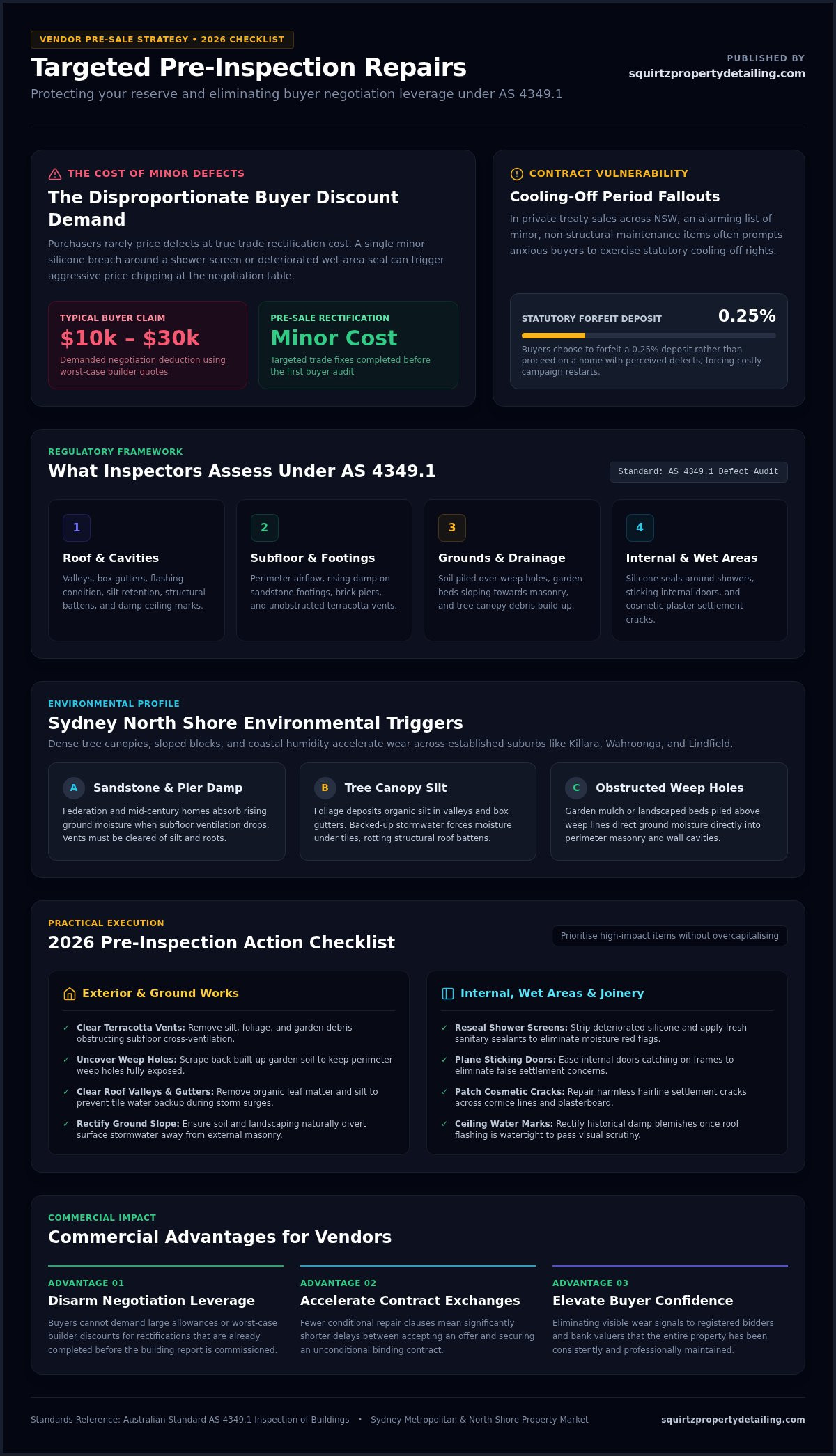
Property inspectors evaluate homes under Australian Standard AS 4349.1, assessing accessible interior, exterior, roof space, subfloor, and grounds. While inspectors classify findings across different severity tiers, an extensive list of minor, non-structural maintenance items often alarms first-home buyers and risk-averse investors alike. Rather than seeing superficial wear, purchasers imagine unseen liabilities. In private treaty sales across NSW, this anxiety often prompts buyers to exercise their statutory cooling-off rights, forfeiting their 0.25% deposit to walk away from an otherwise solid home.
The Financial Return of Proactive Defect Rectification
Unresolved maintenance gives prospective buyers an excuse for aggressive price chipping. When a building report lists minor issues, such as sticking doors, loose guttering, or deteriorated wet-area seals, buyers rarely calculate the true trade cost. Instead, they quote worst-case builder estimates, frequently demanding discounts between $10,000 and $30,000 from the agreed price.
Investing in essential property maintenance for sale Sydney vendors rely on protects your original guide price. Straightforward pre-sale handyman fixes disarm prospective buyers before negotiations start, preserving your reserve and avoiding post-auction renegotiations.
Strategic pre inspection repairs Sydney homeowners complete deliver clear commercial advantages:
- Removal of negotiation leverage: Buyers cannot demand large allowances for rectifications that are already completed.
- Smooth contract exchanges: Fewer conditional clauses mean less delay between accepting an offer and securing an unconditional contract.
- Enhanced presentation: Fixing visible wear signals to buyers and valuers that the entire property has been consistently cared for.
What Building Inspectors Look for in North Shore Homes
Sydney's North Shore presents unique microclimates that directly influence property wear. Dense tree canopies, sloped blocks, and coastal humidity combine to accelerate structural weathering. Because visual audits adhere strictly to AS 4349.1 standards, building consultants focus heavily on environmental moisture accumulation, drainage adequacy, and external timber preservation across these established properties.
Unlike simple styling touch-ups, targeted pre inspection repairs Sydney vendors carry out address the exact environmental vulnerabilities that trigger warning notices in pre-purchase surveys.
Subfloor Ventilation, Rising Damp, and Drainage Issues
Character Federation and mid-century homes in suburbs like Killara frequently rest on sandstone foundations and brick piers. These dense materials draw ground moisture upward when perimeter airflow drops. Inspectors immediately flag obstructed subfloor vents, soil piled over weep holes, and garden beds that direct water toward external footings. Rectifying these faults involves unblocking terracotta vents, scraping away built-up garden soil to reveal brickwork, and ensuring ground slopes divert stormwater away from perimeter masonry.
Roofing Cavities, Flashing, and Gutter Integrity
Heavy foliage in leafy enclaves like Wahroonga and Lindfield deposits organic matter into valleys and box gutters. Silt retention causes rainwater to back up underneath tiles during storm surges, rotting structural battens and showing damp spots on plaster ceilings. Proactive roof servicing resolves these triggers before an inspector climbs into the roof cavity. To ensure your roof passes scrutiny, engaging specialists for pre-sale handyman repairs Sydney homes regularly need helps eliminate blocked channels, realign cracked concrete tiles, and replace degraded lead flashings.
Timber Pest Risks and Structural Timber Decay
Timber pest inspections carried out under AS 4349.3 focus heavily on subterranean termite attractants. Moisture-softened external timbers invite rapid pest activity, making decaying timber joinery a primary concern for local vendors.
Inspectors flag the following perimeter conditions without hesitation:
- Direct earth-to-wood contact: Untreated timber garden edging, timber steps, or structural verandah posts buried directly into moist soil.
- Softened exterior joinery: Weathered fascia boards, window sills, and pergola framing exhibiting wet rot.
- Stored perimeter timber: Firewood piles or discarded building off-cuts stacked flat against external brickwork.
Cutting away decayed timber ends, setting posts on raised metal stirrups, and maintaining clean clearance margins around perimeter brickwork eliminate these pest hazards. For vendors preparing an established residence, partnering with seasoned exterior maintenance professionals at squirtzpropertydetailing.com provides a practical way to rectify perimeter timber and surface drainage defects before listing.
Essential Sydney Pre Inspection Repairs Checklist: Exterior and Grounds
First impressions dictate buyer sentiment, but building consultants look straight past decorative landscaping to test boundary fences, retaining systems, and building skins. Executing targeted pre inspection repairs Sydney buyers expect across your property's perimeter prevents minor outdoor flaws from being flagged as serious structural liabilities.
Start by clearing and vacuuming grit from sliding door and window tracks. When an inspector tests aluminium patio sliders or double-hung sashes, excessive resistance gets written up as failed rollers or frame subsiding. A thorough clean, followed by silicone-based dry lubrication, restores effortless operation across all exterior openings.
External Walls, Render, and Weatherboard Rectification
Fine hairline cracks across external acrylic render or mortar wash often look alarming in photographs. Patch these minor fissures using flexible exterior masonry fillers matched to the wall texture before repainting the affected planes. For timber claddings, scraping back flaking patches and applying flexible acrylic undercoats seals exposed grain against coastal humidity. Rather than undertaking full re-cladding, combining soft house washing with targeted pre-sale house painting Sydney properties often require delivers an immaculate exterior surface that easily satisfies visual standards.
Driveways, Retaining Walls, and Paved Walkways
Inspectors routinely classify cracked concrete slabs or uneven paving stones as safety trip hazards under AS 4349.1. Lifting displaced brick pavers, levelling sub-bases with packing sand, and re-laying them flush removes these safety notations instantly. If low sleeper retaining walls lean forward, clear soil away from the rear, straighten the upright posts, and verify agricultural drain pipes remain free from silt. High-pressure cleaning followed by path resurfacing strips dark mould from concrete driveways, demonstrating deliberate care while improving pedestrian traction.
Pool Safety Barriers and Decking Balustrades
NSW swimming pool compliance regulations enforce strict safety parameters that property inspectors audit thoroughly. Pool gates must latch securely from any resting angle without manual assistance.
Complete these safety checks across outdoor entertainment zones:
- Gate latch operation: Adjust self-closing hinge tension and verify the striker engages reliably from fully open to slightly ajar positions.
- Non-climbable zones: Relocate pot plants, barbecue equipment, and outdoor furniture located within 900 millimetres of the pool barrier.
- Balustrade stability: Tighten timber coach screws and replace loose brackets on elevated decks to eliminate railing play.
- Decking board security: Punch down protruding decking nails, secure cupped timber planks, and swap out dry-rotted steps.
Internal Defect Rectification: Doors, Wet Areas, and Ceilings
Modern residential inspections rely heavily on electronic moisture meters and infrared thermal imaging cameras. These tools detect thermal anomalies and elevated moisture behind walls that look completely pristine to the naked eye. What could be a minor splash leak past a tired silicone bead frequently gets flagged as concealed structural decay or possible subterranean termite activity.
Differentiating harmless settlement from true structural distress is essential during your preparation. Hairline cracks under two millimetres along plasterboard joints or cornice junctions generally indicate standard seasonal movement. In contrast, diagonal stepped cracks across internal brickwork or doors jamming severely in out-of-square frames point to foundation movement. Completing routine internal pre inspection repairs Sydney vendors organise ensures your interior presents flawlessly without triggering unnecessary engineering referrals.
Wet Area Sealing and Plumbing Fixture Servicing
Perished perimeter caulking in showers and around bath lips is the leading cause of false waterproofing failure alerts. When water seeps behind cracked silicone, moisture meters register high readings on adjacent bedroom walls. Strip out degraded, mouldy sealant completely, clean the joint with methylated spirits, and apply high-grade anti-mould sanitary silicone. Simultaneously, replace worn tap washers to halt steady drips, clear slow-draining vanity wastes of hair buildup, and secure loose toilet pans to floor tiles with fresh mortar bedding or silicone.
Internal Doors, Latches, and Window Sash Balances
Building inspectors test every internal door and window opening during an AS 4349.1 audit. Timber doors that bind against jambs, rattle when latched, or fail to catch smoothly give purchasers an immediate impression of deferred maintenance.
Service these operational internal components systematically:
- Door clearances: Plane binding timber edges along top or bottom rails, tighten hinge screws, and reposition strike plates so latches engage with a firm click.
- Window mechanics: Replace snapped spiral sash balances in aluminium frames or renew frayed sash cords and pulleys in traditional timber double-hung windows.
- Wall integrity: Patch doorknob impact indentations using rapid-setting plaster filler, sand smooth, and apply matched interior paint.
- Cornice junctions: Scrape out separated cornice lines, apply flexible gap sealant along the seam, and paint across the join to conceal seasonal movement.
Addressing these internal maintenance jobs before open inspections ensures purchasers receive an unblemished condition report. To eliminate internal defects across your property, book comprehensive trade maintenance through squirtzpropertydetailing.com to prepare every room for market scrutiny.
How Squirtz Property Detailing Streamlines Pre-Sale Repairs
Coordinating property preparation under tight auction deadlines tests any seller's patience. Instead of spending weeks managing individual subcontractors, working with Squirtz Property Detailing consolidates your entire preparation under one roof. We tackle everything from surface detailing to essential handyman maintenance, systematically preparing properties so that building audits run smoothly.
Executing targeted pre inspection repairs Sydney vendors rely on requires a synchronized approach. When pressure washing, roof servicing, garden makeovers, and paint repairs are handled by a single dedicated provider, you avoid costly site delays and protect your campaign schedule.
Consolidated Property Detailing vs. Multi-Trade Coordination
Booking separate painters, carpenters, roofers, and pressure cleaners introduces significant project risk. Independent trades frequently cancel on short notice, blame each other for project delays, and leave loose ends that cause inspection red flags. Sourcing quotes and supervising half a dozen contractors drains time right when your marketing launch demands complete focus.
Choosing established pre-sale handyman services Sydney homeowners trust eliminates this logistical headache. Squirtz manages the full scope of exterior washing, internal plaster patching, door servicing, and grounds care concurrently. This unified service ensures every item on your checklist is completed before professional photographers and building inspectors arrive on site.
Over 30 Years of Sydney Property Presentation Expertise
Operating across Sydney and the North Shore since 1993, Squirtz understands the precise building details local property inspectors scrutinise. From sandstone damp mitigation to timber preservation, our decades of hands-on experience ensure that your home meets rigorous AS 4349.1 standards.
Our comprehensive capabilities span every high-impact area buyers evaluate:
- Handyman repairs: Realigning gates, servicing window balances, securing balustrades, and repairing perimeter timber.
- Internal and external painting: Patching ceiling water stains, filling plaster cracks, and refreshing weathered timber trims.
- Exterior detailing: Roof restoration, pressure washing hard surfaces, path resurfacing, and full garden makeovers.
Delivering exceptional trade workmanship alongside meticulous aesthetic detailing gives prospective purchasers complete confidence, safeguarding your reserve price on auction day. To prepare your property for a flawless market launch, schedule your pre-sale property assessment with Squirtz today.
Secure Your Reserve Price with Proactive Property Preparation
Protect your sale equity before building audits hand buyers the upper hand. Resolving minor wet area sealant gaps, servicing sticking joinery, and clearing perimeter drainage stops purchasers from using standard building reports to demand tens of thousands in price reductions. Completing targeted pre inspection repairs Sydney buyers expect ensures your campaign proceeds without friction, protecting your reserve on auction day.
Squirtz Property Detailing has proudly prepared Sydney homes for the market since 1993. As an all-in-one provider handling handyman repairs, house washing, painting, and grounds care, we take the stress out of pre-sale trade coordination. Our team holds a proven track record of helping North Shore vendors eliminate defect penalties, ensuring every property presents at its highest standard. Take control of your sale campaign and book your pre-sale property repair assessment with Squirtz today.
Frequently Asked Questions
What are the most common defects flagged in Sydney building inspection reports?
The most frequent defect items include leaking shower seals, binding doors, cracked roof tiles, blocked subfloor vents, and perimeter timber-to-soil contact. In established Sydney suburbs, inspectors also routinely log high moisture readings behind bathroom walls and uneven garden paving as notable safety hazards under AS 4349.1 standards.
Do I legally have to fix minor defects found during a pre-purchase building inspection?
No legal requirement forces a vendor to rectify minor defects identified during a pre-purchase audit. However, unaddressed faults give purchasers strong leverage to renegotiate price or cancel during the cooling-off period. Completing proactive pre inspection repairs Sydney buyers expect eliminates these points of friction before contracts exchange.
How much can a bad building and pest report affect my Sydney home sale price?
A defect-heavy report routinely leads to buyer price discounts between $10,000 and $30,000, or roughly 1% to 3% of the agreed purchase price. On higher-value North Shore properties, adverse inspection findings can cause hesitant bidders to walk away entirely, reducing auction competition and damaging the final sale outcome.
What is the difference between a major structural defect and general maintenance?
Major structural defects compromise the core load-bearing elements of a building, such as collapsing foundation footings or sagging roof trusses requiring licensed builders. General maintenance covers serviceable wear, including hairline plasterboard cracks, weathered timber paint, rusted guttering, and perished silicone caulking that handy trade services can readily fix.
Can deteriorated silicone in bathrooms cause a building inspector to fail the waterproofing?
Yes, failing perimeter silicone frequently leads inspectors to flag suspected waterproofing failure. When water penetrates cracked sealant, non-invasive electronic moisture meters detect dampness in adjacent timber studs or wall cavities. Replacing perished caulking with mould-resistant sanitary silicone prevents these alarming moisture readings during the inspection.
How far in advance of listing my Sydney home should pre-inspection repairs be completed?
Organise all maintenance works three to four weeks before launching your marketing campaign. This timeline ensures internal paint patches and wet area caulking dry thoroughly, giving you time to clean window tracks and grounds before real estate photography and preliminary vendor building audits occur.
Will a freshly painted ceiling hide water stains from an inspector’s moisture meter?
Paint conceals visual discolouration, but it does not trick an inspector's electronic moisture meter or thermal camera. If the underlying roof or pipe leak remains active, the meter registers elevated internal moisture immediately. You must stop the water source, dry the plasterboard, and seal the stain with an oil-based primer before repainting.
Why is subfloor ventilation such a big issue for North Shore homes?
Many North Shore residences sit on sandstone foundations and double-brick footings surrounded by heavy tree canopies. Restricting subfloor airflow allows ground moisture to accumulate under timber bearers, creating damp microclimates that promote timber rot and attract subterranean termites under AS 4349.3 guidelines.


