
More pressure doesn’t always mean a cleaner finish. On a Sydney North Shore property, the wrong setting or technique can strip paint, loosen mortar, damage timber or send water across garden beds and nearby fittings. Pressure washing can remove some built-up grime, but the right approach depends on the surface, the type of dirt and the condition of the area.
It’s understandable to want exterior surfaces looking their best before a sale or property inspection, while being cautious about causing damage. This guide explains how pressure washing works, when a gentler method may be more suitable and what to consider before tackling a job yourself or arranging professional help. You’ll also find practical steps for preparing the area and assessing risks around delicate or hard-to-reach surfaces. Squirtz Property Detailing is a Sydney-based property-maintenance business established in 1993, with house washing and driveway and path resurfacing among its listed services. The cleaning method should be assessed for each property and surface.
Key Takeaways
- Choose a cleaning method based on the surface, its condition and the type of build-up, not simply the strongest setting.
- Compare pressure washing with lower-pressure and manual cleaning to find an approach that suits the area and limits the risk of damage.
- Inspect and prepare each area before exterior cleaning, including around plants, fittings and adjoining surfaces.
- For difficult access, uncertain materials or extensive build-up, ask how the surfaces will be assessed and what preparation is needed.
- Plan cleaning with the whole property’s presentation in mind, particularly before a sale or inspection.
What Is Pressure Washing, and What Can It Clean Around a Property?
Pressure washing uses water delivered under pressure to remove selected dirt and surface build-up. It may suit some exterior cleaning jobs, but the result depends on the material, its condition, the type of soil and the cleaning method. More force isn’t automatically more effective. It can mark a surface or drive water where it shouldn’t go.
How does pressure washing work?
Water pressure is the force with which water leaves the outlet. Water volume is how much flows over time. Both affect how a surface responds. A directed spray may loosen grime from a robust surface, but the angle, distance and time spent on one spot can change the result. Some stains may remain, and repeated or forceful treatment can cause damage.
Pressure washing uses pressurised water to dislodge selected build-up, but whether it cleans safely depends on the surface and how the method is applied.
Which property areas may be suitable?
Some sound, hard surfaces may be candidates, including certain paved areas, driveways and paths. Suitability depends on the material, age, existing cracks, joints and type of dirt. A surface that appears sturdy may still have loose sections or a finish that could be affected. Inspect it first and, if appropriate, test a small, inconspicuous area.
Paint, render, timber and fragile or weathered finishes need individual assessment. Excessive force may strip or lift paint, roughen timber or damage render. If the material or its condition is uncertain, don’t assume high pressure is appropriate. Soft washing describes a lower-pressure alternative, but the right method still depends on the surface and the build-up.
How is it different from house washing?
Pressure washing describes a method that uses pressurised water, while house washing refers more broadly to cleaning a home’s exterior. That doesn’t mean every part of a house should be cleaned at the same pressure or with the same method. Walls, windows, fittings and nearby garden areas each need consideration before work begins.
For a broader view of planning exterior care, read this professional exterior cleaning guide. Squirtz Property Detailing lists house washing and driveway and path resurfacing among its services. The suitable cleaning approach should be assessed for each property and surface.
How Pressure, Distance and Surface Condition Affect Cleaning
The same water spray can lift grime from sound concrete yet damage an older painted wall. Pressure washing isn’t a one-setting-fits-all task. The material and its condition determine how much impact a surface may tolerate. The type of soil and the cleaning approach also affect how much treatment is needed.
Why surface material and condition matter
Sound concrete may be more resilient than paving with cracks, loose joints or previous repairs. Even on a hard surface, a forceful spray could dislodge material or worsen weak spots. Inspect the area first, especially if it has been patched or shows signs of wear.
Render, timber, painted finishes and mortar can be more vulnerable. Water may lift loose coatings, mark softer materials or disturb weakened joints. Look for peeling paint, cracks, crumbling mortar, loose paving and fragile fittings before cleaning. If a surface is already compromised or you can’t identify its finish, seek an assessment rather than testing it with a forceful spray.
What changes the cleaning result?
Several variables affect how water meets the surface. A narrow or concentrated spray can have a different impact from a broader pattern. Moving the spray closer may increase its force on a small area, while greater distance can spread the impact. Holding the spray in one spot for longer may also affect the finish. Don’t assume a particular setting or distance is safe for every material.
The type of build-up matters too. Loose dirt may respond differently from ingrained grime, organic staining or residue. A change in soil may call for a different cleaning method, not simply more pressure. If a test area shows colour loss, surface roughening or material coming loose, stop and reassess.
No single pressure setting suits every surface. Choose the method by considering the material, its condition and the build-up.
Plan where wash-water will go before starting. Nearby garden beds, delicate plants, outdoor fittings and surfaces below the cleaning area may need protection. Check current local guidance on water use and runoff rather than assuming wash-water can flow into a stormwater drain. For general equipment hazards, the CDC’s Pressure Washer Safety guidance outlines risks associated with high-pressure equipment.
If you’re unsure which approach suits your home, discuss the surface and its condition before arranging work. Squirtz Property Detailing lists house washing and driveway and path resurfacing among its services. You can enquire about suitable property maintenance for the areas you’re preparing.
Pressure Washing vs Gentler Cleaning: Match the Method to the Surface
Choosing a cleaning method means weighing how well it may remove the build-up against the risk to the surface. Pressure washing can suit some robust materials, but lower-pressure washing or manual cleaning may be more appropriate for delicate, coated or deteriorating areas. No method is automatically safest or most effective in every situation.
| Method | Possible uses and suitability | Risks and when to seek an assessment |
|---|---|---|
| Pressure washing | May suit some sound, hard surfaces with suitable build-up, depending on the material and its condition. | Can damage weak joints, coatings or fragile finishes if the approach is unsuitable. Seek an assessment if the surface is cracked, repaired or unfamiliar. |
| Lower-pressure washing | May be considered for some surfaces that need a less forceful approach. | Lower pressure doesn’t remove all risk. Check the material and finish, and ask for advice if you’re unsure how they’ll respond. |
| Manual cleaning | Can be useful for small areas or targeted work where a controlled approach is preferred. | May take more time and may not suit every type of soil or surface. Pause if cleaning could loosen a finish or damage the material. |
When might a gentler approach be more suitable?
Older paint, fragile render, weathered timber and deteriorating mortar deserve particular care. A lower-impact method may reduce the force applied, but it still needs to suit the surface and the build-up. Identify the material, inspect its condition and check for loose coatings or damage before choosing equipment or technique. Don’t rely on a generic setting or cleaner recommendation for an unknown finish.
If you suspect lead-based paint, don’t disturb it with a pressure washer or attempt to contain the residue yourself. Seek advice from a suitably qualified professional about safe handling and any applicable Australian guidance before work begins.
When should you avoid DIY pressure washing?
Pause if the work involves height, difficult access, nearby electrical fittings or a surface with uncertain condition. A powerful spray can cause injury or property damage, and working from an unstable position adds risk. If you can’t confidently assess the surface or reach it safely, arrange a qualified on-site assessment instead of experimenting.
This comparison is general information, not a substitute for professional advice. Ask the person assessing the job which areas are suitable, what method they propose for each surface and what preparation is needed. That discussion can help you plan exterior cleaning carefully, particularly before a sale or inspection.
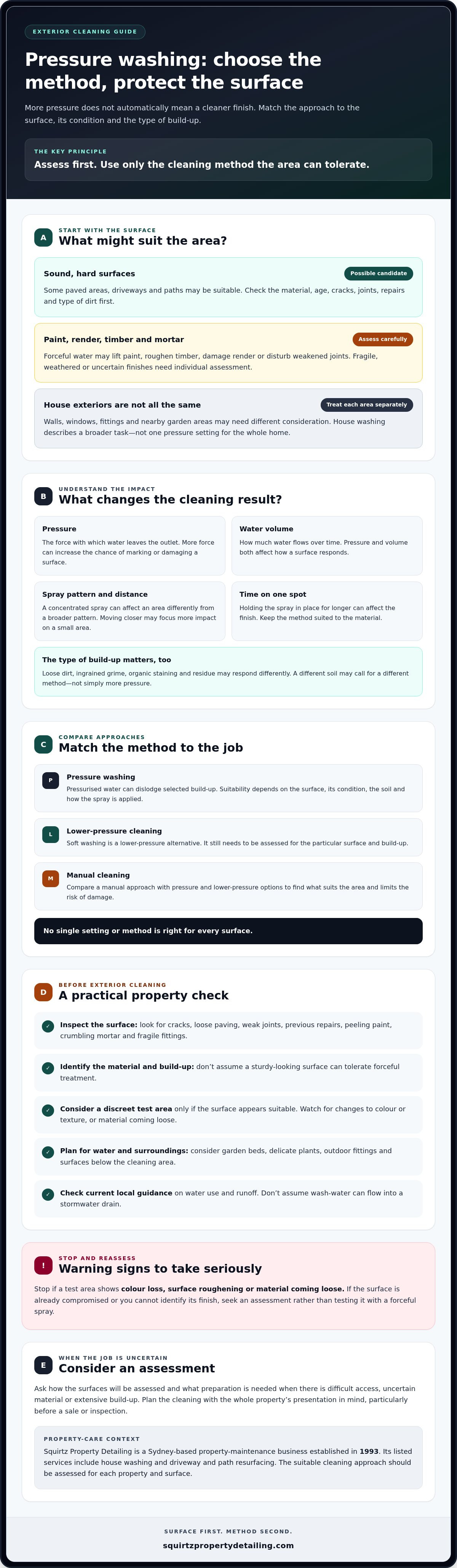
A Practical Pressure-Washing Checklist for Sydney Property Owners
A planned clean starts with checking the property, not switching on equipment. Use this sequence to decide which areas may be suitable, what needs protection and whether the work is appropriate to tackle yourself. For homes across Sydney, including the North Shore, assess each surface according to its condition and access.
Before and during cleaning
- Identify the materials. Note whether each area is concrete, pavers, painted masonry, render, timber or another finish. Don’t assume adjoining surfaces can be cleaned the same way.
- Inspect for existing damage. Look for cracks, peeling paint, loose joints, crumbling mortar, previous repairs and fragile fittings. If you’re unsure how a surface will respond, pause and seek an on-site assessment.
- Check access and surroundings. Consider whether the area can be reached safely, where the water supply is, and whether nearby electrical fittings or other fixtures could be affected. Don’t attempt elevated or difficult-to-reach work if safe access is unclear.
- Protect nearby areas. Identify plants, garden beds, doors, windows and adjoining surfaces that may be affected by spray or water movement. Check current local guidance on water use and runoff before starting. Don’t assume where wash-water may flow is acceptable.
- Choose the method for each surface. Match the approach to the material, its condition and the type of build-up. Stop if a test area shows colour change, surface wear or loose material.
- Inspect after cleaning. Look for missed build-up, new marks, disturbed joints or other signs of damage. Check adjoining areas and planted spaces for residue, then address remaining issues with a suitable method.
Review the whole presentation
Before a sale or inspection, view the driveway, paths and house exterior as connected parts of the property’s presentation. Cleaning one area can make nearby dirt or surface wear more noticeable, so check the overall result rather than focusing on one spot. For more preparation ideas, see the Sydney property maintenance for sale guide.
Squirtz Property Detailing serves Sydney, including the North Shore, and lists house washing and driveway and path resurfacing among its services. Enquire about suitable exterior cleaning for your property and the surfaces you’re preparing.
When to Arrange Professional Pressure Washing for a Sydney Property
Professional assessment is sensible when an exterior area is difficult to reach, the surface material is uncertain or build-up covers a large area. The same applies if you find peeling coatings, damaged joints or previous repairs that may be vulnerable during cleaning. An on-site review can help establish which areas are suitable for cleaning and whether pressure washing is appropriate at all.
Before arranging work, check the scope rather than assuming every exterior surface is included. Ask the provider:
- Which areas and materials are included, and which are excluded?
- How will you assess paint, render, paving, joints and other vulnerable finishes?
- What existing damage should be noted before work begins?
- What preparation is needed around plants, fittings and adjoining areas?
- How should the cleaning be sequenced with other property maintenance?
Clear answers help you compare proposals based on the work being considered, not just the promise of a clean finish. If access is elevated or awkward, ask how the area will be assessed and whether it should be handled by a suitably qualified professional. Don’t proceed if safe access or the risk to the surface is unclear.
Plan exterior care around a sale
Before a sale or property inspection, consider the driveway, paths and house exterior together. Dirt or wear in one area can stand out beside a freshly cleaned surface, so a coordinated plan helps you prioritise visible work and prepare the property consistently. Cleaning can support a tidy presentation, but it can’t guarantee a sale price or market result.
Squirtz Property Detailing is a Sydney-based property-maintenance business established in 1993, serving residential and commercial clients, including on Sydney’s North Shore. Its listed services include house washing and driveway and path resurfacing. Pressure washing is not confirmed as a separately listed service, so ask whether the method is available for your surfaces and how they would be assessed.
For Sydney property owners planning exterior maintenance, discuss property detailing with Squirtz and explain which areas you’re preparing. A clear description of the surfaces, their condition and your presentation goals can help establish what work may be suitable.
Plan your next exterior maintenance step
The right cleaning approach starts with the surface, its condition and the build-up you need to address. Pressure washing may suit some areas, while delicate finishes or uncertain materials call for a more careful assessment. Before starting, consider access, nearby plants and fittings, and how the exterior areas work together in the overall presentation.
If you’re preparing a Sydney property for a sale or inspection, a considered plan can help you prioritise the house exterior, driveway and paths. Squirtz Property Detailing is a Sydney-based property-maintenance business established in 1993, serving the Sydney North Shore. Its listed services include house washing and driveway and path resurfacing. Ask which approach is suitable for your particular surfaces.
Discuss exterior cleaning and property detailing with Squirtz to explore suitable maintenance for your property. With the surfaces and scope clearly considered, you can take the next step towards a cleaner, better-presented exterior.
Frequently Asked Questions
Is pressure washing safe for every type of house exterior?
No, pressure washing isn’t suitable for every exterior surface. The material, age, existing damage and type of build-up all affect which cleaning approach may be appropriate. Sound paving may tolerate a different method from peeling paint, weathered timber or fragile render. Check the surface first, and seek an on-site assessment if you can’t identify the finish or judge its condition confidently.
Can pressure washing damage concrete, render or paint?
Yes, an unsuitable approach can damage any of these surfaces. Cracked or repaired concrete may have weak points, while render can be fragile and paint may be loose or deteriorating. Inspect for cracks, flaking, worn areas and damaged joints before cleaning. Don’t assume a hard-looking surface can withstand a forceful spray. If you’re unsure, ask a suitably qualified professional to assess it first.
How often should you pressure wash a house or driveway?
There’s no single schedule that suits every property. Base cleaning frequency on the surface’s condition, visible build-up and presentation needs, rather than setting a routine without checking the area. Inspect the house exterior, driveway and paths periodically, and address dirt when it affects appearance or upkeep. If a surface is ageing or damaged, assess the cause and suitable method before cleaning it again.
What is the difference between pressure washing and soft washing?
Pressure washing uses water delivered under pressure to dislodge selected dirt and build-up. Soft washing generally refers to a lower-pressure cleaning approach, often considered where a less forceful method is needed. Neither method is automatically right for every surface. The material, its condition and the type of soil should guide the choice. Uncertain finishes may need professional assessment before treatment.
Can you pressure wash a roof?
Don’t assume a roof is suitable for pressure washing. Roof materials, coatings, condition, pitch and access all affect the risks, and an unsuitable method may damage the surface or create a safety hazard. Avoid DIY work if access is elevated or uncertain. Ask a suitably qualified professional to assess the roof and explain the proposed cleaning approach. Squirtz lists roof restoration and painting, not roof cleaning.
Should I pressure wash my property before selling?
Exterior cleaning can help present a property for sale, but choose the method carefully to avoid damaging finishes. Assess the house exterior, driveway and paths together so the presentation feels consistent, and address existing damage before cleaning. Pressure washing won’t guarantee a particular sale price or market outcome. If you’re preparing a Sydney North Shore property, plan work around the surfaces that need attention and their condition.
Do I need a professional for pressure washing in Sydney?
Consider a professional assessment if the surface is unfamiliar or damaged, the build-up is extensive, or access involves height or nearby fittings. Ask which areas are included, how vulnerable finishes will be checked and what preparation is needed. Squirtz Property Detailing is a Sydney-based business established in 1993, serving the Sydney North Shore. Ask whether pressure washing is suitable and available for your property.


