
A pre-sale inspection report isn’t a demand to repair every observation. If you’re looking for a handyman to fix pre-sale inspection report items, start by separating clearly scoped maintenance from findings that need further assessment. That helps you focus on practical jobs buyers may notice, without treating every note as a repair order.
When a report lists several small jobs and sale inspections are approaching, it can be hard to know where to start. Turn each relevant finding into a task, note its location and recommended next step, then prioritise work that affects safety, function or visible presentation. This guide explains how to sort findings, plan suitable repairs and prepare a Sydney property for sale.
Squirtz Property Detailing provides handyman repairs as part of pre-sale property preparation in Sydney, including on the North Shore. Use the report to identify suitable maintenance, keep uncertain findings separate, and plan practical repairs alongside other preparation work for your property.
Key Takeaways
- Use the report’s wording and recommendations to decide what needs action, rather than treating every observation as a repair order.
- Turn findings into a manageable checklist by recording each item’s location, priority and completion status.
- A handyman to fix pre-sale inspection report items can help with suitable minor maintenance, while issues needing specialist assessment should be handled separately.
- Review interior rooms, wet areas, access points, exterior and grounds so practical tasks aren’t missed before sale inspections.
- Squirtz Property Detailing provides handyman repairs as part of tailored pre-sale preparation across Sydney, with a focus on the North Shore.
What a pre-sale inspection report tells Sydney sellers about repairs
A pre-sale inspection report records conditions observed during an inspection. It can help you understand what may need attention before your property goes on the market, but it isn’t an automatic instruction to repair every item. A home inspection provides information about a property’s condition; use the report’s findings and recommendations to decide what to do next.
Report scope and wording vary. One note may describe visible wear, while another recommends further investigation because the cause or extent isn’t clear. Read each finding alongside its location, the condition described and the recommended next step. If the report calls for specialist assessment, don’t treat a handyman repair as a substitute for that advice.
A report observation describes what was seen; it doesn’t, by itself, confirm the repair required or define the full scope of work. Keeping that distinction in mind helps you make a practical task list without turning every brief note into a diagnosis.
How to read the findings without overreacting
Work through the report item by item. Separate direct observations, such as a loose door handle, from recommendations to investigate a possible underlying issue. For each note, record the room or area, the condition described and any next step the inspector recommends. Keep the report’s wording in your notes rather than adding your own explanation. A short comment may not identify the cause, materials or work needed, so don’t treat it as a complete repair specification.
Which report details should go onto your repair list?
Add visible, practical maintenance that can be clearly scoped, such as loose fittings, minor damage or incomplete finishing. Include items affecting how a door or window operates, as well as details likely to stand out during a viewing. A handyman to fix pre-sale inspection report items can help with suitable repairs as part of a broader property preparation plan.
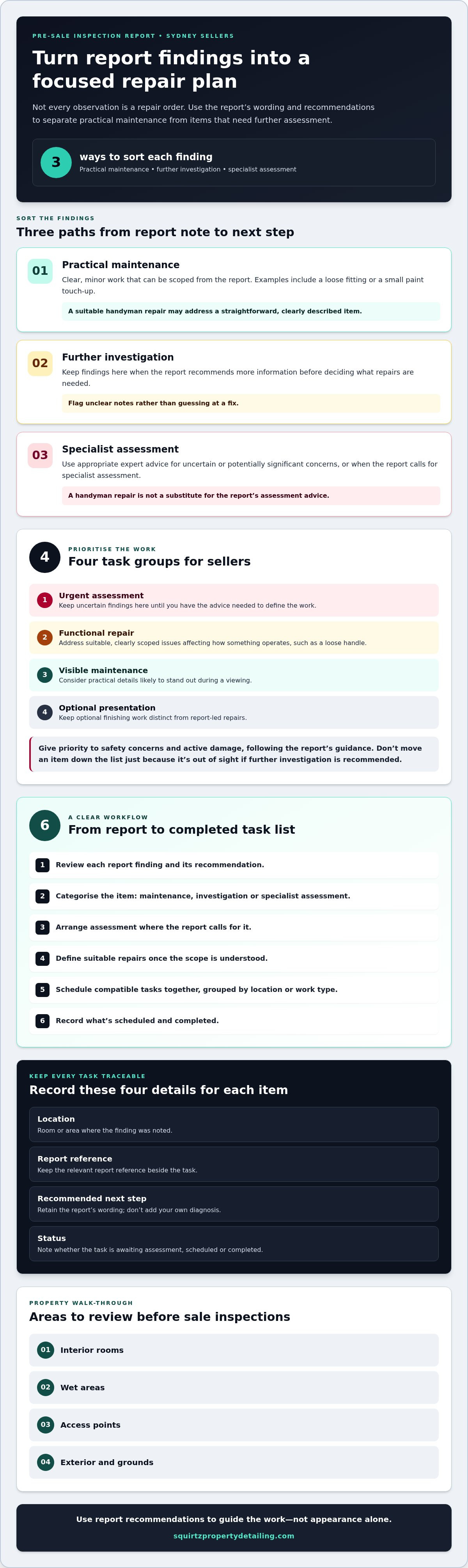
For each entry, note its report reference, exact location and recommended action. Then sort it into one of three groups:
- Practical maintenance: clear, minor items such as a loose fitting or small paint touch-up.
- Further investigation: findings where the report calls for more information before deciding on repairs.
- Specialist assessment: uncertain or potentially significant concerns that need appropriate expert advice.
Let the report’s recommendations guide how you sort each item. If a finding is unclear, flag it rather than guessing at a fix. This gives you a grounded starting point for prioritising work and deciding which repairs belong on your pre-sale checklist.
Prioritise Pre-Sale Inspection Repairs Before Listing
A long report can make every item feel equally pressing. Use a simple sequence to keep the work focused: review the findings, categorise each item, arrange assessment where needed, define suitable repairs, schedule the work and record what’s completed. Keep the relevant report reference beside each task so you can trace why it’s on the list and avoid overlooking recommendations.
The right repair order depends on the report’s recommendations and the property’s condition, not appearance alone. Give priority to safety concerns and active damage, following the report’s guidance. A concern that looks minor may still need investigation, while a visible cosmetic flaw may be straightforward maintenance.
A practical priority system for sellers
Sort tasks into four groups: urgent assessment, functional repair, visible maintenance and optional presentation. Keep uncertain findings in the assessment group until you have the advice needed to define the work. Don’t move an item down the list just because it’s out of sight if the report recommends further investigation.
For each task, record its location, report reference, recommended next step and status. For example, a loose handle can be listed as a functional repair if the report describes a straightforward issue. A note recommending investigation should stay separate until the next step is clear. This makes it easier to distinguish report-led repairs from optional finishing work.
Plan repairs around your Sydney sale timeline
Allow time for assessment before booking repairs if the report’s wording is unclear or points to a potentially significant issue. Once the scope is understood, group compatible tasks by location and work type. For example, plan suitable indoor maintenance together, then list outdoor items separately where access or weather may affect the work.
Grouping tasks can simplify coordination and help avoid repeat visits. Keep assessment-dependent items separate from work that’s ready to proceed, and update the list as jobs are scheduled and completed. For a broader view of preparation beyond report repairs, see this pre-sale property maintenance guide.
Squirtz Property Detailing includes suitable handyman repairs in tailored pre-sale preparation for Sydney properties, including those on the North Shore. Repairs can be considered alongside other work needed to prepare the property for sale. Explore pre-sale handyman repairs.
Which inspection report items suit handyman repairs, and which need assessment?
The key distinction is whether the report describes a clear, minor maintenance task or recommends investigating a possible underlying issue. A handyman to fix pre-sale inspection report items can help with suitable repairs, but a brief observation isn’t a diagnosis or a complete work specification. Follow the report’s recommendations when deciding what happens next.
Use examples like these as a sorting guide, not as a substitute for the report or professional advice:
| Report wording or observation | Possible next step | Minor maintenance? |
|---|---|---|
| Loose handle or fitting | Check the item and arrange a straightforward adjustment or repair if the scope is clear. | May be suitable |
| Small hole, scuff or minor paint damage | Patch or touch up the surface, considering the finish and surrounding area. | May be suitable |
| Crack with a recommendation for further investigation | Follow the report’s recommendation before deciding on cosmetic or other work. | Assessment first |
| Moisture, pest or structural concern | Arrange appropriate assessment to understand the cause and required response. | Not a minor-repair assumption |
| Electrical or plumbing concern | Follow the report’s recommendation and use appropriately qualified expertise for technical work. | Not a general handyman checklist item |
These examples aren’t diagnoses. A crack, damp patch or faulty fitting can have different causes, so use the report’s wording and recommended next step to guide your response. Don’t cover a visible symptom with paint or a patch if the report identifies a safety concern or calls for further investigation.
Common minor repairs a handyman may help address
Once the scope is clear, practical maintenance may include small patching jobs, loose hardware, minor paint touch-ups and straightforward finish repairs. Grouping several suitable items by room or area makes it easier to organise work across the property. See the overview of pre-sale handyman services in Sydney for more on fitting repairs into property preparation.
When a report finding needs more than a minor repair
If the report recommends further investigation, treat that as a separate step before adding a repair to the handyman list. Structural, electrical, plumbing, pest and moisture findings can require appropriate specialist assessment. Cosmetic work may improve presentation, but it doesn’t establish or resolve an underlying building or safety concern. Keep uncertain items flagged until the recommended assessment clarifies the work required.
Sydney North Shore pre-sale handyman checklist: prepare each area
Turn the report into a walk-through list organised by area, rather than trying to remember repairs as you move through the property. For every item, record the report reference, exact location, priority and completion status. A photo taken before work can help you identify the spot later and compare the finished repair with the original observation.
Inside the home: rooms, fittings and finishes
Work through each room and note the relevant report items. Check doors and handles, minor wall damage, paint touch-ups and visible finishes against the report. In bathrooms, laundries and kitchens, copy any moisture or water-related observations as written. Don’t assume a cosmetic repair will resolve an underlying concern; follow the report’s recommended next step.
- Interior: note report-listed doors, handles, wall marks and finish repairs.
- Wet areas: record the specific observation and flag items that call for further assessment.
- Access points: check listed doors, windows and gates for the condition or function described in the report.
Outside the home: entry, exterior and grounds
Walk around the property and note report-listed gates, paths, minor external finishes and other visible maintenance items. What matters varies from home to home, so focus on the actual findings and areas buyers will approach or view. Keep handyman repairs distinct from broader presentation tasks such as external painting, house washing or garden work. If the report raises roof concerns, follow its recommendation and see this Sydney pre-sale handyman repairs guide for roof-related repair context.
A handyman to fix pre-sale inspection report items can help address suitable tasks across several areas as part of a coordinated preparation plan. Keep assessment-dependent findings separate from work that’s ready to proceed, and update each entry when it’s completed.
Final walk-through checklist
- Match each repair to its report reference and location.
- Check that the priority and recommended next step are clear.
- Confirm suitable repairs are complete and note their status.
- Keep findings requiring assessment flagged, rather than marking them as cosmetic fixes.
- Review entry, interior, wet areas, access points, exterior and grounds against the report.
For help organising suitable repair items as part of your property preparation, arrange pre-sale handyman repairs with Squirtz Property Detailing.
Get pre-sale report repairs organised with Squirtz Property Detailing
Once you’ve separated repair tasks from findings that need further assessment, turn the suitable items into a workable plan. Squirtz Property Detailing provides handyman repairs within tailored pre-sale preparation for residential and commercial properties. The Sydney-based business focuses on the North Shore.
Coordinate repairs with wider property preparation
Keep report-led repairs distinct from optional presentation improvements. A loose fitting or minor finish repair may be a practical task from the report; painting, house washing or a garden makeover may help prepare other areas of the property. Grouping relevant work in one plan can make it easier to manage visible tasks while keeping the report’s recommendations clear.
Handyman repairs can be planned alongside relevant presentation services, tailored to the property and sale timeline. For help weighing up broader preparation priorities, read the Sydney property detailing buying guide.
What to have ready when planning the work
A few details can help shape a practical repair list. Have the inspection report, property access details and intended sale timing ready. Mark the report references for the tasks you’re considering, note their locations and identify any findings that call for further assessment. Keep uncertain items separate from work that’s ready to be scoped.
This gives Squirtz a clear starting point for planning suitable handyman repairs and complementary property preparation. It also keeps the plan focused on the work your home or commercial property needs, rather than treating every report note as an automatic repair instruction.
If you’re looking for a handyman to fix pre-sale inspection report items, prepare your report and task list, then request tailored pre-sale property preparation from Squirtz Property Detailing.
Turn your inspection findings into a clear plan
A pre-sale inspection report is a starting point for decisions, not a checklist that every observation must become a repair. Sort findings by priority, follow recommendations for further assessment, then group suitable maintenance by area and record what’s completed. This keeps practical repairs distinct from specialist concerns and optional presentation work.
If you need a handyman to fix pre-sale inspection report items, Squirtz Property Detailing provides suitable repairs as part of tailored property preparation. The Sydney-based business focuses on the North Shore and provides handyman repairs for pre-sale properties.
Have your report, task list and sale timing ready to help shape the next steps. Plan your Sydney pre-sale property preparation with Squirtz and make steady progress towards a well-presented home ready for inspections.
Frequently Asked Questions
Can a handyman fix items listed in a pre-sale inspection report?
Yes. A handyman can address straightforward maintenance and minor repairs when the task’s scope is clear. A handyman to fix pre-sale inspection report items can help with jobs such as tightening loose hardware or completing a small paint touch-up. Use the report to guide the task list, and keep findings that recommend further assessment separate. Cosmetic work shouldn’t be treated as a remedy for an underlying concern.
Do I need to fix everything in a pre-sale inspection report?
No, a report isn’t automatically a compulsory repair checklist. It records observed conditions and may recommend further investigation, so consider each finding in context. Prioritise safety concerns and active damage in line with the report’s recommendations, then separate practical maintenance from optional presentation work. If an item is uncertain, don’t assume it needs the same response as a clear minor repair. Follow the specific next steps stated in the report.
What should I fix first before selling my house?
Start with findings the report identifies as safety-related, active or requiring further assessment. Once those next steps are clear, list functional repairs and visible maintenance, grouping tasks by area where practical. Leave optional presentation improvements until you understand the report-led work. The right order depends on the property, the report’s recommendations and your sale timeline, so use a priority list as a planning aid rather than relying on a generic ranking.
When should I call a specialist instead of a handyman?
Follow the report’s recommendation when it calls for further investigation or specialist assessment. Structural concerns, electrical or plumbing issues, pests, moisture and other uncertain conditions may need assessment before anyone scopes a repair. A handyman checklist is best for clearly defined, minor maintenance. Don’t use patching or painting to conceal a condition the report says needs investigation, as cosmetic work doesn’t confirm or resolve its cause.
Can handyman repairs improve how my home presents to buyers?
Completing suitable minor repairs can help a home look maintained and reduce visible distractions during buyer inspections. Examples might include a loose fitting or a small, clearly scoped finish repair. These tasks don’t guarantee a particular sale price or resolve an underlying defect. Use the report to identify appropriate repairs, then consider whether broader preparation, such as painting, house washing or garden work, suits the property.
How do I organise repairs from an inspection report?
Build a task list using the report’s wording, location and recommended next step. Mark each item as requiring assessment, a clear minor repair or optional presentation work. Group suitable jobs by area and plan them around property access and your sale timing. Photograph relevant areas and record each task’s status as work progresses. Keep notes with the report so observations, recommendations and completed repairs remain easy to distinguish.
Can Squirtz help with pre-sale handyman repairs in Sydney?
Yes. Squirtz Property Detailing provides handyman repairs as part of pre-sale property preparation in Sydney, including for sellers on the North Shore. The business can organise relevant repairs alongside broader preparation tailored to the property. Have your inspection report and task list ready, including any findings that need further assessment, then plan practical next steps with Squirtz.


