
The best pre-sale improvement may be outside the front door, not in the kitchen. High-impact low-cost home improvements for sale often start with visible maintenance: a clean exterior, tidy garden, clear windows or repaired path can help a home look cared-for before buyers step inside.
It’s easy to feel pressure to renovate, especially when you’re unsure which flaws buyers will notice or how much time you have before photography and inspections. A major project isn’t always the right first move. Start with the areas that affect presentation, then rank each job by visibility, condition, effort and fit with your sale schedule.
This guide compares practical improvements, from house washing and garden makeovers to fresh paint and minor repairs, and sets out a sensible order of work. You’ll see where a straightforward refresh may be enough and when a larger update deserves consideration, so you can prepare your home without taking on unnecessary renovation. For Sydney North Shore sellers, Squirtz Property Detailing provides pre-sale maintenance and detailing to help get residential and commercial properties ready for market.
Key Takeaways
- Use visibility, condition and effort to rank high-impact low-cost home improvements for sale before committing to a larger project.
- Compare indoor updates such as touch-up painting, lighting and minor repairs against the home’s current presentation.
- Assess the entry, garden and exterior surfaces from a buyer’s approach, then match the work to what needs attention.
- Build a practical sequence from your first walk-through to the final presentation check, allowing for your sale schedule.
- Keep improvements focused on presentation rather than assuming every upgrade will increase your sale price.
High-impact, low-cost home improvements for sale: how to set priorities
A high-impact improvement is a visible change that helps a property look clean, maintained and ready for inspection. It might mean addressing a scuffed entry, washing grime from exterior surfaces or fixing a small but obvious fault. The aim is not to make the home reflect your personal taste. It’s to remove presentation distractions and help buyers focus on the property.
Start with a shortlist based on four factors: visibility, condition, effort and fit with the sale campaign. A worn front path may deserve attention because buyers see it on arrival; a new decorative feature may not. Consider home staging principles as a guide to presenting a property for prospective buyers, while keeping practical maintenance separate from optional styling.
What makes a low-cost improvement worthwhile before a sale?
“Low-cost” describes the relative scope of a job, not a guaranteed financial return. Before adding anything new, look for noticeable wear, grime, clutter and neglected maintenance. A minor repair or thorough clean can address a visible concern without turning preparation into a major renovation.
Styling choices depend more on the property and its likely buyers. Keep personal upgrades separate from sale preparation, and prioritise work that resolves a clear presentation issue.
How to read this pre-sale improvement roundup
The ideas are grouped into interior presentation, outdoor presentation and practical repairs. Compare each one by how readily buyers will notice it, the work involved and whether the home’s condition makes it worthwhile. A well-kept property may need only a few finishing touches; a tired or neglected area may call for more direct maintenance.
- Visibility: Is the issue in a room, at the entry or along a buyer’s first approach?
- Condition: Does it look worn, dirty or damaged, or is it simply different from your preferred style?
- Effort: Can the work be handled as a small task, or does it need coordination with other preparation?
- Campaign fit: Can it be completed and checked before photography and inspections?
Use these questions to decide what to do first, what to leave alone and what needs closer assessment. Grouping related maintenance, such as exterior cleaning and garden work, can also make preparation easier to organise. Squirtz Property Detailing provides pre-sale property preparation across Sydney, including the Sydney North Shore.
Prioritise clear presentation issues before optional cosmetic upgrades. Improvements can help a home feel cared-for, but no individual update guarantees a higher offer.
Which indoor improvements help a home feel ready for sale?
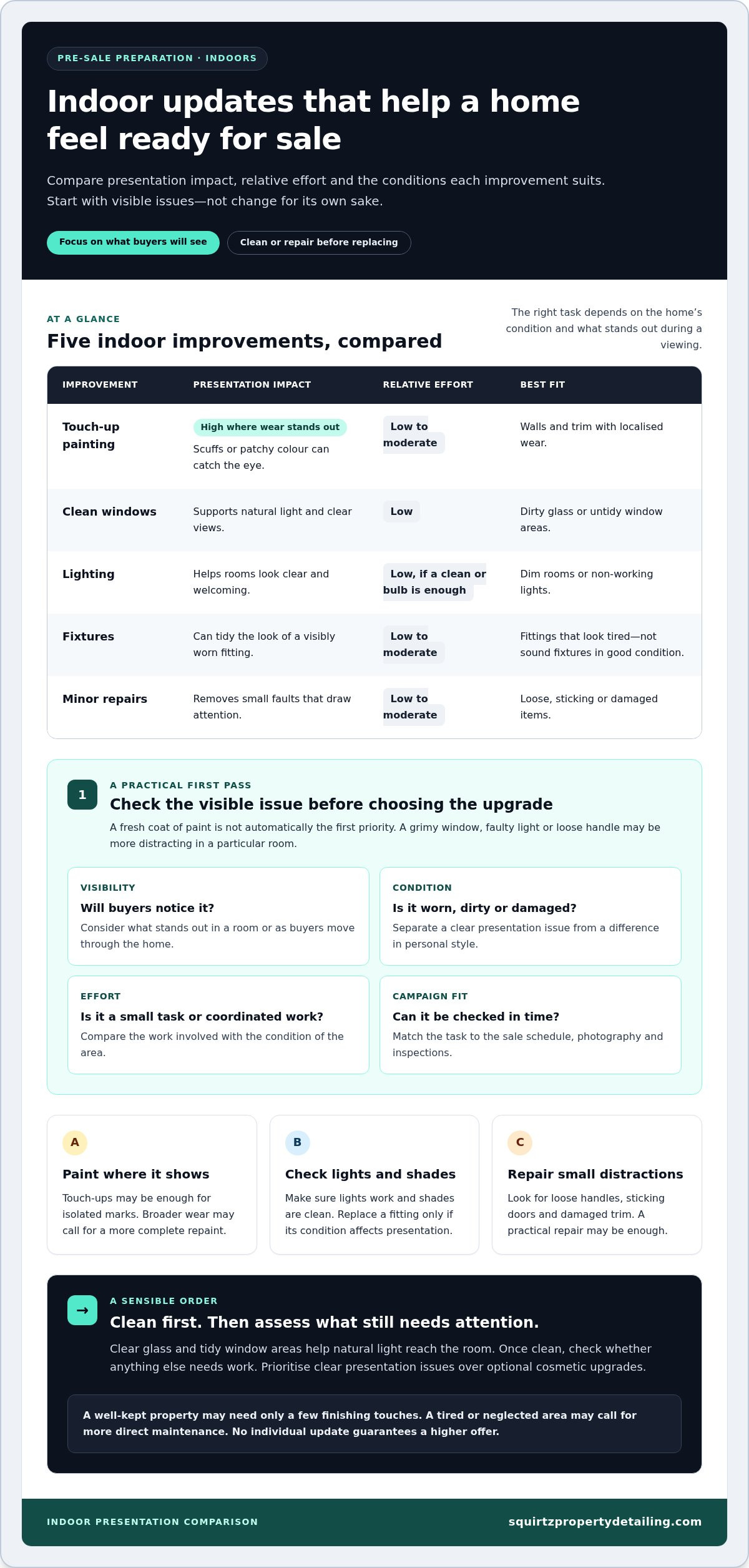
Indoor preparation works best when it responds to what buyers will actually see. A fresh coat of paint isn’t automatically the first priority: a grimy window, faulty light or loose handle may be more distracting in a particular room. Use this shortlist to compare likely presentation impact with the effort involved and the home’s condition.
| Improvement | Presentation impact | Relative effort | Best fit |
|---|---|---|---|
| Touch-up painting | High where scuffs or patchy colour stand out | Low to moderate | Walls and trim with localised wear |
| Clean windows | Supports natural light and clear views | Low | Dirty glass or untidy window areas |
| Lighting | Helps rooms look clear and welcoming | Low if cleaning or replacing a bulb is enough | Dim rooms or non-working lights |
| Fixtures | Can tidy the look of a visibly worn fitting | Low to moderate | Fittings that look tired, rather than sound fixtures in good condition |
| Minor repairs | Removes small faults that draw attention | Low to moderate | Loose, sticking or damaged items |
Paint, lighting and fixtures: which indoor refresh should come first?
Prioritise paint where scuffs, peeling or inconsistent colour catch the eye during a viewing. Touch-ups may be enough for isolated marks; broader wear may call for a more complete repaint. For more detail on paint decisions, consult the pre-sale house painting guide. Squirtz Property Detailing provides internal painting for sale preparation when worn surfaces need more than a small touch-up.
Check that lights work and shades are clean so rooms are easy to view. Replace a fitting only if it looks worn or dated and affects the overall presentation. A sound feature rarely needs replacing simply because it isn’t your preferred style.
Small repairs and clean windows that remove distractions
Look for loose handles, sticking doors, damaged trim and other minor faults that buyers may notice as they move through the home. A practical repair is often more appropriate than replacing an otherwise sound feature. For repair-specific detail, see the pre-sale handyman services guide.
Clear glass and tidy window areas help natural light reach the room and keep attention on the space, not the grime. Clean first, then assess whether anything else needs work. These high-impact low-cost home improvements for sale are most useful when they address a visible issue rather than adding change for its own sake. See the range of Squirtz Property Detailing services for pre-sale maintenance and detailing.
Which outdoor improvements lift kerb appeal without a major renovation?
Buyers start forming an impression before they reach the front door. Focus first on the approach, entry, garden, windows and exterior surfaces they can see from the street or path. The right task depends on what’s affecting presentation: a tidy-up may be enough for an untended garden, while a damaged path or badly weathered paint may need more considered work.
Garden tidy-ups and entry presentation for Sydney sellers
Clear the route to the entrance and make the garden look maintained. Weed garden beds, prune overgrowth, define edges and remove clutter that blocks paths or obscures the entry. These modest jobs can make outdoor areas feel easier to view and care for without redesigning the whole garden.
Sydney North Shore homes vary, so tailor the work to the property’s setting and existing garden rather than imposing one look. A compact entry, established garden or sloping block may each call for different priorities. For more detailed outdoor planning, refer to the garden landscaping guide.
House washing, windows and driveway surfaces
Start by assessing visible grime. House washing and window cleaning can address dirt on exterior surfaces and glass before you consider repainting or resurfacing. Clean first, then judge what remains: if a driveway or path still looks worn or damaged, resurfacing may be worth considering; if it simply looks dirty, cleaning may be the more proportionate step. The professional exterior cleaning guide offers further detail on preparing exterior surfaces.
| What you see | Practical first step | Consider a larger job when |
|---|---|---|
| Weeds, overgrown edges or a cluttered entry | Weed, prune and clear the approach | The garden needs broader improvement to look maintained |
| Grime on walls or windows | Arrange house washing or window cleaning | Surfaces remain visibly worn after cleaning |
| Worn driveway or path | Assess its condition after cleaning | Damage or deterioration continues to distract |
| Weathered roof or exterior paint | Review the extent of visible wear | Restoration or repainting is justified by the condition |
Roof restoration, roof painting and external painting are considered projects, not automatic quick fixes. Match the scope to the visible defects and the property’s wider presentation. The most useful high-impact low-cost home improvements for sale resolve what buyers will notice without adding work the home doesn’t need. Squirtz Property Detailing provides exterior cleaning, garden and surface maintenance as part of pre-sale preparation in Sydney.
Compare pre-sale improvements and avoid over-improving
A comparison framework helps separate genuine presentation priorities from projects that simply add work. Assess each idea against four factors: how visible it is, the condition it addresses, the relative effort involved and how much coordination it needs. Give each factor a simple high, medium or low rating, then prioritise visible problems in poor condition that are straightforward to resolve.
A simple framework for ranking upgrade ideas
Think about what buyers will see in listing photography, from the street and during an inspection. A noticeable maintenance issue in these areas generally deserves attention before a less visible cosmetic preference. Use the table to make a practical first comparison, then adjust the ratings to suit the property.
| Improvement idea | Visibility | Condition to address | Relative effort | Coordination |
|---|---|---|---|---|
| Clean an exterior or windows | High if grime is prominent | Dirty, but otherwise sound | Low to moderate | Low to moderate |
| Repair a small fault | High if it’s in a main viewing area | Loose, sticking or damaged | Low to moderate | Low |
| Refresh paint | High where wear is obvious | Scuffed or inconsistent | Moderate | Moderate |
| Resurface a path or driveway | High on the approach | Worn or damaged | Moderate to high | Moderate |
| Optional cosmetic upgrade | Varies | Sound, but not to your taste | Varies | Varies |
Separate essential maintenance, which addresses a visible fault or neglected condition, from optional upgrades, which mainly reflect personal preference. Clean, sound and well-maintained can be a better sale-preparation brief than fully renovated. Squirtz Property Detailing provides maintenance and detailing for properties with several presentation priorities.
When does a small refresh become an unnecessary renovation?
Pause if a modest repair starts expanding into a room redesign, a new layout or a chain of extra upgrades. Recheck the original reason for the work: does the project fix something buyers will notice, or has the scope grown beyond the sale-preparation goal? Buyer preferences vary, and no improvement can guarantee a higher offer or a particular sale outcome.
Keep the plan focused on the issues that matter most to the property’s condition and sale campaign. Learn about pre-sale property preparation from Squirtz Property Detailing.
A practical pre-sale improvement plan for Sydney North Shore homes
A clear sequence helps keep preparation focused and reduces the chance of cleaning or presenting areas before maintenance work is finished. The right plan depends on the property’s condition, the sale schedule and what buyers are likely to see. North Shore homes differ in their gardens, layouts and exterior surfaces, so assess the individual property rather than working from a one-size-fits-all checklist.
Put the work in a sensible order before photography
- Walk through the property. View it from the street, follow the path to the entry, then move through the rooms and outdoor areas. Note visible repairs, grime, worn paint and garden priorities.
- Rank the issues. List the most noticeable concerns first, then separate essential maintenance from optional cosmetic changes. Keep photography areas and likely inspection routes in mind.
- Coordinate the maintenance. Group related tasks where practical. For example, schedule house washing, painting or handyman repairs before final window cleaning and detail work.
- Complete garden and presentation tasks. Tidy the entry and outdoor areas after any work that could leave dust or debris. Align the order with the sale schedule and the property’s specific needs.
- Do a final check. Revisit the home as a buyer might, from the approach through to the main rooms. Look for missed marks, unfinished repairs or areas that need a last clean before photography and inspections.
Let the sequence reflect the scope of work. A few minor repairs and a clean-up call for a different plan from a property that needs painting, exterior maintenance and garden work. Avoid assuming every task will fit the same timeframe.
Coordinate the right help for the property
Match each job to an identified priority: house washing for visible exterior grime, internal or external painting where surfaces look worn, handyman repairs for small faults, and garden work where overgrowth or untidy edges affect presentation. If several areas need attention, grouping relevant tasks can make preparation more orderly.
Squirtz Property Detailing has prepared properties across Sydney since 1993. Its pre-sale maintenance and detailing work can be tailored to a property’s condition, without defaulting to a major renovation. A focused plan for high-impact low-cost home improvements for sale should leave the property looking cared-for, not overworked.
Planning pre-sale work for your North Shore property? Explore property preparation with Squirtz and see how the work can be shaped around the improvements your home needs.
Prepare your home with a clear, practical plan
The most effective high-impact low-cost home improvements for sale address visible signs of wear and maintenance first. Compare each task by condition, visibility and effort, then decide whether cleaning or a repair will do the job before considering a larger cosmetic upgrade.
Keep the scope tied to your home and sale schedule. Organise maintenance before final cleaning and presentation checks, and focus on a cared-for finish rather than renovating for its own sake. No improvement can guarantee a particular sale outcome, but a considered shortlist helps you use your time and effort where they matter most.
Squirtz Property Detailing provides residential and commercial pre-sale preparation across Sydney. Its services include house washing, garden landscaping and makeovers, swimming pool renovations, roof restoration and painting, internal and external painting, handyman repairs, window cleaning, and driveway and path resurfacing. The Sydney North Shore team can help organise a focused preparation plan around the property’s visible priorities.
Frequently Asked Questions
What are the best low-cost improvements to make before selling a house?
Start with visible maintenance issues that make the home look less cared-for. Clean dirty windows and exterior surfaces, tidy the garden and entry, touch up noticeably scuffed paint, and fix minor faults such as loose handles or sticking doors. The best high-impact low-cost home improvements for sale depend on the property’s condition, so prioritise what buyers will see in listing photos and during inspections rather than following a generic upgrade list.
Do low-cost home improvements increase a property’s sale price?
They can improve presentation, but no individual improvement guarantees a higher sale price or offer. A clean, maintained home may help buyers focus on the property rather than obvious grime, wear or small defects. The result depends on the property and buyer preferences. Treat pre-sale work as a way to address visible issues and prepare for marketing, not as a promised financial return.
Should I paint my house before selling?
Paint before selling if worn, peeling or inconsistent surfaces stand out in important rooms or exterior areas. If the paint is sound and only has a few marks, targeted touch-ups may be more appropriate than repainting the whole house. Consider the condition first, then weigh the work against your sale schedule. For Sydney North Shore sellers, internal or external painting can form part of a focused presentation plan.
Can garden improvements make a difference when selling a home?
Yes, a tidy garden can make the approach and outdoor areas feel cared-for. Start with practical tasks such as weeding, pruning overgrowth, clearing paths and defining garden edges. A larger makeover may suit a property where the garden is visibly neglected, but it isn’t necessary for every home. Across the varied North Shore property settings, tailor garden work to the block and existing planting.
How much should I spend on home improvements before selling?
Set a spending limit based on your priorities and the work the property genuinely needs, rather than aiming for a particular renovation level. List visible maintenance issues first, then compare each task’s effort and relevance to the sale campaign. Avoid assuming every upgrade will be recovered through the sale price. If a project’s scope keeps growing, reassess whether it’s still necessary for presentation.
When should I complete improvements before listing my home?
Plan improvements early enough to complete maintenance before final cleaning, photography and inspections. Start with a walk-through and priority list, then organise messier work, such as painting or exterior cleaning, ahead of detail cleaning and presentation checks. The timing depends on the project scope and sale schedule, so allow room to review completed work. This sequence can help North Shore sellers avoid last-minute preparation pressure.
Should I renovate a kitchen or bathroom before selling?
Not automatically. First assess whether the kitchen or bathroom has a visible maintenance problem or simply reflects a style you’d change for personal reasons. Addressing a clear defect may be more proportionate than taking on a major renovation, particularly if the room remains functional and presentable. Buyer preferences vary, and a renovation can’t guarantee a higher offer, so weigh the project against the property’s overall condition and sale plan.
Preparing a property for sale on the Sydney North Shore? Contact Squirtz Property Detailing to plan your pre-sale maintenance and detailing.


