
The strongest water jet isn’t always the right choice. If you’re looking for high pressure cleaning Sydney homeowners can rely on, focus on a method that suits each surface, not simply the most powerful equipment. A driveway may tolerate a different approach from painted cladding, timber or older masonry. Using the wrong technique can damage finishes, joints or nearby plants.
A thorough clean should also protect the property. This guide explains which areas may benefit from professional pressure cleaning, when a gentler method may be more suitable, and how preparation and runoff management can affect the job. You’ll also find practical questions to ask before booking, so you can check what’s included and how the work will be carried out.
Squirtz Property Detailing is a Sydney-based property maintenance business established in 1993. Its listed services include house washing and driveway and path resurfacing. Pressure cleaning isn’t confirmed as a standalone service, so check which surfaces and methods are currently available. The guidance below can help you assess your property, including homes on Sydney’s North Shore, and choose work that supports a clean, well-presented result.
Key Takeaways
- Check the condition and finish of each surface before deciding whether pressure cleaning is suitable.
- Ask how the provider will adapt the cleaning method to reduce the risk of damage to surfaces, joints and nearby plants.
- Photograph the areas you want cleaned and note stains, repairs and access issues before requesting a quote.
- When comparing high pressure cleaning Sydney services, look for a clear scope and specific answers about surface assessment and preparation.
- Well-planned exterior cleaning may support a tidy pre-sale presentation, but results depend on the property and the work carried out.
High pressure cleaning in Sydney: what the service does and when it helps
Pressure cleaning uses a focused stream of water to remove dirt and build-up from suitable outdoor surfaces. It may refresh paths, driveways and other hard areas where grime, dust or organic residue has collected. This is different from general exterior property detailing, which can include several kinds of maintenance rather than focusing on water-based cleaning. For a general overview of what pressure washing is, see Wikipedia’s explanation of its uses and terminology.
For high pressure cleaning Sydney properties, the right approach depends on more than the surface name. Material, condition, previous repairs, nearby gardens and the proposed method all matter. Concrete, pavers and sandstone can vary in age, finish and stability, so don’t assume they can all be cleaned in the same way. Painted areas also need assessment to avoid affecting the coating.
What can high pressure cleaning remove from outdoor surfaces?
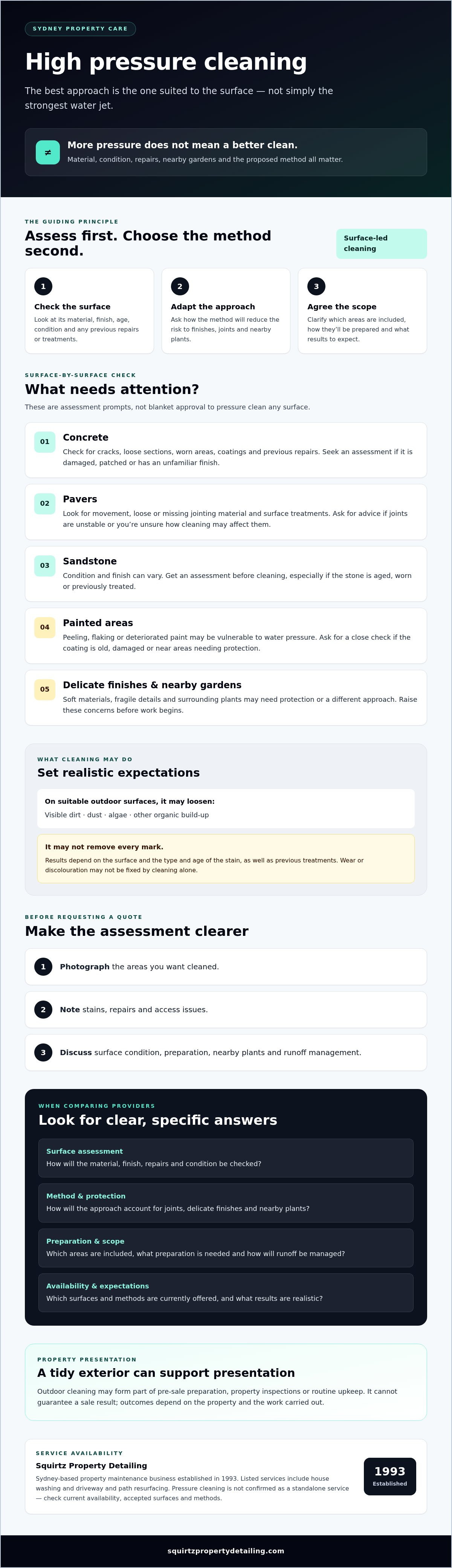
On suitable surfaces, pressure cleaning may loosen visible dirt, dust, algae and other organic build-up. It may not remove every mark. Results depend on the surface and the type and age of the stain, as well as any previous treatments. A surface that looks dirty may also be worn or discoloured, which cleaning alone won’t fix. Identifying the likely cause helps set realistic expectations before work begins.
When should Sydney property owners consider a professional service?
Consider an assessment before property inspections, a sale campaign or routine upkeep if outdoor hard surfaces look marked or neglected. Professional input can be useful when an area is large, access is awkward, or you’re unsure whether a finish, joint or repair can tolerate the proposed method. Ask which areas are included and how the provider will account for surrounding plants and surfaces.
Cleaning can form part of a property’s presentation alongside other maintenance, but it can’t guarantee a sale result. Squirtz Property Detailing is a Sydney-based property maintenance business established in 1993, with listed services including house washing and driveway and path resurfacing. Pressure cleaning isn’t confirmed as a standalone service, so check its current availability, accepted surfaces and methods before booking. For broader guidance on planning exterior maintenance, see the existing guide, Professional Exterior Cleaning.
Which Sydney property surfaces suit pressure cleaning?
There’s no single pressure setting or method that suits every outdoor surface. Even materials often cleaned this way can be vulnerable if they’re cracked, worn, poorly repaired or covered with a finish that reacts badly to water pressure. Use the guide below to identify what needs checking. It isn’t blanket approval to clean any particular surface.
| Surface | What to consider | When to seek assessment |
|---|---|---|
| Concrete | Look for cracks, loose sections, worn areas and previous coatings or repairs. | Ask for an assessment if the concrete is damaged, patched or has an unfamiliar finish. |
| Pavers | Check for movement, loose or missing jointing material, and surface treatments. | Seek advice if joints are unstable or you’re unsure how cleaning could affect them. |
| Sandstone | Its condition and finish can vary, so the method needs to suit the particular surface. | Get an assessment before cleaning, especially if the stone is aged, worn or previously treated. |
| Painted areas | Peeling, flaking or deteriorated paint may be vulnerable to water pressure. | Ask for a close check if the coating is old, damaged or near areas needing protection. |
| Delicate finishes and nearby gardens | Soft materials, fragile details and surrounding plants may need protection or a different approach. | Raise these concerns before work begins so the method and preparation can be discussed. |
How should you assess concrete, pavers and sandstone?
Start by looking for cracks, surface wear, loose pavers and deteriorating joints. Previous repairs or coatings can change how a surface responds, even if the surrounding material appears sound. Pavers may rely on jointing material or have a finish that needs careful consideration. Sandstone also needs a method suited to its condition. If you can’t confidently identify the material or its history, ask for an assessment before agreeing to clean it.
What needs extra care around painted or delicate finishes?
Check whether paint is firmly attached and note any soft, fragile or decorative surfaces nearby. There isn’t one pressure setting that’s safe for every property. Ask the provider how it will select a method for each area and protect surrounding finishes and plants. If a surface looks vulnerable, discuss whether another approach would be more suitable rather than assuming it can be cleaned at high pressure.
Before enquiring, confirm whether high pressure cleaning Sydney is currently offered and whether the specific surface and method are within the provider’s scope. Squirtz Property Detailing lists house washing and driveway and path resurfacing among its services, but pressure cleaning isn’t confirmed as a standalone offering. You can review Squirtz’s listed property services and check the exact scope before making an enquiry.
Will high pressure cleaning damage your Sydney property?
It can if the pressure or technique doesn’t suit the surface. The risk varies between properties: material, existing wear, and the condition of coatings, joints and repairs all affect how an area may respond. Matching the method to the surface helps reduce avoidable damage. Discuss any uncertainty before work starts.
Pressure cleaning is not a one-setting-fits-all task. Inspecting the surface matters because a worn or previously repaired area may react differently from an intact one. An assessment can also help identify vulnerable details and clarify whether the proposed approach is suitable. Don’t rely on the surface name alone as proof that high pressure is appropriate.
What damage can incorrect pressure or technique cause?
Depending on the material and its condition, unsuitable cleaning may etch or roughen a surface, remove or lift a coating, disturb paver joints, or force water into gaps and vulnerable areas. These are risks to assess, not inevitable outcomes. Existing cracks, loose sections, deteriorated paint or past repairs can add uncertainty and affect the finished appearance. Point them out before work begins rather than assuming they’ll be obvious during cleaning.
How can a professional reduce avoidable cleaning risks?
Before booking, ask how the provider will inspect the area, choose a method and protect nearby finishes or landscaping. Find out whether a small test area is appropriate, particularly if the surface is delicate, coated or in uncertain condition. Agree on what should happen if the surface changes unexpectedly. If you notice colour loss, surface wear or movement in joints during the job, ask for the work to pause while the approach is reassessed.
For some surfaces, a gentler option may be more appropriate than high pressure. The guide Soft Washing vs Pressure Cleaning can help you understand why method choice matters. Ask the provider to explain which approach suits your particular surface and why.
For high pressure cleaning Sydney properties, clear communication is part of protecting the result. Squirtz Property Detailing lists house washing and driveway and path resurfacing among its services, but pressure cleaning isn’t confirmed as a standalone service. Confirm current availability, accepted surfaces and methods before enquiring, and make sure the agreed scope reflects the property’s condition.
How to prepare for high pressure cleaning in Sydney
A clear brief helps a provider assess the work, identify potential issues and explain what the job includes. Before arranging high pressure cleaning Sydney, use this checklist to prepare the details and confirm the practical requirements for your property.
- Define the areas. List the paths, driveway or other surfaces you want assessed. Be specific about what’s in scope and what should be left untouched.
- Record the condition. Photograph each area and note stains, cracks, loose sections, previous repairs or coatings. Point out fragile finishes and nearby plants.
- Ask about suitability. Confirm which surfaces and tasks the proposed service covers, and how the provider will assess vulnerable areas and surrounding finishes.
- Check site requirements. Discuss water access, access routes, scheduling and any property-specific requirements. Don’t assume the provider can reach every area or use an available water source.
- Agree on the scope. Clarify preparation, protection measures and what post-cleaning checks to expect before confirming the booking.
What should you ask a pressure-cleaning provider before booking?
Ask how the provider will decide whether each surface is suitable and what method it proposes for areas with wear, repairs or delicate finishes. Confirm exactly which surfaces and tasks are included, what you need to move or prepare, and how access will work. A clear response should explain the planned work and any limitations before you book.
How can you get the property ready on the day?
Once arrangements are confirmed, clear movable items from the agreed work areas where practical. Tell the provider about access constraints, such as locked gates or narrow paths, and identify outdoor furniture, plants, electrical fittings and other nearby features that may need protection. Check directly whether you should make any additional preparations. Requirements can differ between properties, so follow the provider’s instructions rather than relying on assumptions.
The scope, access and surface condition all affect an individual assessment, so don’t compare proposals on price alone. Squirtz Property Detailing lists house washing and driveway and path resurfacing among its services, but pressure cleaning isn’t confirmed as a standalone offering. Before enquiring, check whether the specific work is currently available and what it includes. To review the business’s listed property services, visit Squirtz Property Detailing.
Choosing high pressure cleaning in Sydney for property presentation
For a sale campaign, exterior cleaning can help make paths and other suitable surfaces look tidier for inspections. It’s one part of presentation, not a promise of a particular sale result. Compare providers by how clearly they assess the property and define the work, not by broad claims alone.
What makes a provider a practical fit for your Sydney property?
Look for clear, property-specific answers. Before confirming a booking, check that the provider can explain:
- Surface suitability: Which areas it has assessed, and whether any need a different approach.
- Method and preparation: How it plans to carry out the agreed work and account for nearby finishes or landscaping.
- Scope: What is included, what is excluded and what you should prepare or expect afterwards.
- Service boundaries: Whether the provider offers the requested task and can address related presentation needs through its confirmed services.
Specific answers help you understand what you’re booking and avoid assumptions about surfaces or tasks that haven’t been discussed. For broader sale-readiness planning, the guide Property Maintenance for Sale may also help you consider how exterior work fits into the property’s overall presentation.
How can Squirtz help with broader property preparation?
Squirtz Property Detailing is a Sydney-based property maintenance business established in 1993. Its listed services include house washing and driveway and path resurfacing, alongside other property maintenance and pre-sale preparation work. These confirmed offerings may be relevant when organising exterior presentation, but pressure cleaning isn’t identified as a standalone service in the supplied information.
Before treating it as an option, ask Squirtz whether pressure cleaning is currently available, which surfaces it accepts and what method and scope would apply to your property. Share your priorities and any surface concerns so the discussion can focus on the work you need. You can also ask about its listed services if other presentation tasks are on your list.
Choosing high pressure cleaning Sydney providers is ultimately about fit: a clear assessment, a defined scope and straightforward communication. If your property is on Sydney’s North Shore, discuss the location and the surfaces you have in mind with Squirtz, then confirm whether the specific service is available.
Make your next property-care step a considered one
Choosing high pressure cleaning Sydney services starts with checking whether the surface and its condition suit the proposed method. A clear assessment, agreed scope and practical preparation can help reduce the risk of damage and set expectations before work begins. For a pre-sale property, suitable exterior cleaning may support a tidy presentation, but it can’t guarantee a particular sale outcome.
Squirtz Property Detailing is a Sydney-based property maintenance business established in 1993, with house washing and driveway and path resurfacing among its listed services. Pressure cleaning isn’t confirmed as a standalone service, so check its current availability and confirm which surfaces and methods are included for your property.
Discuss your Sydney property presentation needs with Squirtz and ask which listed services may suit your plans. If you’re on the North Shore, include your location and the surfaces you’d like assessed when you enquire.
Frequently Asked Questions
Is high pressure cleaning safe for every outdoor surface?
No, high pressure cleaning isn’t suitable for every surface. The material, condition, repairs and finish all affect which method is appropriate. Older paint, delicate materials and unstable joints may need a gentler approach or further assessment. Ask the provider to inspect the areas first, explain its proposed method and identify any surfaces it recommends leaving untouched. Don’t assume one pressure setting will suit the whole property.
Can pressure cleaning damage concrete or pavers?
Yes, unsuitable pressure or technique can damage concrete or pavers, although damage isn’t inevitable. Cracks, worn patches, previous coatings and repairs can affect how the surface responds. Pavers may also have loose joints or jointing material that needs careful consideration. Before work begins, point out visible issues and ask how the provider will assess the surface, choose a method and respond if it reacts unexpectedly.
How do I choose a high pressure cleaning service in Sydney?
Choose a provider that assesses your surfaces, explains the proposed method and sets out a clear scope before you book. Ask which areas are included, what preparation is needed and how nearby finishes or plants will be considered. For high pressure cleaning Sydney properties, confirm the provider serves your location, including Sydney’s North Shore if relevant. Check that the specific service is available rather than assuming it from a general service description.
How much does high pressure cleaning cost in Sydney?
The cost depends on the work included, the area’s size and access, the surface condition and the cleaning method required. There’s no reliable single price for every property, so request an individual quote based on the actual surfaces and tasks. Ask the provider to make clear what’s included and whether any areas need separate assessment. Confirm that the quoted work matches your priorities before proceeding.
How long does professional pressure cleaning take?
Job duration varies with the size and number of areas, access, surface condition and agreed scope. A small, clear area may take less time than a property with several surfaces or difficult access, but the provider should estimate timing after understanding the job. Share photos and details of repairs or stains when enquiring, then confirm the expected schedule and any access arrangements directly before the appointment.
Should I pressure clean my house before selling it?
It may be worth considering if suitable outdoor areas look dirty or detract from a tidy presentation before inspections. First, check that the surfaces can tolerate the proposed method, and consider whether house washing or another maintenance task is more appropriate. Cleaning can support presentation, but it can’t guarantee a sale result. If you’re unsure, ask a provider to assess the surfaces and explain what work is suitable.
What should I move before a pressure-cleaning appointment?
Move outdoor furniture, pots and other portable items away from the agreed work areas where practical. Tell the provider about nearby plants, electrical fittings, fragile finishes, locked gates or access restrictions, and ask what needs protection. Confirm whether you need to prepare anything else, including water access or clear entry to the site. Requirements can vary, so follow the arrangements agreed with the provider rather than assuming what’s needed.


