
The strongest pressure setting is rarely the best place to start. Effective outdoor cleaning means matching the method to the surface, not simply using more force. Grime, mould and debris can affect a property’s presentation, but the wrong equipment or approach may damage paint, timber, render or other finishes.
It’s understandable to be unsure where to begin when several outdoor areas need attention. This guide explains how to plan outdoor cleaning for a Sydney property, choose practical methods for different surfaces and decide what to prioritise, whether you’re maintaining your home or preparing it for sale. The aim is to improve presentation while avoiding preventable surface damage.
We’ll cover areas that commonly need attention, from paths and driveways to exterior walls and windows, then set out a sensible order for the work. You’ll also find guidance on when a gentler approach is more suitable and when it may be practical to arrange help with larger or more delicate jobs.
Key Takeaways
- Identify which exterior areas need attention, and distinguish cleaning from landscaping, repairs and restoration.
- Plan outdoor cleaning around each surface’s material, condition and level of soiling rather than assuming one method suits all.
- Assess whether a task is suitable for DIY or whether height, delicate finishes or possible damage call for professional help.
- Use a practical sequence to inspect, prioritise, prepare, clean and review your property’s exterior.
- For coordinated outdoor property preparation in Sydney, check how Squirtz Property Detailing’s services may match your needs.
What outdoor cleaning covers around a Sydney home
Outdoor cleaning is the maintenance of a property’s exterior surfaces and nearby access areas, removing dirt, grime, organic debris and other surface build-up. Depending on the property and the condition of each surface, this may include the house exterior, windows, paths, driveway and pool surrounds. The broader field of Exterior cleaning includes different tasks and specialisations, so define the job before choosing a method.
Cleaning differs from landscaping, repairs, restoration and construction. It addresses surface soiling rather than redesigning garden beds, fixing damaged structures, renewing a roof coating or building new features. Some projects need more than one type of work, but these tasks aren’t interchangeable. A clear scope helps you identify what needs attention and which service is relevant.
Which outdoor areas are usually included?
Start with the areas people see and use: exterior walls, windows, paved accessways, driveways and, where present, pool surrounds. Not every job includes every surface. The material, finish, existing damage and type of soiling all affect what work is appropriate.
Gardens and pools may need separate attention. Garden landscaping and makeovers address outdoor spaces beyond surface cleaning, while swimming pool renovations are distinct from washing around a pool. Roof restoration and painting are specialised services, not routine roof washing. If a surface appears damaged or deteriorated, identify that before treating it as a cleaning task.
When does outdoor cleaning matter most?
Routine upkeep can focus on visible build-up and access areas as they need attention. Before property photography or inspections, look at how the exterior presents as a whole. Marks on walls, dirty windows, leaf litter on paths and driveway grime may be more noticeable when visitors approach or view the property closely. Prioritise areas that are both visible and relevant to how the property will be used.
North Shore homes may sit among established trees or in shaded settings. Shade, leaf litter and damp conditions can mean some surfaces need closer assessment than sunnier, more exposed areas. Check where debris collects and whether marks look like surface grime or may indicate a maintenance issue. This site-specific review helps you set a practical scope instead of assuming every part of the property needs the same treatment.
How outdoor cleaning methods differ across exterior surfaces
Outdoor cleaning methods aren’t interchangeable. Gentle washing and pressure cleaning differ in the force applied, but the right choice depends on the surface, its condition and what is on it. A method that suits sound paving may be unsuitable for aged paint, delicate coatings or a cracked surface. Angi’s guide to power washing and pressure washing explains how these terms and approaches are commonly distinguished.
Choose a method that suits the material
Consider each material separately. Painted walls may have worn areas or loose coating; glass may have existing marks, seals or surface treatments; and paving and masonry vary in age, finish and condition. A gentler approach may be more appropriate where vigorous cleaning could affect the finish. Don’t assume a pressure washer is suitable simply because the surface is outdoors.
Before cleaning, check for cracks, peeling paint, previous coatings and other signs of wear. If the surface is delicate or its condition is uncertain, have it assessed before applying force. Avoid choosing equipment or products based on a general recommendation alone.
| Area | Likely concern | Questions to ask before cleaning |
|---|---|---|
| Painted exterior | Faded, peeling or aged coating | Is the paint sound, and could force affect the finish? |
| Glass and windows | Marks, seals or surface treatments | Are there existing defects or coatings to consider? |
| Paving and driveway | Surface wear, debris or staining | Is the material intact, and what is causing the build-up? |
| Masonry | Age, cracks or uneven surface condition | Could the surface be fragile or previously treated? |
Why surface condition changes the cleaning plan
Age, previous coatings and existing damage can change how a surface responds, even when two areas appear to be made from the same material. Mould, algae and accumulated debris are signs to assess, not conditions that can be diagnosed from appearance alone. Look closely at the affected area and consider whether the issue is surface build-up or a sign that the material needs attention beyond cleaning.
Method suitability depends on the surface material, age, finish, condition and coatings, as well as the type and extent of soiling. If you’re unsure, pause before using force or applying a product. If your needs include exterior washing or window cleaning, review house washing and window cleaning as services to discuss.
DIY outdoor cleaning or professional help: how to decide
A pressure washer isn’t a shortcut for every surface. It may seem efficient, but using one without considering the material and its condition can create problems. Choosing between DIY and professional help is about access, risk and the scope of the job, not a rule that one option always gives a better result.
Which outdoor tasks may suit a careful DIY approach?
Simple upkeep can be manageable if the area is easy to reach and the work feels within your experience. For example, you might pick up loose leaves from a clear, accessible path or remove debris from a spot you can reach safely without climbing. Keep the task modest, and follow the equipment manufacturer’s instructions if you use tools.
This is general guidance, not a substitute for assessing the property. Don’t attempt unfamiliar work or proceed if access feels unsafe, the surface is fragile or you’re unsure how equipment may affect it.
When should you seek experienced help?
Pause before working at height, cleaning a fragile finish or treating an area with visible damage. These conditions can make a straightforward job more complex, particularly if you can’t inspect the surface or reach it comfortably from the ground. A pressure washer isn’t automatically the right choice for an exterior just because it can remove stubborn grime elsewhere.
Before requesting an assessment, note what the surface is made from, if you know, describe its condition and explain how it can be accessed. Be clear about the result you want, such as removing surface build-up or improving the presentation of a particular area. This helps clarify the scope without assuming cleaning will resolve underlying damage. For a broader framework, read this guide to professional exterior cleaning guidance.
Before deciding, consider four practical questions:
- Access: Can you reach the area comfortably from a safe, stable position?
- Equipment: Do you understand how to use the tools and what they’re suitable for?
- Time: Can you complete the work carefully without rushing?
- Confidence: Are you certain about the surface and the method, or would an assessment be sensible?
If your answers point to uncertainty, getting advice before starting can help prevent a cleaning task from becoming a repair. The right outdoor cleaning plan should fit the property, the surface and your confidence with the work.
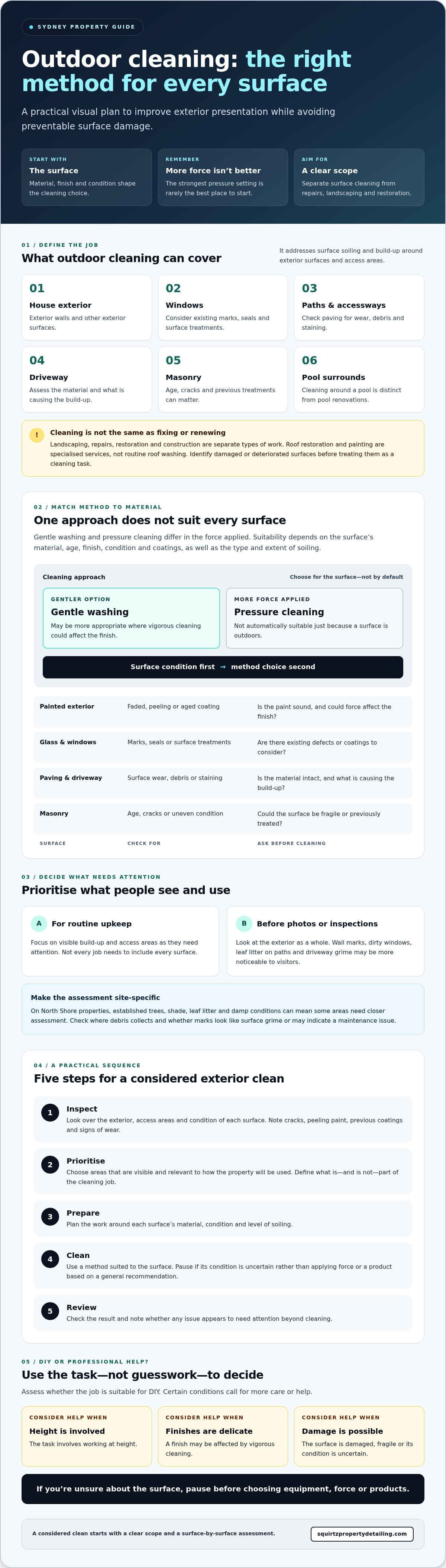
A practical outdoor-cleaning plan for your Sydney property
A clear sequence keeps outdoor cleaning focused and reduces the chance of redoing work. For a North Shore property, note where shade, leaf litter and dampness collect, then check each surface before deciding what to tackle. If you’re preparing for a sale, prioritise presentation and safe access rather than expecting cleaning alone to produce a particular sale result.
- Inspect: Walk around the property and note visible build-up, debris, access constraints and signs of surface damage. Pay attention to shaded areas and places where leaves gather.
- Prioritise: List the work by urgency and visibility. Address access concerns and surfaces in poor condition before planning cosmetic cleaning.
- Prepare: Clear loose items from the work area and confirm which surfaces are included. Check access, the condition of the materials and any requirements for the planned work.
- Clean: Use an approach suited to each surface. Don’t assume the same method is right for the house exterior, windows, driveway and paths.
- Review: Check the result and note any areas that still appear marked or damaged. They may need a different assessment or work beyond cleaning.
Prioritise visible areas before a sale
Start at the entry and approach, then review windows and other exterior areas likely to be seen during photography or an inspection. These are practical priorities, not a promise about buyer response or sale price. Garden design and detailed weeding are separate landscaping tasks; for ideas on that work, see this advice on Sydney garden landscaping.
Coordinate outdoor work in a sensible order
Cleaning may need to fit around painting, repairs or garden work. Plan the sequence with those tasks in mind so completed surfaces are less likely to be affected by follow-on work. Confirm the scope, access arrangements and surface requirements with anyone undertaking the work before booking. This is useful when several exterior tasks need coordination. Sellers planning a broader programme can refer to this guide to property maintenance before sale.
Squirtz Property Detailing is a Sydney-based property maintenance business established in 1993. Relevant services include house washing, window cleaning, external painting, garden landscaping and makeovers, and driveway and path resurfacing. Discuss your outdoor property preparation needs with Squirtz, and confirm current service availability for your location.
When Squirtz can help with outdoor property preparation
Some properties need one exterior task; others need several considered together before a sale. Squirtz Property Detailing is a Sydney-based property maintenance business established in 1993. Its services cover a range of outdoor needs, so start by matching the work required to the service offered and confirming the scope for your property.
Match the service to the outdoor work required
House washing may suit a property where the exterior needs attention, while window cleaning may be relevant if the windows are a presentation priority. For worn or tired access areas, driveway and path resurfacing is a separate option to discuss. These services address different needs, so describe the surfaces and the outcome you’re looking for rather than assuming every area can be handled as a standard clean.
Other work may be relevant in specific circumstances. Garden landscaping and makeovers address outdoor spaces, swimming pool renovations concern the pool itself, and roof restoration and painting are specialised roof services rather than routine washing. Squirtz provides property maintenance and detailing, not real estate agency, furniture staging or full-scale construction.
If several tasks are on your list, explain how they relate. That gives the business a clearer picture of whether your request involves one service or coordinated property preparation. The right scope depends on the property and the work required, not simply on whether you’re preparing to sell.
What to share when making an enquiry
Give a clear outline of the job so the service scope and availability can be checked. Include:
- Property location: Share the suburb, particularly if the home is on Sydney’s North Shore, and confirm whether service is available for that specific address.
- Surfaces and work required: Identify areas such as the house exterior, windows, driveway or paths, and note any visible damage or particular concerns.
- Access details: Explain how the areas can be reached and mention any access limitations.
- Preferred timing and scope: State your preferred timing and whether you need one task or help coordinating several services before a sale.
A specific enquiry makes it easier to establish whether the requested work matches the services available for your property. To discuss your requirements, discuss your property preparation with Squirtz.
Make your next steps clear
A practical outdoor cleaning plan starts with the property, not the pressure setting. Assess each surface and its condition, then choose an approach that suits the material. Prioritise visible areas and safe access, and coordinate cleaning with painting, repairs or landscaping if those jobs are also needed.
For a Sydney property, local shade, leaf litter and dampness can affect which areas need attention. A considered plan can help you maintain your home or prepare it for sale without assuming every surface needs the same work or promising a particular sale result.
Squirtz Property Detailing has operated since 1993 and offers property maintenance services across the Sydney region. If you’ve identified work that may suit its services, share the property location, surfaces and access details, and confirm availability for your area.
Discuss your outdoor property preparation with Squirtz and take the next step with a clear understanding of what your property needs.
Frequently Asked Questions
What does outdoor cleaning include?
Outdoor cleaning covers maintaining exterior surfaces and areas around a property by removing dirt, grime and loose debris. Depending on the job, this may include house exteriors, windows, paths, driveways or pool surrounds. The scope varies with the property and surface condition. It’s distinct from landscaping, repairs, roof restoration or construction, which address other maintenance needs. On Sydney’s North Shore, shade and leaf litter can influence which areas need attention.
How do you clean outdoor surfaces without damaging them?
Choose the method after checking the material, finish and condition, rather than assuming one approach suits every surface. Painted walls, glass, paving and masonry can respond differently to cleaning. Look for cracks, peeling coatings, previous treatments or other signs of wear before starting. If you’re unsure, avoid vigorous cleaning and seek an assessment. This is particularly sensible for older North Shore properties where the surface history may not be clear.
Is pressure cleaning suitable for every outdoor area?
No. Pressure cleaning may not suit every material or surface condition, and higher force isn’t automatically more effective or appropriate. Delicate finishes, aged paint, cracked areas and coated surfaces need careful consideration before cleaning. Assess what the surface is made from and what build-up you’re addressing. If you can’t identify the material or its condition, pause and ask for advice rather than testing a pressure washer on a prominent area.
Can outdoor cleaning help prepare a property for sale?
Yes, it can help address visible grime and debris on exterior areas before photography, inspections or buyer visits. Start with surfaces that shape the approach to the property, such as the entry, windows and driveway. Cleaning can support a well-maintained presentation, but it can’t guarantee a particular sale result or price. If the property also needs painting, repairs or landscaping, plan those tasks alongside cleaning to establish a suitable order of work.
How often should outdoor areas be cleaned?
There’s no single schedule that suits every property. Check outdoor areas periodically and pay attention to local conditions, including shade, dampness and leaf litter, which can affect how quickly debris or surface build-up becomes noticeable. A sheltered path beneath trees may need attention at a different time from an exposed wall. Clean when the condition and use of the area call for it, and reassess surfaces before choosing a method.
What outdoor areas should I clean first before an inspection?
Begin with the entry and approach, then check windows, paths and the driveway. These areas are visible as people arrive and move around the property. Remove loose debris where it can be reached safely, and note any surface marks or damage that may need separate attention. For a Sydney North Shore home, check shaded spots and places where leaves collect. Keep the plan focused on the property’s condition, not a promised inspection outcome.
When should I hire a professional for outdoor cleaning in Sydney?
Consider experienced help if the work involves height, fragile finishes, visible damage, difficult access or equipment you’re not confident using. Squirtz Property Detailing is a Sydney-based business established in 1993, with services including house washing, window cleaning and driveway and path resurfacing. Describe the surfaces, access and work you need, and confirm service scope and current availability for your specific Sydney North Shore location before proceeding.


